Free tool

Can I plug in my kiln? Outlet checker

Enter your kiln’s amps (or watts and volts) and your breaker size. The checker applies the 80% continuous-load rule that kiln circuits are sized with and tells you whether the circuit is big enough.

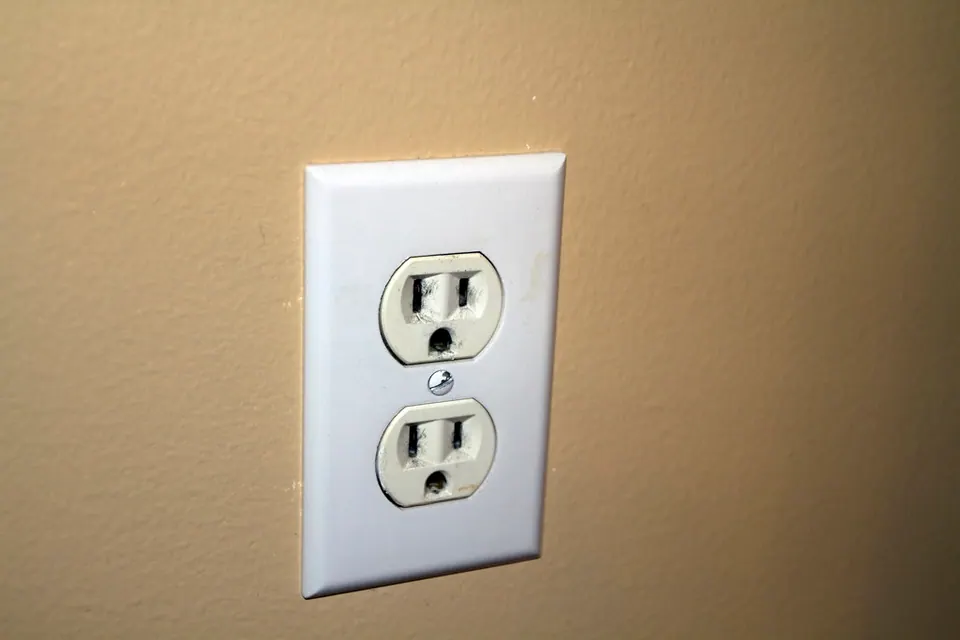
Standard 120 V duplex wall outlet
Photo: markn3tel, CC BY 2.0, via Flickr
I know my kiln’s…
Printed on the kiln’s nameplate or spec sheet.
Your circuit breaker
—

Each breaker size at the 80% continuous-load limit
Breaker80% limitYour kiln
15 A12 A—
20 A16 A—
30 A24 A—
40 A32 A—
50 A40 A—

Continuous load ≤ 80% of breaker rating

This is a planning aid, not an inspection. Local code and the kiln maker’s installation instructions decide. Have a licensed electrician confirm the breaker, wire size, receptacle and run length before the first firing.

The 80% rule in one line

The National Electrical Code calls a load that runs at full current for three hours or more a continuous load, and sizes the circuit for it at 125% of that current. That is the same as saying the load may use only 80% of the breaker’s rating. A kiln firing runs for hours, so kiln makers and electricians treat it as continuous.

BreakerContinuous limit (80%)Largest kiln draw
15 A12 A12 A
20 A16 A16 A
30 A24 A24 A
40 A32 A32 A
50 A40 A40 A

120 V “plug-in” kilns

Plug-in does not mean any outlet. A 120 V kiln that draws 15 A needs 15 × 1.25 = 18.75 A of circuit, which means a 20 A circuit, not the 15 A circuit behind most household outlets. Many small kilns are specified for a dedicated circuit with nothing else plugged in, and the plug on the cord tells you which receptacle the maker expects.

AvoidExtension cords, plug adapters and sharing the kiln’s circuit with other appliances. If the plug does not fit the outlet, the outlet is the wrong one for that kiln.

240 V kilns

Larger kilns run on 240 V (or 208 V in some buildings) and need a dedicated circuit sized for their amps. A kiln that draws 48 A needs 48 × 1.25 = 60 A of circuit, which is beyond this checker’s 50 A option. Wire gauge also depends on distance from the panel, so the electrician sizes the whole run, not just the breaker.

208 V and 240 V are not interchangeable. A kiln built for 240 V on a 208 V supply heats more slowly, so many models come in both versions: order the one that matches your building.

What to tell your electrician

  • Kiln model, voltage, amps and phase (homes are almost always single-phase)
  • The receptacle or hard-wiring the manual specifies
  • Where the kiln will sit and how far that is from the panel
  • Clearances the manual asks for around the kiln

Questions

Can I plug a kiln into a regular outlet?
Only small kilns, and usually not a typical 15 A outlet. Under the 80% rule a 15 A circuit can carry 12 A continuously, so a kiln drawing more than 12 A needs at least a 20 A circuit. Check the kiln’s amps and the manual’s circuit requirement.
Do I need an electrician for a kiln?
For any new or upgraded circuit, yes. Even for a plug-in kiln, an electrician can confirm that the circuit is dedicated, the breaker and wire match, and the receptacle is the type the kiln maker specifies.
Can I use an extension cord with a kiln?
Kiln makers advise against it. A kiln draws high current for hours, and an extension cord adds resistance and heat at every connection.
What size breaker does a 27 A kiln need?
27 × 1.25 = 33.75 A, so the next standard size is 40 A. The wire must match the breaker and the run length.

Sources

  1. Skutt, kiln installation resources
  2. Skutt, electrical installation guide for contractors (PDF)
  3. Seattle Pottery Supply, information for the installing electrician
  4. Kiln Frog, kiln electrical requirements