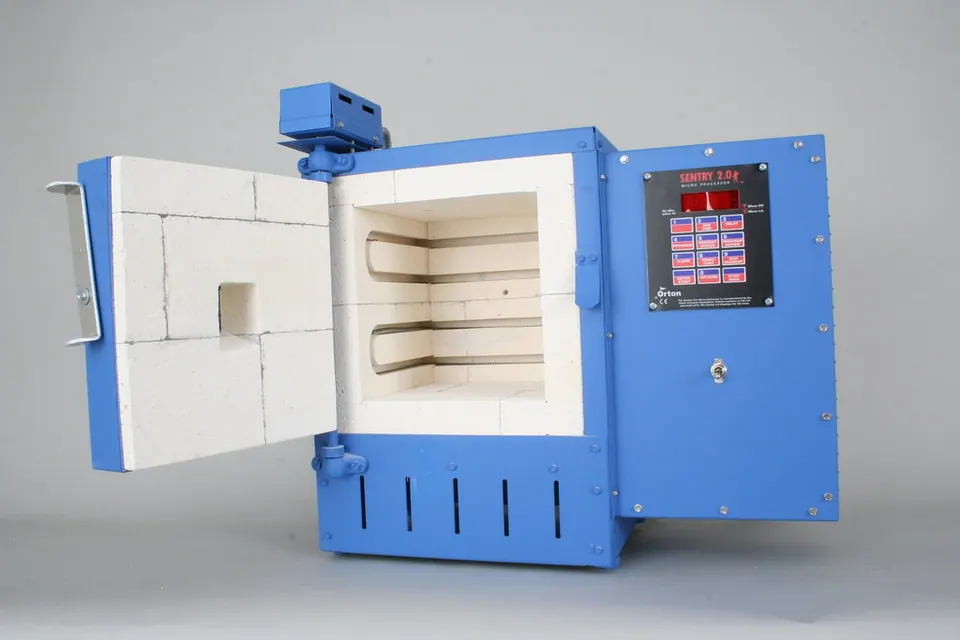
- For cone 5–6 or cone 10 pottery: the Paragon Xpress Q11A (120 V, 12 A, 2,350 °F listed). It's the one plug-in kiln here with a listed temperature high enough for stoneware.
- Biggest box for low fire: the Paragon Xpress E12A (8½ × 12 × 6¾ in), listed at 2,000 °F. Use it for bisque and earthenware, not cone 6.
- For glass and metal clay: the Skutt Firebox models, the Paragon SC2 and the PMC OV-1 are small, programmable kilns built for that work.
- Skip 2,192 °F "pottery kilns" for stoneware. They're jewelry furnaces. Orton puts cone 6 at 2,232 °F.
The best 120V kiln is the one that reaches your clay's cone on a circuit you actually have. With plug-in kilns those two goals pull against each other. A standard household circuit limits the power, and less power means a smaller chamber or a lower top temperature. Every 120V kiln is a trade-off between the two.
The plug-in kilns in our catalogue come from Paragon and Skutt, plus one PMC metal-clay kiln and one Fuseworks glass kiln. The pottery-capable ones are Paragon and Skutt. We rank the rest by what they're made for and say plainly when a kiln isn't meant for stoneware. Budget tabletop furnaces get their own section at the end.
Our picks
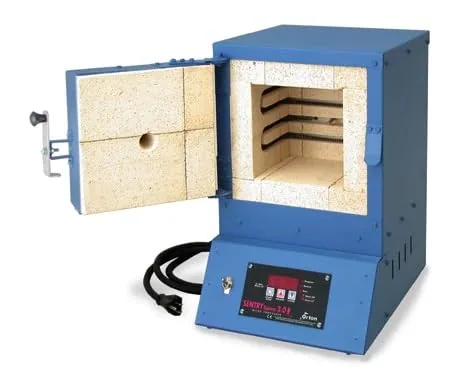
Paragon Xpress Q11A 120V Kiln
- Max temperature
- 2350 F
- Voltage
- 120v
- Power
- 12amp
- Interior size
- 6" W x 6" D x 6 1/4" H
The Q11A lists 120 V, 12 A and 2,350 °F. On Orton's chart that clears cone 6 (2,232 °F) and reaches cone 10 (2,345 °F) at a medium heating rate. At 12 A it fits a dedicated 15 A circuit under the 80% rule, the lowest draw of any pottery kiln here.
Best for: cone 5–6 glaze tests and small high-fire pieces
Skip if: you want to fire full mugs or a week of bowls
- 2,350 °F listed max
- 12 A, the lowest circuit demand here
- Sentry 3 Key programmable controller
- 6 × 6 × 6¼-inch chamber
- Running near its maximum wears elements
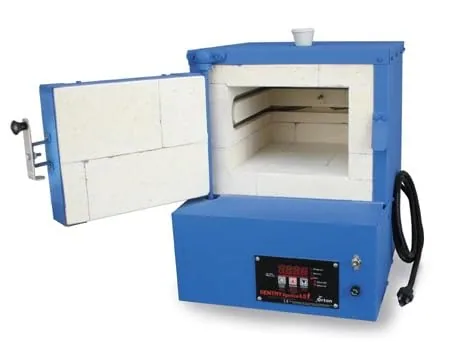
Paragon Xpress E12A 120V Kiln
- Max temperature
- 2000 F
- Voltage
- 120v
- Power
- 15amp
- Interior size
- 8 1/2" W x 12" D x 6 3/4" H
The E12A's 8½ × 12 × 6¾-inch chamber is the roomiest plug-in box in our catalogue, about three times the volume of the Q11A. The listing gives 2,000 °F as the maximum, which covers cone 06–04 bisque and earthenware glazes with some margin. It won't reach cone 5–6.
Best for: low-fire earthenware, bisque, Stroke & Coat-style glazes
Skip if: your clay bag says cone 5 or cone 6
- Largest 120 V chamber listed
- Sentry 3 Key controller
- Fire brick construction per the listing
- 2,000 °F listed max
- 15 A draw needs a 20 A circuit
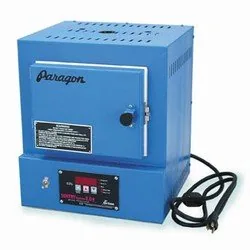
Paragon SC2 120V Digital Kiln, Sentinel Touch
- Voltage
- 120V
- Power
- 14A / 1680W
- Controller
- Sentinel Touch Xpress
- Size
- 13.25" x 15.5" x 14"
The SC2 lists 120 V, 14 A / 1,680 W and Paragon's Sentinel Touch Xpress controller, in a 13.25 × 15.5 × 14-inch outer body. It's a popular all-rounder for glass, metal clay and small ceramics. This listing doesn't state a maximum temperature or cone, so check Paragon's spec sheet before you count on it for a given firing.
Best for: makers who switch between glass, metal clay and small ceramics
Skip if: you need a confirmed cone 6 rating
- Touchscreen programming
- 120 V, 14 A / 1,680 W listed
- Compact body
- Max temperature not in this listing
- 14 A needs a 20 A circuit
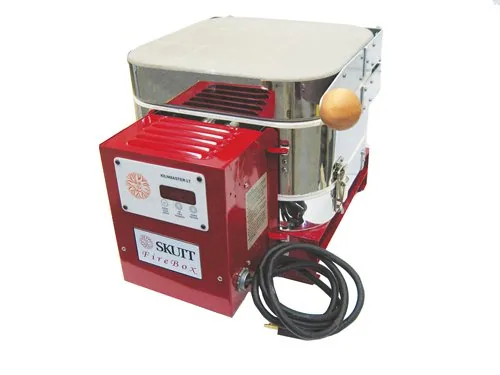
Skutt Firebox 8x8x4.5 LT Digital Glass Kiln
- Interior size
- 8" x 8" in. in diameter and 4.5 in. high
- Controller
- Digital, Ramp/Hold programs
- Includes
- 7" x 7" shelf, kiln wash, posts
Skutt's Firebox 8x8x4.5 LT listing says the digital controller does glass, PMC and ceramics, and lets you write your own ramp/hold programs. It comes with a 7 × 7-inch shelf, kiln wash and posts, so it's ready for a first firing. The listing doesn't give its voltage, amps or maximum temperature.
Best for: fused glass and metal clay, with occasional small ceramics
Skip if: your main work is cone 6 stoneware
- Ramp/hold programs
- Shelf, kiln wash and posts included
- UL approved per the listing
- Voltage, amps and max temperature not listed here
- Small, shallow chamber
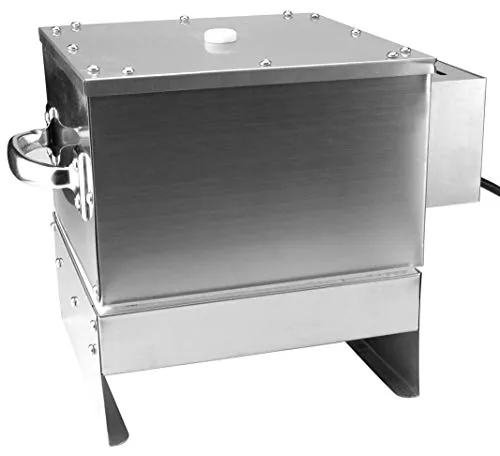
PMC OV-1 Kiln & OC-01 Controller Combo
- Interior size
- 4 5/8" x 4 5/8" x 3 1/2" high
- Controller
- OC-01, 14 programs pre-programmed
- Insulation
- 2" walls
- Top shell weight
- 7.5 lbs
The PMC OV-1 with the OC-01 controller has 14 pre-set programs, 2-inch walls and a 4⅝ × 4⅝ × 3½-inch chamber. The top shell weighs 7.5 lb. It's made for silver and bronze metal clay and other tiny pieces, and it isn't a substitute for a pottery kiln.
Best for: metal clay jewelry
Skip if: you work in clay larger than a pendant
- 14 pre-set programs
- Double-thick 2-inch walls
- Fires quickly per the listing
- Smallest chamber here
- Voltage and max temperature not listed
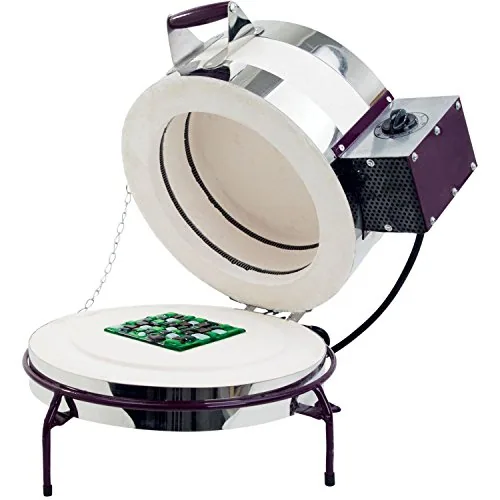
Fuseworks Craft Kiln FW999
The Fuseworks Craft Kiln FW999 comes from the Diamond Tech Fuseworks glass line. The listing gives little beyond the model and line, so treat it as a glass-fusing tool and check the specs on the listing before you buy.
Best for: hobby glass fusing
Skip if: you need listed temperatures and amps before buying
- Made for glass fusing
- From an established glass-craft line
- Specs not listed
- Not for pottery
How many amps can a 120V kiln draw on your circuit?
Every 120V kiln listing should tell you its amps. If it only gives watts, divide watts by 120. Kilns run at full power for hours, so they count as a continuous load. The rule kiln makers and electricians use is that a continuous load may draw only 80% of the breaker's rating.
Listed draw vs the circuit it needs (80% rule)
| Kiln | Listed draw | Smallest circuit | On a shared 15 A outlet? |
|---|---|---|---|
| Paragon Q11A | 12 A | 15 A, dedicated | ✗ No, it needs the circuit to itself |
| Paragon SC2 | 14 A / 1,680 W | 20 A | ✗ No |
| Paragon E12A | 15 A | 20 A | ✗ No |
| VEVOR furnace | 1,650 W ≈ 13.8 A at 120 V | 20 A | ✗ No |
| PeiXWming furnace | 2,000 W ≈ 16.7 A if 120 V | ~ Over a 20 A circuit's 16 A limit | ✗ No |
Source: Skutt electrical installation notes; amps from listings
In plain terms, a 15 A circuit carries 12 A continuously and a 20 A circuit carries 16 A. Only the Q11A fits the first, and only if nothing else is on that circuit. Most of the others need a 20 A circuit, which many rooms don't have. Plug in any kiln's numbers with our kiln outlet checker.
Thinking about stepping up? 120V vs 240V kilns covers what a 240 V circuit buys you: bigger chambers, full mug loads, and an electrician bill up front.
Which cone can each plug-in kiln reach?
Cones measure heat work, meaning temperature and time together. Orton therefore publishes three temperatures per cone, one for each heating rate. At the common medium rate (108 °F per hour at the end of the firing), cone 04 bends at 1,945 °F, cone 6 at 2,232 °F and cone 10 at 2,345 °F. Compare those with the maximums in the listings:
- Paragon Q11A, 2,350 °F: reaches cone 6 with room to spare, and touches cone 10.
- Paragon E12A, 2,000 °F: above cone 04 (1,945 °F) and below cone 02 (2,016 °F). This is a low-fire kiln.
- Skutt Firebox, Paragon SC2, PMC OV-1, Fuseworks FW999: maximum temperature not listed. Check the maker's spec sheet.
Heating rate matters at the top. If your controller slows down for the last stretch, the cone bends at a lower temperature. The full Orton cone chart shows all three rates, and our cone guide explains how to read witness cones.
How big is a 120V kiln chamber, really?
Chamber size is where plug-in kilns surprise people. We multiplied the interior dimensions in each listing to get usable volume. Shelves and posts take some of that space.
Listed interior volume, cubic inches
Width × depth × height from each listing (Clay at Home catalogue). Firebox interiors are not listed as W × D × H.
For scale, the Q11A's 6 × 6 × 6¼-inch box holds a few test tiles or a couple of small cups. The E12A's 12-inch depth holds a row of small bowls, but only at low fire. Neither is a mug-production kiln. If you throw a lot, the realistic plan is a 120 V kiln for tests and a full-size home kiln or a studio firing service for full loads.
| Product | Voltage | Power | Max temperature | Interior size | Controller |
|---|---|---|---|---|---|
| Paragon Xpress Q11A 120V Kiln | 120v | 12amp | 2350 F | 6" W x 6" D x 6 1/4" H | Sentry 3 Key |
| Paragon Xpress E12A 120V Kiln | 120v | 15amp | 2000 F | 8 1/2" W x 12" D x 6 3/4" H | Sentry 3 Key |
| Paragon SC2 120V Digital Kiln, Sentinel Touch | 120V | 14A / 1680W | — | — | Sentinel Touch Xpress |
| Skutt Firebox 8x8x4.5 LT Digital Glass Kiln | — | — | — | 8" x 8" in. in diameter and 4.5 in. high | Digital, Ramp/Hold programs |
| PMC OV-1 Kiln & OC-01 Controller Combo | — | — | — | 4 5/8" x 4 5/8" x 3 1/2" high | OC-01, 14 programs pre-programmed |
| Fuseworks Craft Kiln FW999 | — | — | — | — | — |
Specs as listed by the maker or seller; check the listing before you buy.
Budget furnaces: what they can and can't do
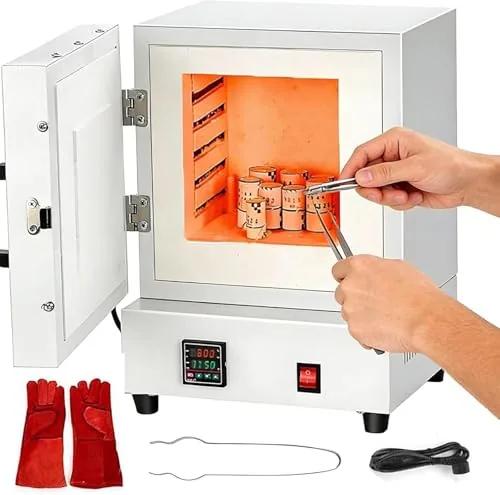
Several low-cost stainless tabletop units are listed as pottery kilns. In our catalogue these are the VEVOR 1650W (2,192 °F / 1,200 °C), the PeiXWming 2000W (2,102 °F / 1,150 °C) and the AFLEPCBRQ (0–1,150 °C). Read their listings closely and they describe melting furnaces for casting, annealing and wax burnout, with ceramics added at the end.
Real 120V pottery kiln vs budget furnace
| Paragon Q11A | VEVOR 1650W | PeiXWming / AFLEPCBRQ | |
|---|---|---|---|
| Listed max | 2,350 °F | 2,192 °F | 2,102 °F (1,150 °C) |
| Cone 6 at 108 °F/hr (2,232 °F) | ✓ Yes | ✗ No | ✗ No |
| Cone 04 bisque (1,945 °F) | ✓ Yes | ✓ Yes | ✓ Yes |
| Listed main use | Pottery kiln | Melting, casting, annealing | Jewelry, casting, burnout |
| Chamber | 6 × 6 × 6¼ in | 8 × 5 × 6 in | ~ Not clearly listed |
Source: Orton cone chart (°F); specs from listings
Fine for
- Silver and jewelry-metal melting, casting and wax burnout.
- Metal clay sintering and small enamel work.
- Low-fire test tiles, if you use witness cones to check what really happened.
Not fine for
- Cone 5–6 stoneware, porcelain or mid-fire glazes. A maximum of 2,192 °F falls short of cone 6 (2,232 °F) at a medium rate.
- Functional ware you plan to eat from. An under-fired glaze isn't a finished glaze.
- Anything larger than the chamber, which for the VEVOR is 8 × 5 × 6 inches.
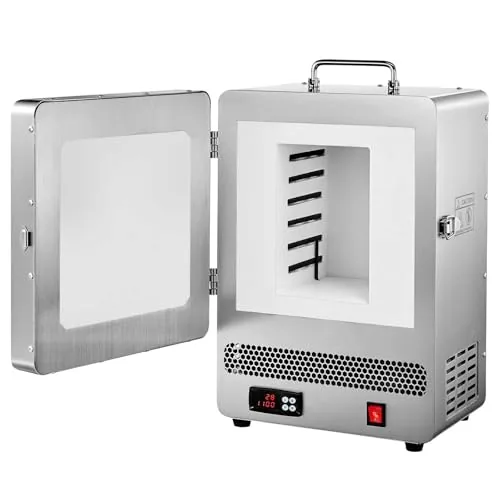
VEVOR 1650W Programmable Melting Furnace, 2192°F
- Max temperature
- 2192℉/1200℃
- Watts
- 1650W
- Interior size
- 8 x 5 x 6 inch / 203 x 127 x 152mm
Best for Jewelry, metal clay and small test tiles
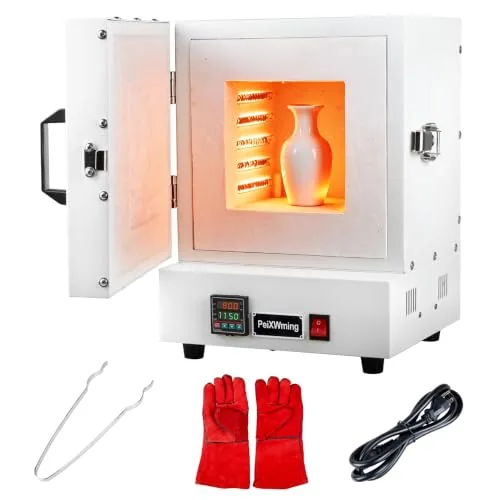
PeiXWming 2000W Jewelry Kiln, 2102°F
- Max temperature
- 2102℉/1150℃
- Watts
- 2000W
Best for Jewelry and metal casting
AFLEPCBRQ Electric Furnace, 0-1150°C
- Max temperature
- 1150°C
- Controller
- Digital with real-time monitoring
Best for Jewelry and metal clay work
How to choose and set up a 120V kiln
- Pick your cone first
Low-fire earthenware (cone 06–04) points to the E12A. Mid-fire stoneware (cone 5–6) points to the Q11A. Glass and metal clay point to a Firebox, the SC2 or the PMC OV-1.
- Check the circuit
Find a circuit with no other loads, and confirm with an electrician that it's 15 A for the Q11A or 20 A for the others.
- Set the kiln on a safe surface
Use a non-combustible surface, away from walls and curtains, at the clearance the maker states, in a room you can ventilate.
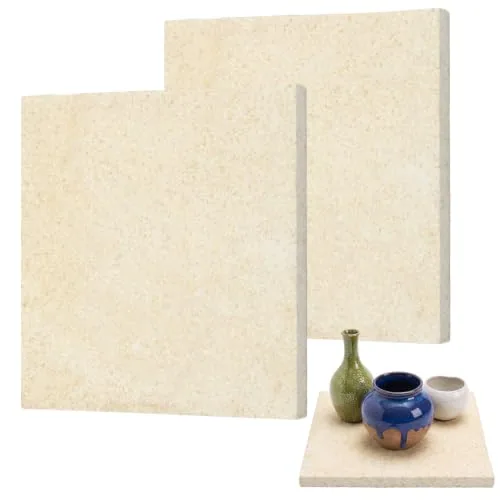
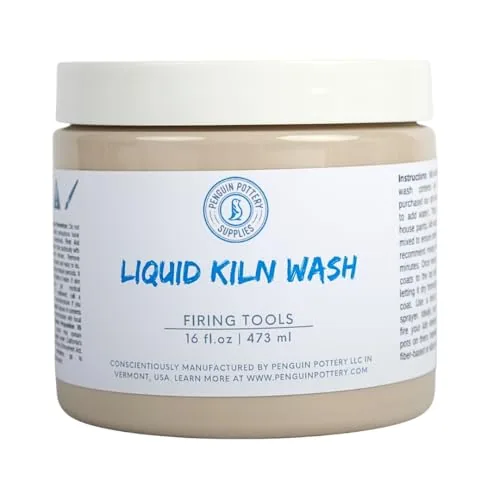
- Protect the shelf
Coat shelves with kiln wash and use posts sized for a small kiln.
- Use witness cones
Put a cone where you can see it, at least for the first firings, to check what the controller reports.
- Know the running cost
The Q11A draws up to 12 A × 120 V = 1.44 kW. Four hours at full power would be 5.76 kWh. At the EIA US average residential rate (18.16¢/kWh, Aug 2026, preliminary) that's about 105¢. Real firings cycle on and off, so they cost less. The firing cost calculator uses your state's rate.
Mistakes people make with plug-in kilns
- Reading "pottery kiln" in a furnace title as a cone rating. Look for the listed maximum and compare it with cone 6 at 2,232 °F.
- Sharing the circuit. A kiln plus a space heater on one circuit is how breakers trip and wiring overheats.
- Buying for the chamber you'll want next year. A small kiln suits glaze tests. If you already make ten mugs a week, plan for 240 V.
- Packing it tight. Small chambers heat unevenly when crammed. Leave space around pieces and the thermocouple.
- No ventilation. Skutt's safety material and EnviroVent manual explain the fumes a firing gives off. Fire in a ventilated room you're not sitting in.
Browse every plug-in kiln, furnace and shelf in the kilns category, or see what fits a flat in small space and apartment. If glass is your main material, our glass fusing kiln picks go deeper.
We compared every 120V and plug-in kiln in our catalogue by the voltage, amps or watts, maximum temperature, interior size, controller and included accessories shown in its listing. We checked temperatures against Orton's cone equivalents at 108 °F per hour and worked out circuit sizes with the 80% continuous-load rule. We did not fire these kilns. Gaps in a listing are marked as not listed.
Questions
Can a 120V kiln fire stoneware?
What is the best 120V kiln for beginners?
Can I plug a kiln into a regular outlet?
Why do cheap kilns say 2,192 °F?
Do I need a vent for a small kiln?
How long does a small kiln take to fire?
Sources
- Orton Ceramic Foundation: pyrometric cones and temperature equivalents
- Orton cone chart PDF (°F, cones 022–14)
- Skutt: electrical installation for contractors (PDF)
- Skutt: kiln installation
- Skutt EnviroVent 2 manual (PDF)
- Seattle Pottery Supply: for the installing electrician
- U.S. EIA Electric Power Monthly, Table 5.6.A