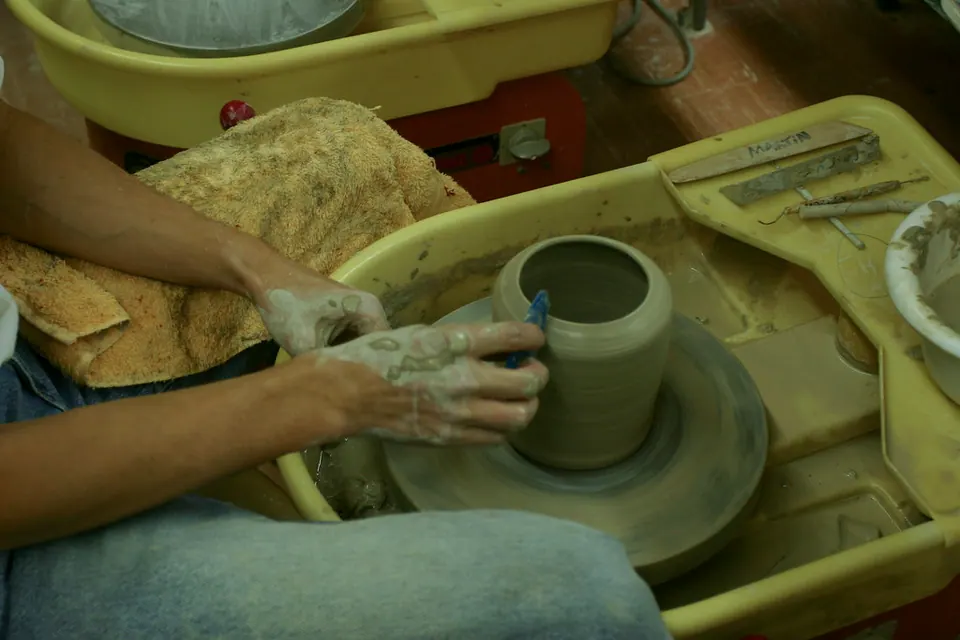
- Long-term workhorse: the Brent Model B lists 150 lb continuous centering capacity, reversible electronic speed control and an all-steel frame.
- Full-size all-rounder: the Speedball Clay Boss lists a 0.5 HP motor, 14" head, up to 100 lb capacity, load-sensing control, a reversing plug and a 10-year warranty.
- Quietest full-size option on paper: the Shimpo VL-Whisper lists a quiet brushless DC motor that holds speed under load.
- Short on space: the Speedball Artista (25 lb, 1/3 HP) and VEVOR 450W tabletop (11 lb, 11" and 14" heads) fit on a table.
The best pottery wheel for home use is the one that handles the size of work you want to make in a year, not just this month, and that fits the room you actually have. For a garage or spare room that usually means a full-size floor wheel; for an apartment, a quiet tabletop with a splash pan you can carry to the sink.
We rank seven wheels from six brands, from steel-framed studio wheels to capable tabletops. Figures are copied from each listing, and anything a listing leaves out is marked "not listed" rather than guessed.
Our picks
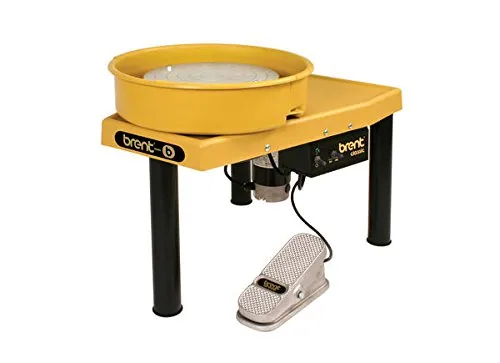
Brent Model B Pottery Wheel
- Wheel head
- 12 inches
- Centering capacity
- 150 lbs. continuously
- Reverse
- Reversible electronic speed control
- Construction
- All-steel
The Brent Model B lists 150 lb of centering capacity "continuously", a 12" head, reversible electronic speed control and an all-steel frame with a solid table. Automatic belt tensioning keeps its 6-groove poly-v belt tight. That capacity is far beyond most home work, which is the point: the motor rarely works near its limit.
Best for: a dedicated garage, basement or spare-room studio
Skip if: you have to move the wheel after every session
- 150 lb continuous centering capacity
- Reversible electronic speed control
- All-steel construction
- Motor power and speed range not in this listing
- Heavy floor wheel
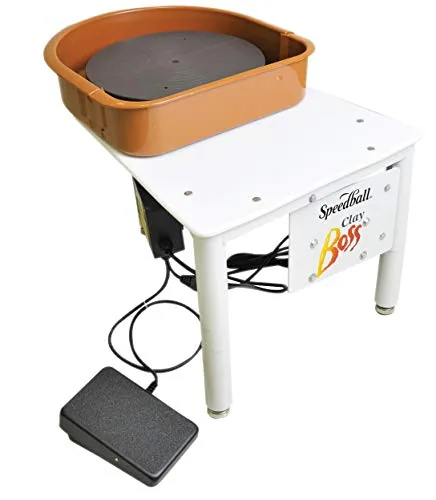
Speedball Clay Boss Pottery Wheel, 0.5 HP, 14"
- Motor
- .5 HP
- Wheel head
- 14"
- Centering capacity
- up to 100lb
- Speed
- 0-240 rpm
The Clay Boss lists a 0.5 HP motor (about 373 W), a 14" head, up to 100 lb capacity and a foot pedal from 0 to 240 RPM. Load-sensing control keeps the head at speed under changing loads, a reversing plug switches direction, and the polyethylene table and two-part splash pan wipe clean.
Best for: committed hobbyists throwing anything from mugs to large bowls
Skip if: you only throw small pieces a few times a month
- Load-sensing speed control
- Reversing plug
- 10-year warranty listed
- Reversing needs a plug swap, not a switch
- Floor wheel footprint
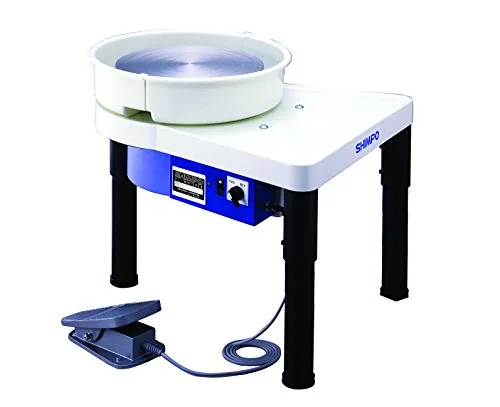
Shimpo VL-Whisper Potter's Wheel
- Motor
- Brushless DC
- Wheel head
- 14 inches
- Reverse
- Reversible
- Controller
- Electronic, maintains speed under load
Shimpo lists a brushless DC motor described as smooth, quiet and maintenance-free, an electronic controller that holds your chosen speed under all load conditions, a 14" head and reversibility for left- and right-handed throwers. It is the obvious shortlist pick for shared walls.
Best for: home studios where noise travels
Skip if: you want listed capacity and motor figures to compare
- Quiet brushless DC motor per the listing
- Holds speed under load
- Reversible
- Centering capacity not listed
- Speed range not listed
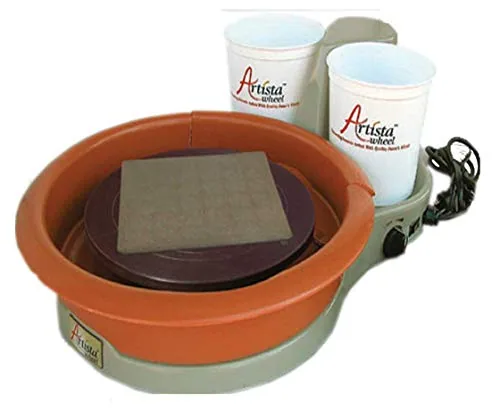
Speedball Artista Potter's Wheel, 1/3 HP, 11"
- Motor
- 1/3 HP
- Wheel head
- 11"
- Centering capacity
- 25lb
- Speed
- 0-220 rpm
With a 1/3 HP motor (about 249 W), 11" head and 25 lb centering capacity, the Artista covers almost everything a home potter throws. Speedball describes it as lightweight, portable and running with very little noise, and lists a 30" × 22" footprint with a two-part splash pan.
Best for: spare rooms, apartments and wheels that get stored between sessions
Skip if: you want a foot pedal or a reverse
- 25 lb capacity in a portable body
- Very little noise per the listing
- Two-part splash pan
- Hand speed control only
- Reversing not mentioned
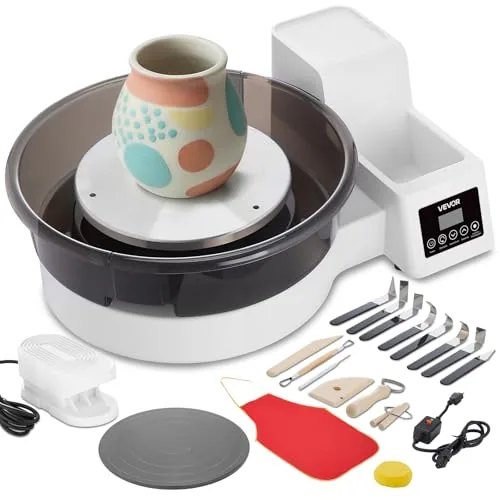
VEVOR 450W Tabletop Pottery Wheel, 11" & 14" Heads
- Motor
- 450W
- Wheel head
- 11" and 14" turntables
- Centering capacity
- up to 11 lbs of clay
- Speed
- 30-300 RPM
VEVOR's 450 W tabletop lists 11" and 14" turntables, a Hall-effect pedal from 30 to 300 RPM and up to 11 lb of clay. It adds a side tool box and detachable basin, which helps in a room that is not a dedicated studio.
Best for: starting a home practice before investing in a floor wheel
Skip if: you throw pieces bigger than 10 lb
- Two head sizes included
- 30 RPM low end for trimming
- Detachable basin
- 11 lb capacity
- Reversing not listed
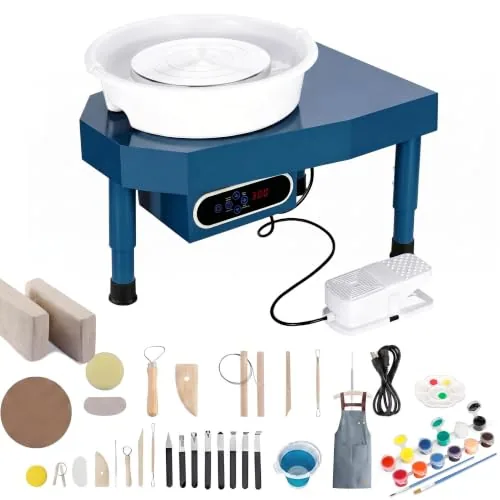
OceanWings 14" 450W Height-Adjustable Pottery Wheel
- Motor
- 450W stepless
- Wheel head
- 35CM aluminum alloy
- Speed
- 0-320rpm
- Reverse
- Forward/reverse switch
OceanWings lists a 35 cm (about 14") aluminum head, a 450 W stepless motor, LCD touch plus foot pedal control and a forward/reverse switch. The head height adjusts so you can throw sitting or standing, which is easier on your back during long sessions.
Best for: potters who want a reverse switch and adjustable height on a table
Skip if: you want a centering capacity figure
- Forward/reverse switch
- Height adjustment
- LCD and pedal control
- Centering capacity not listed
- Listing gives two speed ranges (0-320 and 60-300 RPM) and two height ranges; check the listing
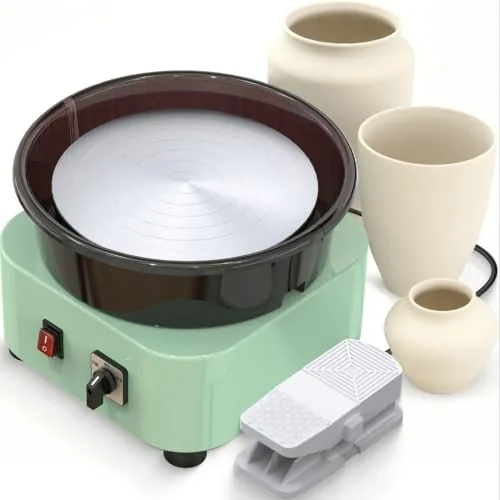
Alldeer PW103MAX 11" 350W Pottery Wheel Kit
- Motor
- 350W brushless
- Wheel head
- 11 inch
- Centering capacity
- 15kg clay loads
- Speed
- 300RPM (foot pedal)
The Alldeer PW103MAX lists a 350 W brushless motor, an 11" head, a foot pedal and a detachable splash tray with 19 tools. Its "15kg clay loads" (about 33 lb) is a seller claim on a tabletop motor; plan your work well below it.
Best for: a pedal-driven tabletop with a full-size head
Skip if: you need a reversing switch
- Brushless motor
- Foot pedal
- Detachable splash tray
- Reversing not listed
- Capacity is a seller claim
What should a pottery wheel for home use have?
A wheel you live with is judged on five things. Get these right and the brand matters less.
Centering capacity: headroom, not ambition
Centering capacity is the most clay the maker says the wheel will center. Most home potters throw 1–5 lb at a time, so 25 lb is plenty and 100–150 lb is headroom. A motor working far below its limit stalls less, runs cooler and lasts longer.
Motor and controller
Studio brands quote horsepower, imported wheels quote watts; 1 HP is about 746 W, so 1/3 HP is about 249 W and 0.5 HP about 373 W. Torque also depends on the drive and the controller. Load-sensing or electronic control (Clay Boss, VL-Whisper, Brent B) holds speed as you press, which is what makes centering feel easy.
Wheel head
A 12" to 14" head handles plates and wide bowls and takes standard bats. Check the pin spacing before you buy bats; many 12" bats use 10" spacing.
Reversing
Left-handed potters often throw clockwise, and many potters trim in reverse. Brent and Shimpo list reversible control, Speedball's Clay Boss uses a reversing plug and OceanWings has a forward/reverse switch.
Noise and cleanup
Only a few listings give a noise figure; Shimpo and Speedball describe their motors as quiet, and the VEVOR 350W lists 60 dB. For cleanup, a two-part splash pan you can carry to a bucket is worth more than any feature on the control box.
Compare the home wheels by listed specs
Values below are copied from the listings; a dash means not listed.
| Product | Wheel head | Motor | Speed | Centering capacity | Reverse |
|---|---|---|---|---|---|
| Brent Model B Pottery Wheel | 12 inches | — | — | 150 lbs. continuously | Reversible electronic speed control |
| Speedball Clay Boss Pottery Wheel, 0.5 HP, 14" | 14" | .5 HP | 0-240 rpm | up to 100lb | Reversing plug |
| Shimpo VL-Whisper Potter's Wheel | 14 inches | Brushless DC | — | — | Reversible |
| Speedball Artista Potter's Wheel, 1/3 HP, 11" | 11" | 1/3 HP | 0-220 rpm | 25lb | — |
| VEVOR 450W Tabletop Pottery Wheel, 11" & 14" Heads | 11" and 14" turntables | 450W | 30-300 RPM | up to 11 lbs of clay | — |
| OceanWings 14" 450W Height-Adjustable Pottery Wheel | 35CM aluminum alloy | 450W stepless | 0-320rpm | — | Forward/reverse switch |
| Alldeer PW103MAX 11" 350W Pottery Wheel Kit | 11 inch | 350W brushless | 300RPM (foot pedal) | 15kg clay loads | — |
Specs as listed by the maker or seller; check the listing before you buy.
Listed centering capacity, home wheels
Pounds of clay. Alldeer's 15 kg converted to 33 lb (seller claim). Shimpo and OceanWings do not list capacity.
The chart splits the list in two: floor wheels built for 100 lb or more, and tabletops in the 11–33 lb range. Both groups throw the same mug; the difference shows up in large bowls, in long sessions and in how the wheel feels when you lean in.
Floor wheel or tabletop: which suits your home?
Floor wheel vs tabletop wheel at home
| Floor wheel | Tabletop wheel | |
|---|---|---|
| Centering capacity listed | ✓ 100–150 lb (Brent B, Clay Boss) | ~ 11–33 lb |
| Moves between rooms | ✗ Rarely | ✓ Yes |
| Foot pedal | ✓ Standard | ~ Most, not the Artista |
| Reversing | ✓ Brent B, Clay Boss, VL-Whisper | ~ OceanWings; others not listed |
| Best room | Garage, basement, spare room | Apartment, shared room |
If you rent or share walls, a tabletop and a good cleanup routine usually beat a bigger wheel you cannot use after 8 p.m. Our tabletop wheel ranking goes deeper, and Brent vs Speedball and Speedball vs Shimpo compare the floor wheels head to head.
How do you set up a wheel corner at home?
- Choose the floor
Vinyl, tile or sealed concrete near water. Put a washable mat under the wheel if the floor is wood.
- Set the height
Your knees should sit slightly below the wheel head. A stool or the OceanWings height adjustment helps.
- Plan the water
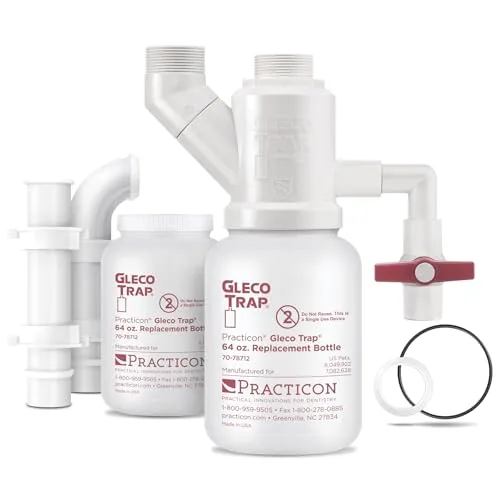
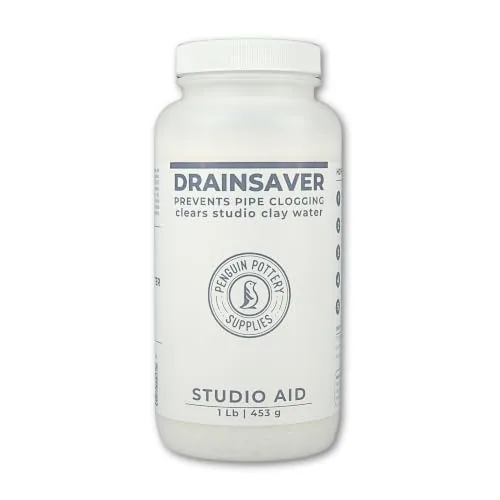
Throw from a bucket, not the tap. Let the slurry settle and reclaim it; never pour clay down the sink.
- Add the essentials
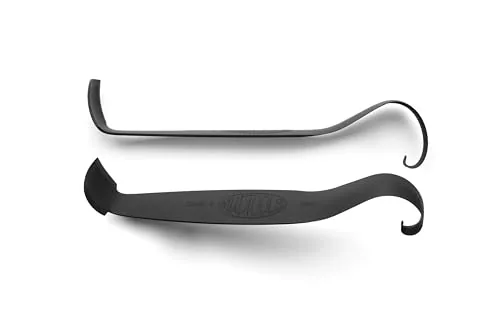
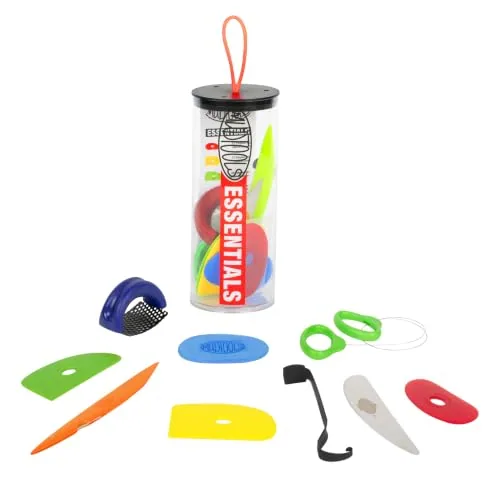
Bats, a trimming tool and a sponge cover most sessions.
- Clean wet every time
Wipe the splash pan, table and floor while the clay is still damp, so it never dries into dust.
The home studio setup guide covers shelving, drying and kiln access, and the studio checklist turns it into a shopping list by stage.
Mistakes to avoid with a home pottery wheel
- Buying a floor wheel for a room you share. A wheel that has to be moved every session soon stops being used.
- Skipping reverse because you are right-handed. Trimming in reverse is handy, and a future student or partner may be left-handed.
- Mixing bats and pins. Check the head size and pin spacing before ordering bats.
- Letting slurry dry. Dried clay becomes fine dust that contains crystalline silica; clean it wet.
- Draining clay water. Clay settles in traps and pipes. Use a bucket or a sink trap.
Which wheel for your home?
- Garage or basement studio: Brent Model B or Speedball Clay Boss.
- Shared walls or late sessions: Shimpo VL-Whisper or Speedball Artista; see pottery in an apartment and the small-space hub.
- Just starting at home: VEVOR 450W, then upgrade once you know your sizes. VEVOR vs Speedball explains the trade-offs.
- Long sessions, sore back: OceanWings with its adjustable height.
Browse every wheel, bat and splash pan in pottery wheels.
We compared listed wheel head, motor (HP converted at 746 W per HP), speed range and control, centering capacity, reversing, noise and included splash pans for every wheel in our catalogue. We did not throw on these wheels. Seller claims are labeled, and figures a listing leaves out are marked as not listed.