- VEVOR vs Speedball is a budget-vs-studio choice. VEVOR's two adult wheels are tabletop machines with foot pedals, removable basins and tool sets in the box. Speedball's are an 11" portable studio wheel and a 14" floor wheel.
- The biggest listed gap is centering capacity: up to 11 lb on the VEVOR 450W, 25 lb on the Artista and up to 100 lb on the Clay Boss. VEVOR's 350W wheel does not list a capacity.
- VEVOR lists faster top speeds (300 rpm) and two head sizes on the 450W. Speedball lists load-sensing control, a reversing plug and a 10-year warranty on the Clay Boss.
- Trying the wheel for the first time on a small table? VEVOR. Throwing several pounds at once, or buying a wheel to keep for years? Speedball.
VEVOR vs Speedball is the question many beginners land on once they have looked at prices. VEVOR sells tabletop wheels that arrive as kits, with a pedal, a removable splash basin, two tool sets and an apron. Speedball is a long-running studio brand whose wheels show up in classrooms and community studios.
They are built for different jobs, and the listings show it. This comparison puts VEVOR's 450W and 350W wheels against Speedball's Artista and Clay Boss. It uses only the specs each listing gives and marks everything else "not listed". VEVOR's tiny 30W mini wheel is covered briefly at the end. It is a miniatures and kids' machine, not a rival to either Speedball.
VEVOR
Tabletop wheels with pedals, removable basins and bundled tools; listed up to 11 lb of clay
BrowseSpeedball
Studio wheels rated 25 lb (Artista) and up to 100 lb (Clay Boss), with a 10-year warranty on the Clay Boss
BrowsePicks from each side
VEVOR
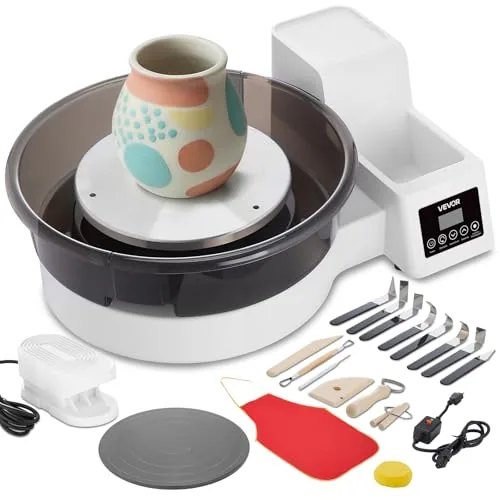
VEVOR 450W Tabletop Pottery Wheel, 11" & 14" Heads
- Motor
- 450W
- Wheel head
- 11" and 14" turntables
- Centering capacity
- up to 11 lbs of clay
Best for Beginners setting up a tabletop wheel at home
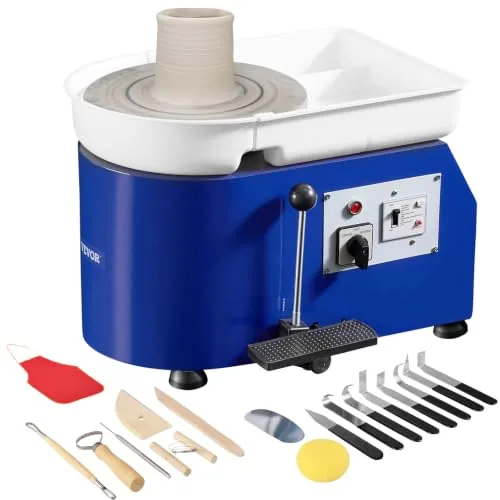
VEVOR 350W 11" Pottery Wheel with Pedal, Blue
- Motor
- 350W
- Wheel head
- 11in
- Speed
- 60-300 RPM
Best for First wheel for adult beginners
Speedball
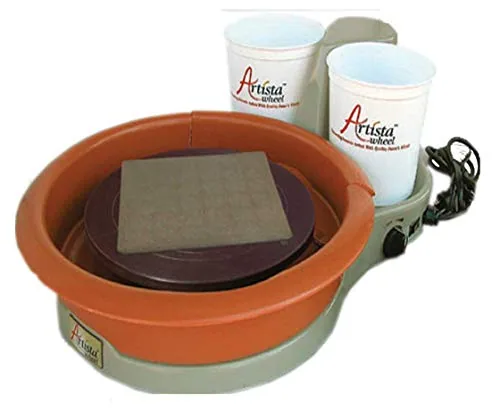
Speedball Artista Potter's Wheel, 1/3 HP, 11"
- Motor
- 1/3 HP
- Wheel head
- 11"
- Centering capacity
- 25lb
Best for Home studios with limited space
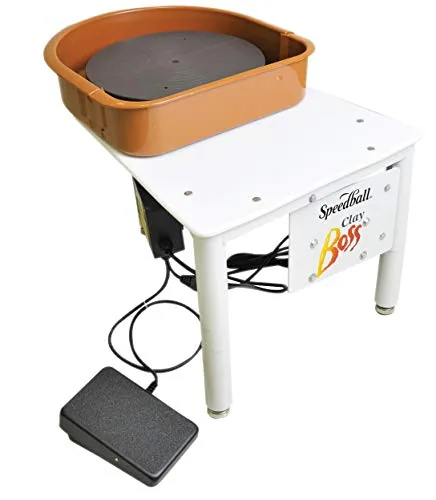
Speedball Clay Boss Pottery Wheel, 0.5 HP, 14"
- Motor
- .5 HP
- Wheel head
- 14"
- Centering capacity
- up to 100lb
Best for Committed hobbyists throwing larger work
VEVOR vs Speedball: specs side by side
| Product | Wheel head | Motor | Speed | Centering capacity | Control | Reverse | Warranty |
|---|---|---|---|---|---|---|---|
| VEVOR 450W Tabletop Pottery Wheel, 11" & 14" Heads | 11" and 14" turntables | 450W | 30-300 RPM | up to 11 lbs of clay | — | — | — |
| VEVOR 350W 11" Pottery Wheel with Pedal, Blue | 11in | 350W | 60-300 RPM | — | Handle and pedal | — | — |
| Speedball Artista Potter's Wheel, 1/3 HP, 11" | 11" | 1/3 HP | 0-220 rpm | 25lb | Variable speed hand control | — | — |
| Speedball Clay Boss Pottery Wheel, 0.5 HP, 14" | 14" | .5 HP | 0-240 rpm | up to 100lb | — | Reversing plug | 10 year |
Specs as listed by the maker or seller; check the listing before you buy.
Feature by feature
| VEVOR 450W | VEVOR 350W | Speedball Artista | Speedball Clay Boss | |
|---|---|---|---|---|
| Format | Tabletop | Tabletop | Tabletop, portable | Floor wheel |
| Wheel head | 11" and 14" turntables | 11" | 11" | 14" |
| Motor | 450 W | 350 W brushless | 1/3 HP | 0.5 HP |
| Speed | 30–300 rpm | 60–300 rpm | 0–220 rpm | 0–240 rpm |
| Centering capacity | ~ Up to 11 lb | ✗ Not listed | ✓ 25 lb | ✓ Up to 100 lb |
| Speed control | ✓ Hall-effect pedal | ✓ Lever and pedal | ~ Hand control | ✓ Foot pedal |
| Holds speed under load | ~ Not stated | ~ Not stated | ~ Not stated | ✓ Load-sensing |
| Reverse | ~ Not listed | ✓ Direction adjustment | ✗ Not listed | ✓ Reversing plug |
| Splash basin | ✓ Detachable | ✓ Detachable ABS | ✓ Two-part pan | ✓ Two-part pan |
| Tools in the box | ✓ 16 tools + apron | ✓ 16 tools + apron | ✗ None listed | ✗ None listed |
| Warranty in listing | ✗ Not listed | ✗ Not listed | ✗ Not listed | ✓ 10 years |
Source: Manufacturer listing data, Clay at Home catalogue
Centering capacity: the number that separates them
Centering capacity is how much clay a wheel keeps turning while you press on it. It is the best single clue to how a wheel feels when you lean in to center.
Listed centering capacity
Pounds of clay as listed. VEVOR 350W: not listed, so not charted.
Up to 11 lb is enough for mugs, bowls and small vases, which most beginners throw from 1 to 3 lb balls. It gets tight if you want wide platters, tall forms or several pots thrown off one big lump. The Artista's 25 lb gives you more than twice the margin in a similar tabletop format. The Clay Boss is a different class of wheel.
Speed, pedal and controls
Both VEVOR wheels top out at 300 rpm, faster than the Artista's 220 and the Clay Boss's 240. Top speed matters less than it sounds. You center at a fairly high speed, but you pull walls and trim slower, and few potters run a wheel flat out. Smooth low-speed control matters more.
On control, VEVOR is generous for the money. The 450W lists a Hall-effect pedal with smooth 30–300 rpm response. The 350W gives you both a hand lever and a pedal, plus a direction switch and leakage protection. The Artista has a hand control only. The Clay Boss has a pedal, a reversing plug and load-sensing control that holds your set speed as the load changes. That last feature is the one you feel most while centering, and only the Clay Boss lists it.
Two heads on the VEVOR 450W
The 450W ships with 11" and 14" turntables you can swap. The 14" head helps with wide pieces, but the listed 11 lb capacity is the same either way, so a bigger head does not mean bigger pots.
Noise, size and small rooms
VEVOR quotes 60 dB for the 350W's brushless motor. VEVOR markets the 450W as 50% smaller than traditional wheels, with a built-in tool box on the side. Speedball says the Artista runs "with very little noise" and lists a 30" x 22" footprint. Neither brand's noise claim has been independently verified here.
For an apartment, all three tabletop wheels fit a sturdy table. The Clay Boss needs a permanent floor spot. Wherever you set up, slurry and splash become dust when they dry. See the small space hub and our apartment pottery guide for drains, floors and cleanup.
What about VEVOR's mini wheel and "kiln"?
VEVOR's 30W mini wheel has 2.6" and 3.9" turntables and 0–300 rpm. It is for miniature pots and kids, not a step toward a Speedball. If that is what you want, compare it in best tabletop and mini pottery wheels.
VEVOR also sells a 1650W programmable furnace listed at 2192 °F with an 8 x 5 x 6" chamber. Orton puts cone 6 at 2232 °F at 108 °F/hr, so it cannot fire cone 6 stoneware. It is a jewelry and metal-clay furnace. For real pottery kilns, see Skutt vs Paragon.
Mistakes to avoid
- Reading watts as capacity. A 450 W label does not tell you how much clay the wheel centers. The listed 11 lb does.
- Throwing too much clay on a small wheel. Stay well under the listed capacity while you learn, so the motor is not straining.
- Using a wobbly table. A tabletop wheel is only as steady as what it sits on.
- Skipping the warranty question. Only the Clay Boss lists one (10 years). Ask about the others before you buy.
- Ignoring the rest of the kit. Bats, a sponge, a wire and somewhere to fire your work matter as much as the wheel. The studio checklist lays it out.
Who should choose VEVOR, and who should choose Speedball?
| If you… | VEVOR tabletop | Speedball Artista | Speedball Clay Boss |
|---|---|---|---|
| Are trying the wheel for the first time | ✓ Kit with tools | ✓ Good step up | ~ Big commitment |
| Throw 1–3 lb pieces | ✓ Yes | ✓ Yes | ✓ Yes |
| Want to throw 10 lb+ at once | ✗ 11 lb limit | ~ 25 lb | ✓ Up to 100 lb |
| Need a pedal | ✓ Yes | ✗ Hand control | ✓ Yes |
| Want a long listed warranty | ✗ Not listed | ✗ Not listed | ✓ 10 years |
| Have only a table to work on | ✓ Yes | ✓ Yes | ✗ Floor wheel |
Weighing Speedball against other studio brands too? See Speedball vs Shimpo and Brent vs Speedball. For a broader beginner list, read best pottery wheel for beginners.
Other options worth a look
These wheels from other brands sit between and around VEVOR and Speedball. Alldeer's PW103MAX pairs an 11" head and a 350W brushless motor with a listed 15 kg (about 33 lb) load. OceanWings' 14" 450W wheel adds 1–10 cm height adjustment and a forward/reverse switch. HTTMT's 25 cm 250W wheel suits small spaces. Brent's Model B is the heavy-duty end of the range at 150 lb.
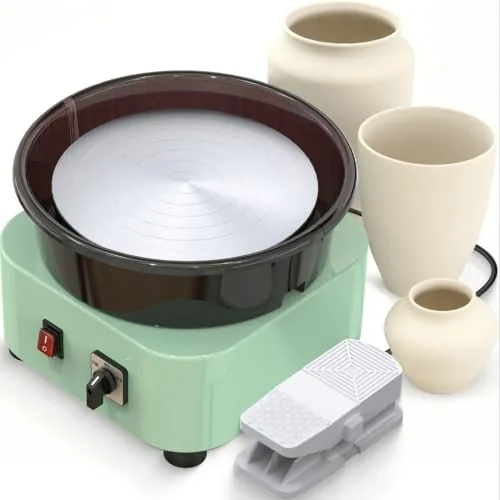
Alldeer PW103MAX 11" 350W Pottery Wheel Kit
- Motor
- 350W brushless
- Wheel head
- 11 inch
- Centering capacity
- 15kg clay loads
Best for Adult beginners wanting a full-size head
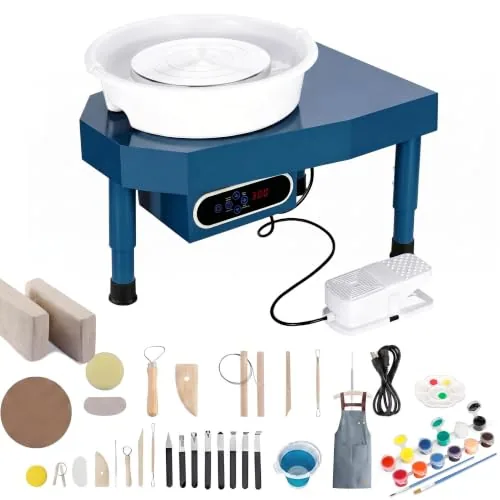
OceanWings 14" 450W Height-Adjustable Pottery Wheel
- Motor
- 450W stepless
- Wheel head
- 35CM aluminum alloy
- Speed
- 0-320rpm
Best for Beginners who want a larger wheel head
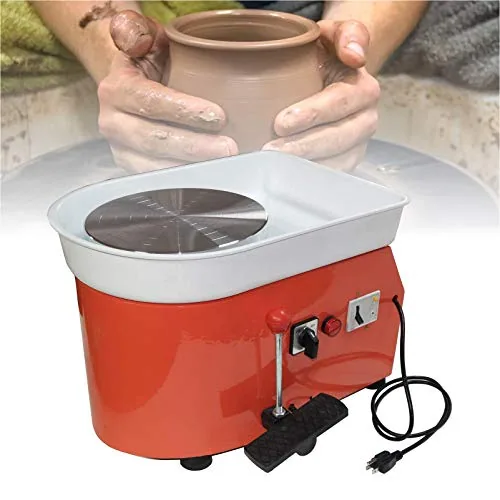
HTTMT 25cm 250W Electric Pottery Wheel
- Motor
- 250W brushless
- Wheel head
- 25cm
- Speed
- 0-300 rpm
Best for Small home setups
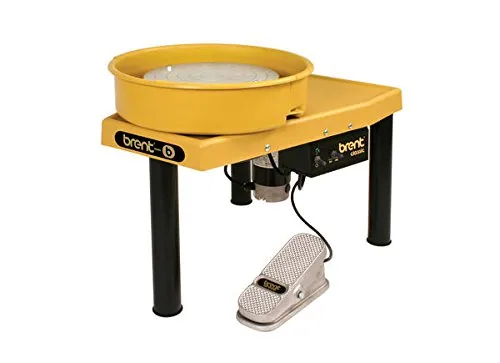
Brent Model B Pottery Wheel
- Wheel head
- 12 inches
- Centering capacity
- 150 lbs. continuously
- Reverse
- Reversible electronic speed control
Best for Long-term home or studio use
Browse every model in the pottery wheels category, or filter by beginner-friendly picks.
How we compared
We compared manufacturer listings only. We did not throw on or measure these wheels. Missing specs are marked "not listed", and listings change, so check the current one before you buy.