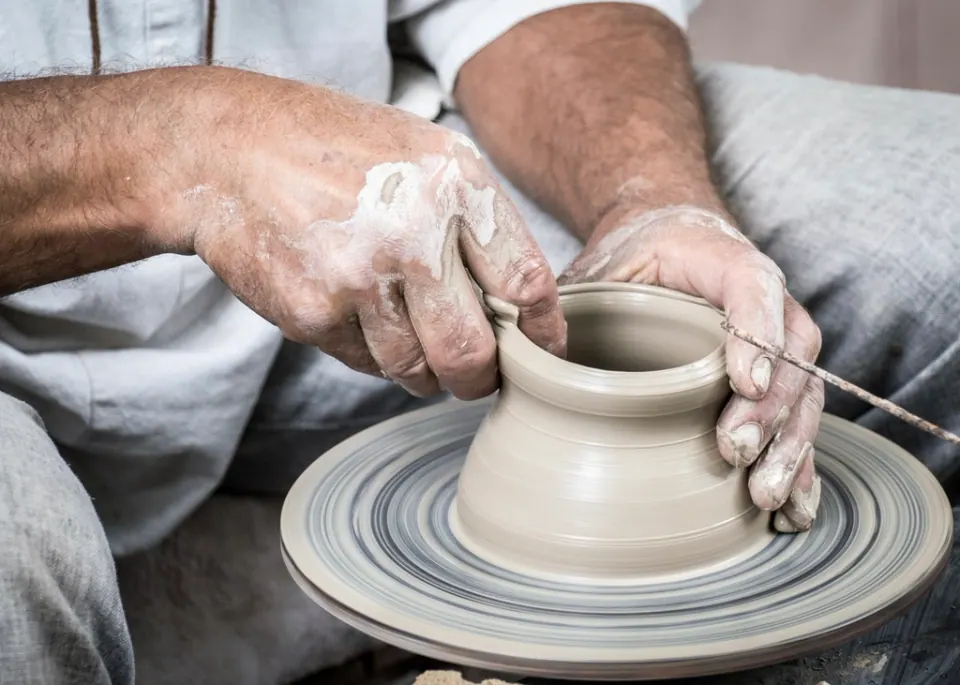
- Speedball vs Shimpo in our catalogue comes down to three wheels: Speedball's Artista (11", 1/3 HP, 25 lb) and Clay Boss (14", 0.5 HP, up to 100 lb), and Shimpo's VL-Whisper (14", brushless DC motor).
- Speedball's listings give more hard numbers: horsepower, rpm range, centering capacity and a 10-year warranty on the Clay Boss.
- Shimpo's VL-Whisper listing leads with quiet running, a maintenance-free brushless motor and a controller that holds speed under load, but it does not list horsepower, rpm or centering capacity.
- Short on space or throwing small pieces? The Artista. Want a full-size wheel with published numbers? The Clay Boss. Noise is the priority? The VL-Whisper, after you confirm the missing specs with Shimpo.
Speedball vs Shimpo is one of the first match-ups people search once they decide a toy wheel will not do. Both brands make wheels that show up in school art rooms and community studios, and both sell full-size models you can put in a spare room or garage.
The catch is that the listings are not equally detailed. Speedball publishes motor power, speed range and centering capacity for both of its wheels. Shimpo's VL-Whisper listing describes the motor and controller but leaves out most numbers. This comparison sticks to what is listed, marks every gap as "not listed", and tells you what to ask before you buy.
Shimpo
One full-size 14" wheel built around a quiet brushless DC motor, plus a banding wheel
Picks from each side
Speedball
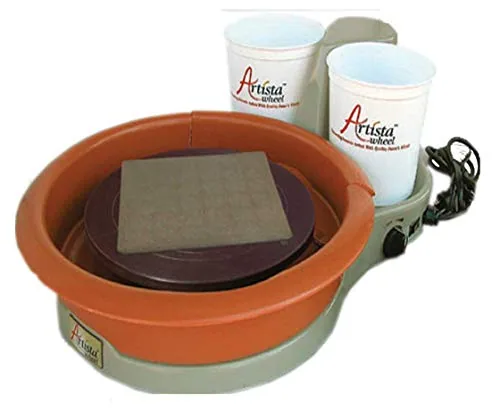
Speedball Artista Potter's Wheel, 1/3 HP, 11"
- Motor
- 1/3 HP
- Wheel head
- 11"
- Centering capacity
- 25lb
Best for Home studios with limited space
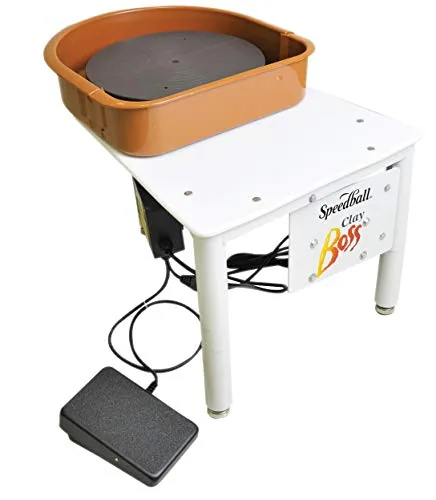
Speedball Clay Boss Pottery Wheel, 0.5 HP, 14"
- Motor
- .5 HP
- Wheel head
- 14"
- Centering capacity
- up to 100lb
Best for Committed hobbyists throwing larger work
Shimpo
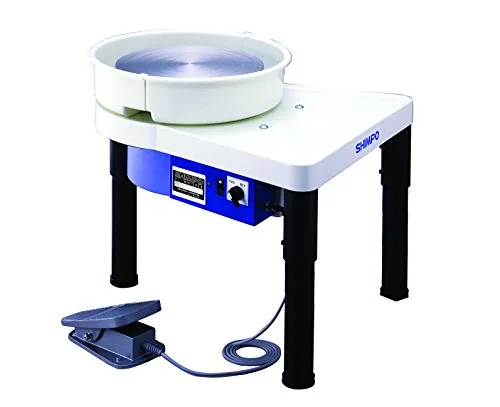
Shimpo VL-Whisper Potter's Wheel
- Motor
- Brushless DC
- Wheel head
- 14 inches
- Reverse
- Reversible
Best for Potters who want a quiet full-size wheel
Speedball vs Shimpo at a glance
Start with the spec sheet. The table below pulls the exact listed values for all three wheels. A dash means the listing does not give that figure.
| Product | Wheel head | Motor | Speed | Centering capacity | Reverse | Control | Controller |
|---|---|---|---|---|---|---|---|
| Speedball Artista Potter's Wheel, 1/3 HP, 11" | 11" | 1/3 HP | 0-220 rpm | 25lb | — | Variable speed hand control | — |
| Speedball Clay Boss Pottery Wheel, 0.5 HP, 14" | 14" | .5 HP | 0-240 rpm | up to 100lb | Reversing plug | — | — |
| Shimpo VL-Whisper Potter's Wheel | 14 inches | Brushless DC | — | — | Reversible | — | Electronic, maintains speed under load |
Specs as listed by the maker or seller; check the listing before you buy.
What each wheel brings, side by side
| Speedball Artista | Speedball Clay Boss | Shimpo VL-Whisper | |
|---|---|---|---|
| Format | Tabletop, portable | Floor wheel | Floor wheel |
| Wheel head | 11" | 14" | 14" |
| Motor | 1/3 HP | 0.5 HP | Brushless DC (HP not listed) |
| Speed range | 0–220 rpm | 0–240 rpm | ~ "Broad" (rpm not listed) |
| Centering capacity | 25 lb | Up to 100 lb | ✗ Not listed |
| Holds speed under load | ~ Not stated | ✓ Load-sensing control | ✓ Electronic controller |
| Reverse | ✗ Not listed | ✓ Reversing plug | ✓ Reversible |
| Foot pedal | ✗ Hand control | ✓ Foot pedal | ~ Not listed |
| Splash pan | ✓ Two-part | ✓ Two-part | ~ Not listed |
| Warranty in listing | ✗ Not listed | ✓ 10 years | ✗ Not listed |
| Quiet running claim | ✓ "Very little noise" | ~ Not stated | ✓ Core selling point |
Source: Manufacturer listing data, Clay at Home catalogue
How big a pot can each wheel center?
Centering capacity is the weight of clay a wheel can keep turning while you push on it. It is the closest thing to a horsepower rating that potters actually feel. Most beginners throw mugs and bowls from 1 to 3 lb balls of clay, so even 25 lb is plenty at first. The number matters later, when you want big platters, tall vases or several pieces off the hump.
Listed centering capacity
Pounds of clay, as each listing states it. Shimpo VL-Whisper: not listed, so it is not charted.
Brent and VEVOR are on the chart for scale only, so you can see where the two Speedball wheels sit. The Clay Boss is in full-size studio territory. The Artista is a lighter-duty wheel. It still handles the 1 to 5 lb balls most home potters throw, but it is not built for 20 lb platters.
Motor and speed control: horsepower vs brushless DC
Speedball tells you the horsepower: 1/3 HP on the Artista, 0.5 HP on the Clay Boss. The Clay Boss adds what Speedball calls load-sensing control, which keeps the wheel head at the speed you set when you lean into the clay. That is exactly what you want while centering. A wheel that bogs down under pressure makes centering harder than it needs to be.
Shimpo describes the VL-Whisper motor differently. It is a brushless DC motor, which the listing calls smooth, quiet, powerful and maintenance-free. Its electronic controller "maintains desired speed under all load conditions". In practice, that is the same job the Clay Boss's load-sensing control does. Shimpo just does not give a power figure, so you cannot compare the two on paper.
Hand lever or foot pedal?
The Artista uses a variable-speed hand control. The Clay Boss has a foot pedal. A pedal leaves both hands on the clay, and most teachers start students on one. A hand lever works fine once you learn to set your speed and leave it, and it keeps the wheel compact on a table. The VL-Whisper listing does not say how speed is controlled, so check the listing photos or Shimpo's manual.
Reverse for left-handers and trimming
Both full-size wheels reverse. The Clay Boss does it with a reversing plug, the VL-Whisper with a reversibility feature Shimpo lists for left- and right-handed users. The Artista listing does not mention reverse. If you throw left-handed or like trimming in the other direction, put the Artista on the "check first" list.
Noise, size and the room you have
If you throw in an apartment or late at night, noise matters as much as power. Shimpo built the VL-Whisper's whole pitch around quiet running: the name, the brushless motor and the low-maintenance drive. Speedball says the Artista "runs smoothly with very little noise". Neither listing gives a decibel figure, so neither claim can be checked against a number.
Footprint is easier. The Artista's listed size is 30" L x 22" W, and it is sold as lightweight, portable and easy to store. It suits a sturdy table you clear after each session. The Clay Boss and VL-Whisper are floor wheels that need a permanent spot. For small-space setups, see our small space and apartment hub and the guide to pottery in an apartment, which covers splash, slurry and the sink.
Beyond the wheel: what else each brand offers
Speedball's catalogue presence here goes past wheels. You will also find 12" Medex and plastic bats and opaque underglazes that Speedball lists as lead-free and dinnerware-safe when used and fired as directed. If you like buying into one system, that makes Speedball an easy brand to stick with for a first studio.
Shimpo's second item in our catalogue is the BW-25H banding wheel. Its listing gives no specs beyond the model number, so check the size on the listing before you order. A banding wheel is a hand-turned turntable for decorating, glazing and hand-building, not a throwing wheel.
Neither brand's extras change the main decision. Pick the wheel first. Bats, splash pans and turntables from other makers fit most wheels. Our best wheel bats roundup covers pin spacing, and the best banding wheels list compares sizes and load ratings.
Mistakes to avoid when choosing between them
- Buying on brand name alone. Both brands are respected, but the listed numbers differ a lot. A 25 lb tabletop wheel and a 100 lb floor wheel are different tools.
- Assuming a missing spec is a good one. "Not listed" means unknown. Ask for the VL-Whisper's centering capacity and the Artista's reverse function before you treat them as equal to the Clay Boss.
- Ignoring splash and cleanup. A wheel without a good splash pan sprays slurry across the room. Both Speedball wheels list a two-part pan; for the VL-Whisper, check what ships in the box.
- Overbuying for year one. If you are not sure you will keep throwing, a lighter wheel and a few classes may teach you more than the biggest motor. Our best pottery wheel for beginners list covers that step.
- Forgetting the rest of the studio. A wheel is one line on the list. The home studio checklist shows what else each stage needs.
Who should choose which wheel?
| Your situation | Artista | Clay Boss | VL-Whisper |
|---|---|---|---|
| First wheel, small room | ✓ Good fit | ~ Big for a small room | ~ Big for a small room |
| Plan to throw large pieces | ✗ 25 lb limit | ✓ Up to 100 lb | ~ Capacity not listed |
| Want published specs | ✓ Most listed | ✓ Most listed | ✗ Few numbers listed |
| Quiet operation is the priority | ~ "Very little noise" | ~ Not stated | ✓ Brand's core claim |
| Left-handed thrower | ~ Reverse not listed | ✓ Reversing plug | ✓ Reversible |
| Long warranty matters | ✗ Not listed | ✓ 10 years | ✗ Not listed |
If you are still weighing a cheaper option against these, read VEVOR vs Speedball. If you are looking at Brent too, see Brent vs Speedball.
Other options worth a look
Not sold on either brand? These three wheels from other makers cover the range above and below. Brent's Model B lists the highest centering capacity in our catalogue. VEVOR's 450W tabletop ships with both 11" and 14" heads. OceanWings adds a 14" head with height adjustment.
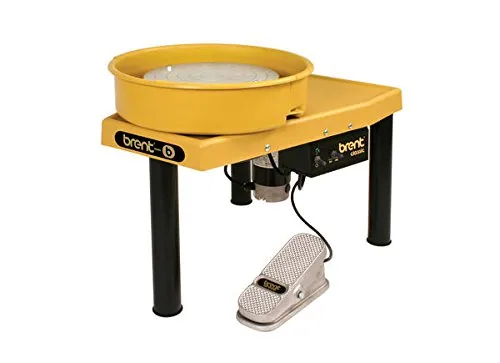
Brent Model B Pottery Wheel
- Wheel head
- 12 inches
- Centering capacity
- 150 lbs. continuously
- Reverse
- Reversible electronic speed control
Best for Long-term home or studio use
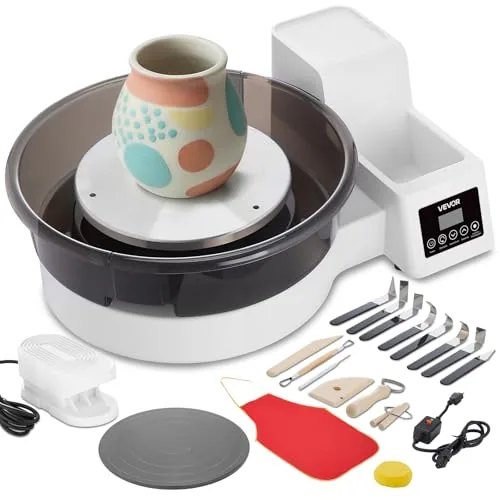
VEVOR 450W Tabletop Pottery Wheel, 11" & 14" Heads
- Motor
- 450W
- Wheel head
- 11" and 14" turntables
- Centering capacity
- up to 11 lbs of clay
Best for Beginners setting up a tabletop wheel at home
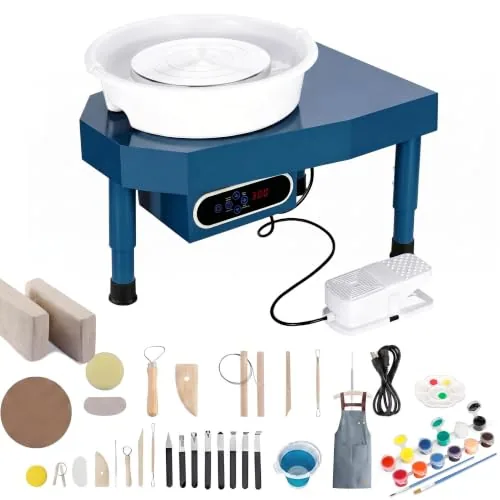
OceanWings 14" 450W Height-Adjustable Pottery Wheel
- Motor
- 450W stepless
- Wheel head
- 35CM aluminum alloy
- Speed
- 0-320rpm
Best for Beginners who want a larger wheel head
For the full field, including smaller tabletop wheels, see best pottery wheels for home use or browse every model in the pottery wheels category.
How we compared
We compared manufacturer listings and published specs only. We did not throw on, measure or noise-test these wheels. Where a listing leaves out a figure, we say "not listed" instead of filling the gap from memory or third-party claims. Check the current listing before you buy, because sellers update specs and bundles.