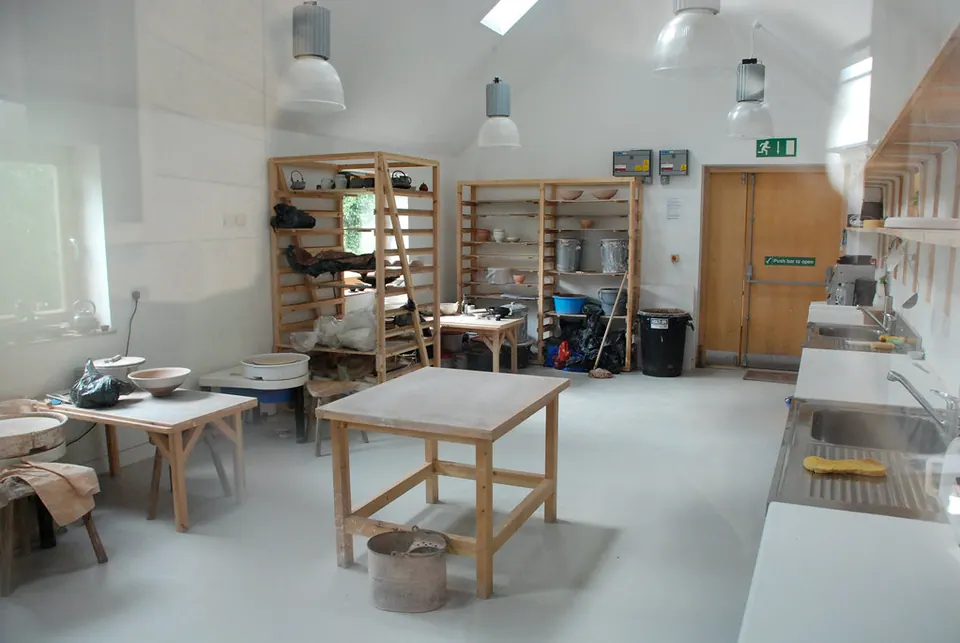
- Start with a tabletop wheel or hand-building. Both fit on a sturdy table and pack away after a session.
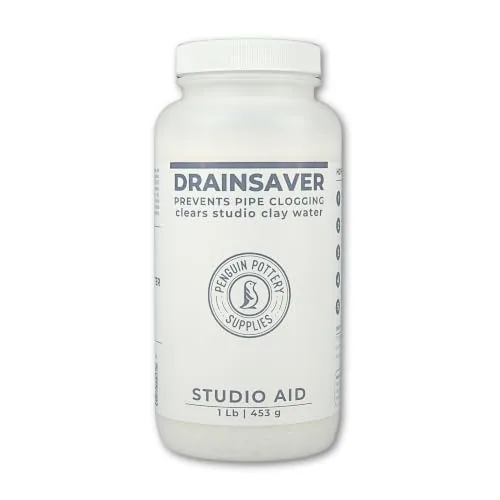
- Never rinse clay down the drain. Use a three-bucket rinse system, a settling powder or an under-sink sediment trap.
- Control dust by cleaning wet after every session; never dry sweep. Put a washable mat or vinyl sheet under your work area.
- Most apartment potters fire elsewhere: a community studio, a paint-your-own-pottery shop or a local potter who rents kiln space.
- A 120V kiln is possible only if your lease allows it, you have a suitable room and a licensed electrician confirms the circuit.
Pottery in an apartment works well if you plan for three things: space, water and firing. Clay is messy but manageable when you keep it wet, keep it off the carpet and keep it out of the plumbing. Noise is rarely a problem; most tabletop wheels are quieter than a blender.
This guide covers how to choose a small-space wheel, how to set up a corner that cleans up in minutes, how to deal with water and dust without a utility sink, and how to get your work fired. It also lists the mistakes that annoy neighbors and landlords.
Can you do pottery in an apartment?
Yes. Many potters throw and hand-build in apartments and fire their work at a nearby studio. The two hard limits are firing and drains. A kiln needs a suitable room, ventilation and a proper circuit, which most rentals do not have. And clay water poured down a sink can clog pipes, which landlords notice.
What fits in an apartment
| Activity | Apartment-friendly? | What it takes |
|---|---|---|
| Hand-building (pinch, coil, slab) | ✓ Yes | A table, a board and a few tools |
| Air-dry or polymer clay | ✓ Yes | No kiln at all; polymer cures in a home oven per the maker |
| Tabletop wheel throwing | ✓ Yes | A sturdy table, a splash pan and a bucket system |
| Full-size floor wheel | ~ Sometimes | Floor space and a washable floor |
| Glazing | ~ Usually | Brush-on glazes, done where you fire or carried there raw |
| Firing in a 120V kiln | ~ Rarely | Lease permission, ventilation, clearance and an electrician's OK |
| Firing in a 240V kiln | ✗ Usually not | A dedicated 240V circuit and a kiln room |
Check your lease before you start. Most leases do not mention pottery, but some restrict appliances, open flames or alterations such as an under-sink trap. A quick note to the landlord can save a dispute later.
Choosing a wheel for a small space
Tabletop wheels sit on a table, weigh much less than floor wheels and store in a closet. The trade-off is power: a smaller motor slows down when you center a big lump of clay. For mugs, bowls and small vases, a tabletop wheel is plenty.
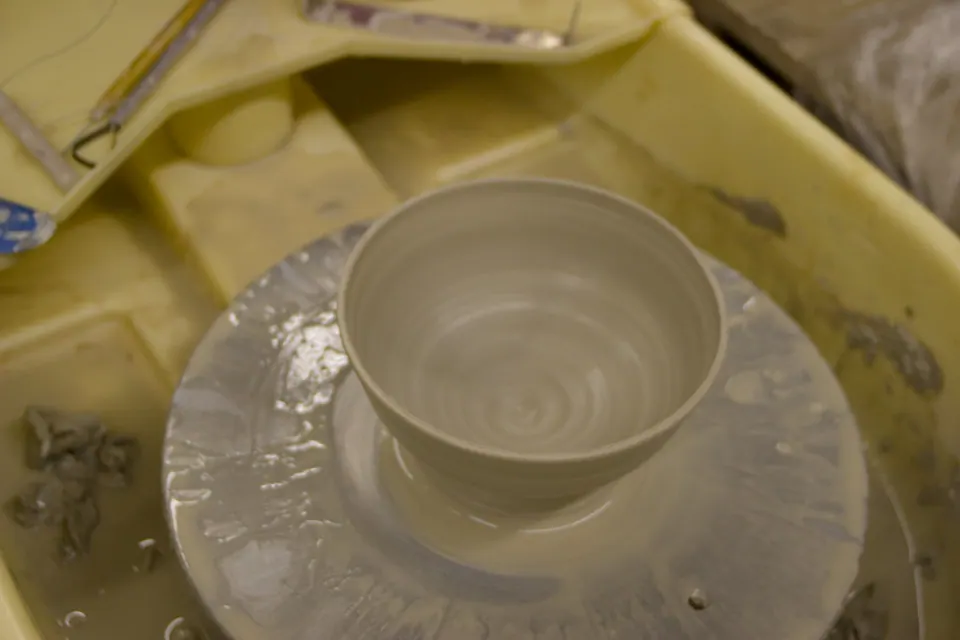
Motor power of compact wheels in our catalogue
Watts as listed by each maker. Bigger numbers handle more clay; centering capacity is not listed for every model.
The Speedball Artista lists its motor as 1/3 HP rather than watts, with an 11-inch head, 25 lb centering capacity and a 30 x 22 inch footprint, and its listing pitches it as portable. Mini wheels with 6-inch heads and air-dry clay are kits for kids and casual play, not tools for throwing stoneware.
| Product | Wheel head | Motor | Speed | Centering capacity | Noise |
|---|---|---|---|---|---|
| Speedball Artista Potter's Wheel, 1/3 HP, 11" | 11" | 1/3 HP | 0-220 rpm | 25lb | — |
| VEVOR 450W Tabletop Pottery Wheel, 11" & 14" Heads | 11" and 14" turntables | 450W | 30-300 RPM | up to 11 lbs of clay | — |
| Alldeer PW103MAX 11" 350W Pottery Wheel Kit | 11 inch | 350W brushless | 300RPM (foot pedal) | 15kg clay loads | — |
| HTTMT 25cm 250W Electric Pottery Wheel | 25cm | 250W brushless | 0-300 rpm | — | — |
| SKIRFY 9.5" Pottery Wheel Kit with Foot Pedal | 9.5-inch | 60W | 0-160 RPM | up to 6.6 lb (3 kg) | less than 60 dB |
| Alldeer PW-104 7" Compact Pottery Wheel Kit | 7" metal turntable | — | 0-250 RPM | — | — |
Specs as listed by the maker or seller; check the listing before you buy.
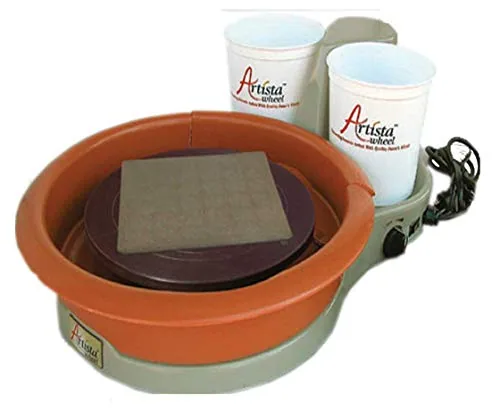
Speedball Artista Potter's Wheel, 1/3 HP, 11"
- Motor
- 1/3 HP
- Wheel head
- 11"
- Centering capacity
- 25lb
Best for Home studios with limited space
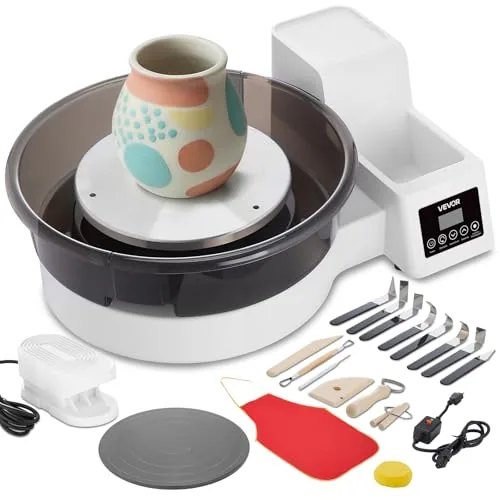
VEVOR 450W Tabletop Pottery Wheel, 11" & 14" Heads
- Motor
- 450W
- Wheel head
- 11" and 14" turntables
- Centering capacity
- up to 11 lbs of clay
Best for Beginners setting up a tabletop wheel at home
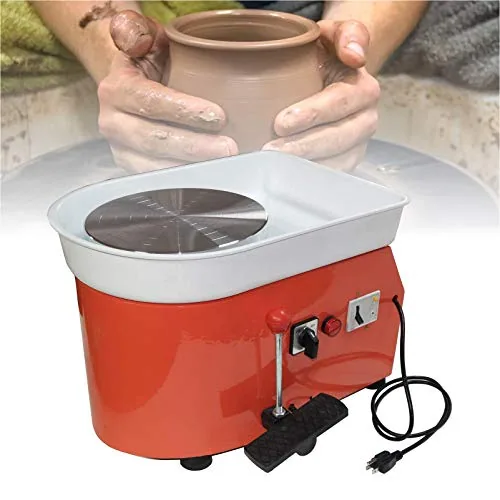
HTTMT 25cm 250W Electric Pottery Wheel
- Motor
- 250W brushless
- Wheel head
- 25cm
- Speed
- 0-300 rpm
Best for Small home setups
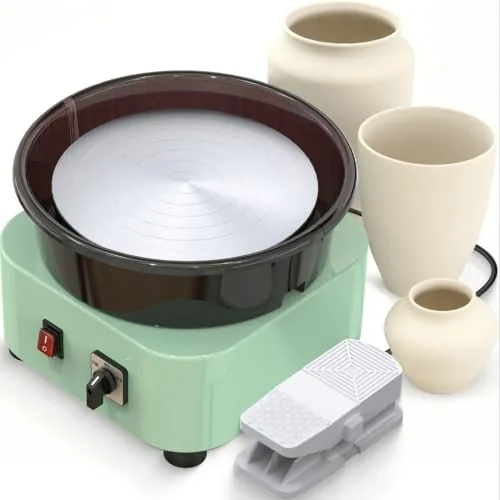
Alldeer PW103MAX 11" 350W Pottery Wheel Kit
- Motor
- 350W brushless
- Wheel head
- 11 inch
- Centering capacity
- 15kg clay loads
Best for Adult beginners wanting a full-size head
- Noise: only a few listings give a decibel figure. SKIRFY lists under 60 dB for its 9.5-inch kit wheel. Rubber feet or a folded towel under the wheel cut vibration through the floor.
- Splash pan: look for a one- or two-piece pan that lifts off so you can carry it to the bucket, not the sink.
- Footprint: measure your table and closet before you buy. A wheel that is easy to put away gets used more.
For full picks, see the best tabletop pottery wheels and the best pottery wheel for beginners.
How to set up an apartment pottery corner
A good small-space setup takes about ten minutes to lay out and the same to pack away. The goal is that clay stays inside one zone that you can wipe clean.
- Pick a hard floor near light
Choose a spot on tile, vinyl or sealed wood, close to a window if you can. Avoid carpet; dried clay grinds into it. If carpet is your only option, lay a large vinyl or rubber mat that you can wipe and roll up.
- Use a sturdy table at the right height
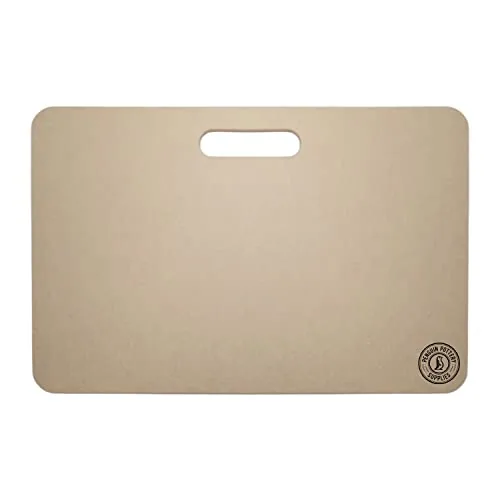
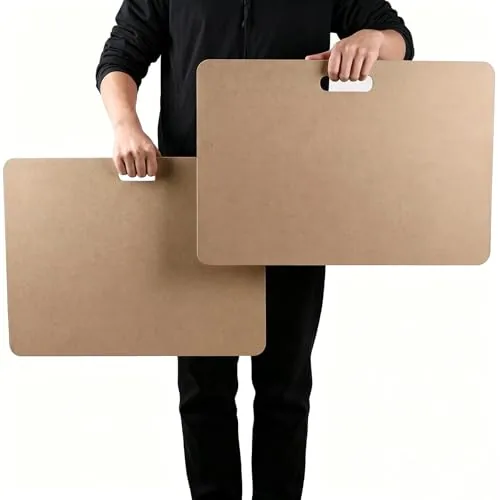
The table must not wobble when the wheel runs. Many potters put the wheel on a table that sits slightly lower than a dining table so they can lean over the clay. Put a canvas sheet or a wedging board on the table for hand-building.
- Set up the three-bucket rinse
Keep three buckets: one for throwing water, one for a first rinse of hands and tools and one for a clean final rinse. Clay settles to the bottom. Pour off the clear water into the next session's bucket and reclaim the sludge.
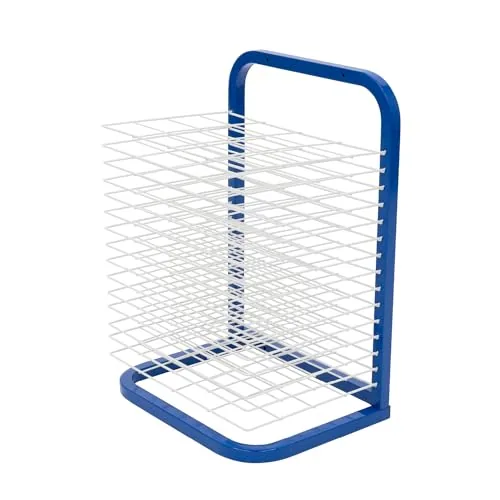
- Add a drying shelf
Pieces need somewhere to dry slowly where nobody bumps them. A wall-mounted or tabletop drying rack keeps work off the counter.
- Keep a small tool caddy
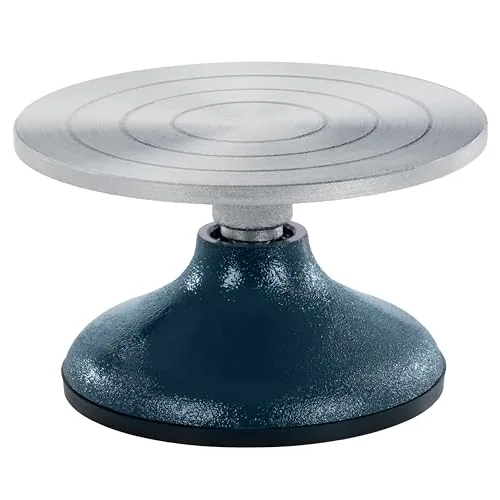
A banding wheel, a sponge, a wire, a needle tool and a rib cover most small projects. A 7-inch banding wheel takes little space and doubles as a turntable for decorating.
- Store clay sealed
Keep clay in its bag inside a lidded bin. Wrap work in progress in plastic. Damp clay can grow harmless mold, and a lid keeps both moisture and smell inside.

Water, drains and dust without a utility sink
This is where apartment pottery succeeds or fails. Clay particles do not dissolve. They settle in sink traps and pipes and harden, and a plumber's visit is the classic first-year potter mistake.
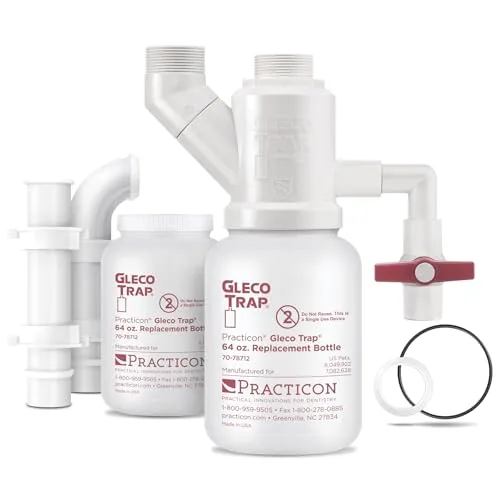
Gleco Clay & Plaster Sink Trap Kit, 64 oz
- Capacity
- 64 oz
- Type
- Under-sink sediment trap
Best for Rinsing clay in a home sink
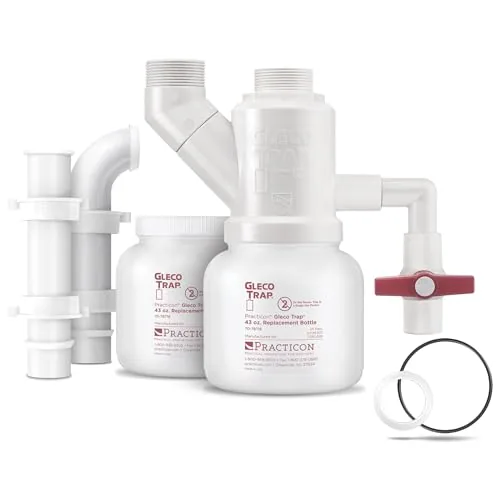
Gleco GT-43 Sediment Trap System
- Type
- Sediment trap kit
Best for Sink setups needing a sediment trap
Penguin Pottery DrainSaver Clay Settler, 1 lb
- Size
- 1 lb
- Dose
- 1 tsp per 1.5 gallons
- Settling time
- About 40 minutes
Best for Bucket rinsing without a sink trap
Dust is the other issue. Dry clay contains crystalline silica, and OSHA sets a workplace limit of 50 µg/m³ for the respirable dust averaged over 8 hours. In an apartment, the same dust ends up in shared air and on furniture.
- Clean wet at the end of each session: damp sponge on the table, damp mop on the floor. Never dry sweep.
- Trim at leather-hard rather than sanding bone-dry pieces.
- Wear an apron that stays in the pottery corner and wash it on its own.
- A HEPA air purifier is a useful backup in a small room, but it does not replace wet cleaning.
- For rare dusty jobs, such as mixing powdered glaze, use a NIOSH-approved respirator with P100 filters, or do the job at a community studio.
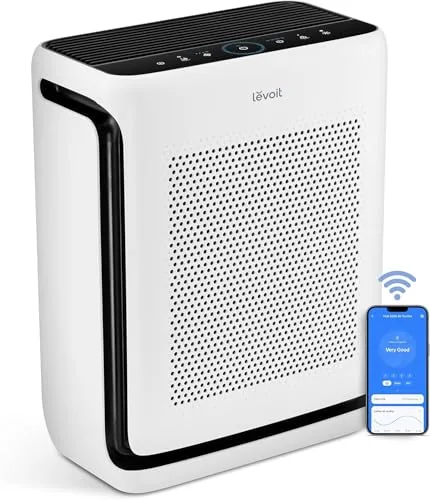
LEVOIT Vital 200S-P Smart HEPA Air Purifier
- Size
- 15.6"D x 8.5"W x 19.8"H
- Room size
- Up to 1875 ft²
- CADR
- Smoke 250 CFM
Best for Ongoing airborne dust in a home studio

GVS Elipse P100 Dust Half Mask, S/M
- Filter rating
- P100
- Size
- Small-Medium
- Filters
- Replaceable, included
Best for A compact reusable dust mask
Read pottery studio safety for the full dust and ventilation picture.
How do you fire pottery when you live in an apartment?
Most apartment potters do not own a kiln. You have four realistic options.
- Community studio firing. Many studios fire members' and non-members' work for a fee, often by shelf or by size. Ask which clay and cone they fire to and buy a matching clay.
- Paint-your-own-pottery shops. Some will fire outside work in their low-fire kilns. Confirm the cone first.
- A local potter or school. Potters with home kilns sometimes rent space in a load.
- No kiln at all. Air-dry and polymer clay skip firing entirely. See no-kiln pottery and how to seal air-dry clay.
Carry greenware carefully: bone-dry pieces are fragile. Wrap them in soft cloth or bubble wrap in a sturdy box, and transport bisque and glazed work separately.
What about a 120V kiln?
Small 120V kilns exist, and on paper they plug into a household outlet. In practice, kilns are continuous loads, and under the NEC logic kiln makers cite a continuous load should stay within 80% of the circuit rating. That is 12 amps on a 15-amp circuit and 16 amps on a 20-amp circuit.
120V kilns in our catalogue vs the 80% rule
| Kiln | Listed amps | 15 A circuit (12 A at 80%) | 20 A circuit (16 A at 80%) | Listed max temp |
|---|---|---|---|---|
| Paragon Xpress Q11A | 12 A | ~ At the limit | ✓ Within 80% | 2,350 °F |
| Paragon SC2 | 14 A | ✗ Over 80% | ✓ Within 80% | Not listed |
| Paragon Xpress E12A | 15 A | ✗ Over 80% | ✓ Within 80% | 2,000 °F |
Even when the amps work, a kiln needs clearance from walls, a non-combustible floor, ventilation for firing fumes and a room nobody sleeps in during a firing. In most apartments those are harder to meet than the electrical side. Never wire a circuit yourself; a licensed electrician and your landlord both need to agree.
Can I plug in my kiln? Outlet checkerCheck a kiln's amps against your outlet before you buy.For more, read kiln electrical requirements, 120V vs 240V kilns and do you need a kiln?
Mistakes apartment potters make
- Washing clay down the sink. The most expensive mistake. Use buckets or a trap.
- Working on carpet. Clay grinds in and dries to dust. Use a washable mat.
- Dry sweeping. It spreads dust through the apartment. Clean wet.
- Buying a clay before finding a firing service. Ask the studio which cone they fire, then buy clay to match.
- Over-sizing the wheel. A big floor wheel you cannot store ends up unused. Measure first.
- Drying pieces next to a heater. Fast, uneven drying causes cracks; see why pottery cracks.
- Running a kiln on an extension cord. Never do this. Kilns need a properly rated outlet and circuit.
For gear chosen for tight spaces, browse the small-space pottery hub and pottery wheels.
Can I plug in my kiln? Outlet checkerCheck a kiln’s amps or watts against a 15, 20, 30, 40 or 50 A circuit using the 80% continuous-load rule,…Home studio checklist by stageAn interactive home pottery studio checklist in four stages: no-kiln start, first wheel, home kiln and small…