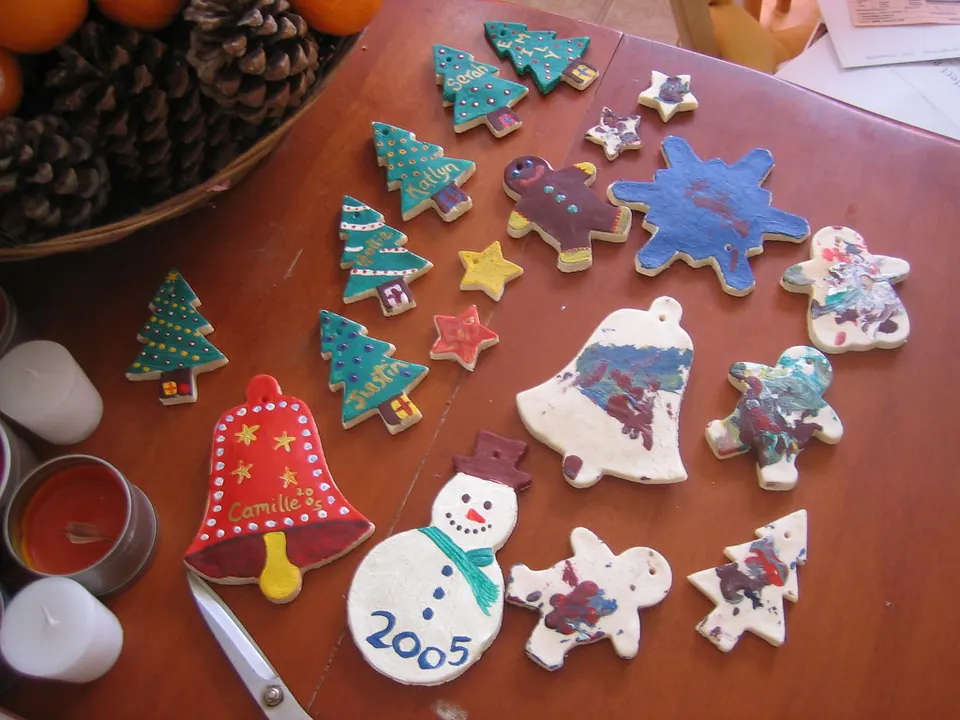
- Seal only when the piece is completely dry, usually after 24 to 72 hours depending on thickness, humidity and the maker's directions.
- The usual order is sand, prime or base coat, paint, then two or three thin coats of sealer, letting each coat dry.
- Water-based acrylic varnish and water-based polyurethane are the easiest sealers to use indoors. Decoupage medium is fine for decor that stays dry.
- Sealed air-dry clay is water-resistant, not waterproof. Do not use it for food, drinks or holding water.
- If you want functional dishes, you need kiln-fired clay and a glaze, or a studio that fires for you.
Knowing how to seal air-dry clay is what turns a fragile trinket dish into something that survives dusting, a humid bathroom shelf or a child's handling. Unsealed air-dry clay absorbs moisture, softens when wet and can crack or chip easily. A sealer adds a protective film over the surface.
This guide covers when to seal, which sealers work, a step-by-step process, how to get a glossy or matte finish and the limits you should know about. The short version: seal for durability and looks, not to make clay food-safe or watertight.
Why seal air-dry clay at all?
Air-dry clay hardens as water evaporates. It does not go through the chemical change that a kiln causes in pottery clay, so the dried piece stays porous and can re-absorb water. Some air-dry clays will soften again if they get wet, which is why many potters can even reclaim them.
A sealer does three useful things:
- Blocks moisture. It slows down water absorption from humid air, splashes and damp cloths.
- Protects paint. Acrylic paint on bare clay rubs off and fades; a top coat holds it in place.
- Adds finish. You choose matte, satin or gloss, and you get a surface that can be wiped clean.
Which sealer should you use?
The best sealer depends on how much moisture and handling the piece will see. Water-based products are the easiest choice indoors because they clean up with water and have less odor. Use solvent-based or spray products outside or in a well-ventilated room, and follow the label.
Common sealers for air-dry clay
| Sealer | Finish options | Moisture protection | Ease of use | Best for |
|---|---|---|---|---|
| Decoupage medium (e.g. Mod Podge) | Matte, satin, gloss | ~ Light | ✓ Very easy, brush on | Decor, kids' projects |
| Water-based acrylic varnish | Matte, satin, gloss | ~ Moderate | ✓ Easy, brush on | Painted pieces, ornaments |
| Water-based polyurethane | Matte, satin, gloss | ✓ Good | ✓ Easy, brush on | Pieces handled often, trinket dishes |
| Spray acrylic sealer | Matte, gloss | ~ Moderate | ~ Use outdoors | Textured pieces, fast even coats |
| Two-part epoxy resin | High gloss | ✓ Strong surface film | ✗ Fiddly, measured mix | Coasters, jewelry trays |
| Shellac | Gloss, amber tone | ~ Moderate | ~ Brush on, alcohol cleanup | Painted pieces; AMACO suggests it for its air-dry clay |
| Wax or oil | Soft sheen | ✗ Minimal | ✓ Easy | Unpainted, rustic looks only |
Water-based polyurethane is a good default if you want one product for most projects. If you paint with acrylics, a matte or satin acrylic varnish keeps colors looking like paint rather than plastic. Some all-in-one kits include a varnish: the Sculpd listing calls its varnish a waterproof gloss varnish, and the Pott'd kit includes a sealant. The POTTREATIVE listing describes its matte varnish as waterproof too. Treat “waterproof” on a kit as “water-resistant” and check the instructions for how many coats it expects.
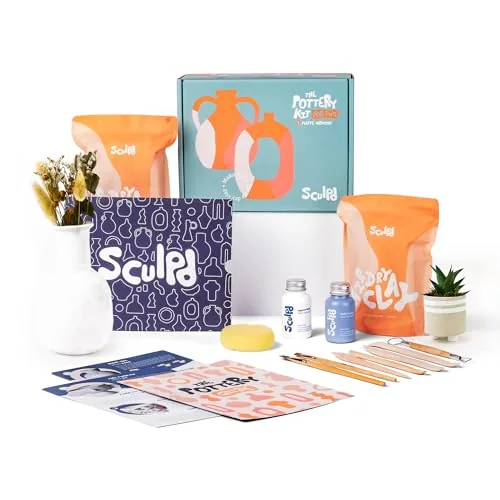
Sculpd Air Dry Clay Pottery Kit for Two
- Pieces
- 5-piece tool set
- Clay amount
- 4 lbs air-dry clay
- Includes
- Clay, tools, brushes, gloss varnish, sponge, guide
Best for A shared beginner project

Pott'd Air Dry Clay Pottery Kit for Adults
- Clay amount
- 2x 1kg air-dry clay
- Includes
- Clay, tools, paints, brushes, sealant, guide
Best for A relaxed first try at clay
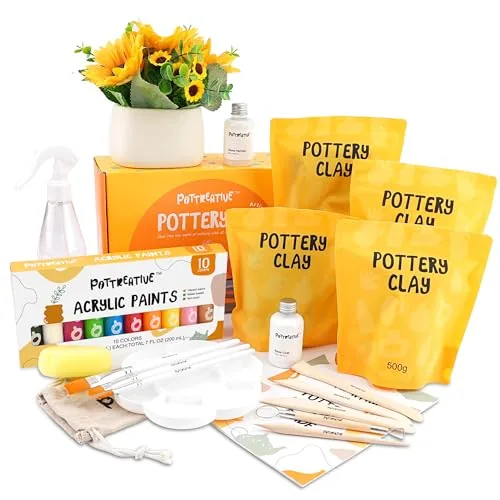
POTTREATIVE Air Dry Clay Pottery Kit for Adults
- Clay amount
- 4 × 500g air-dry clay
- Includes
- Tools, base coat, matte varnish, 3 brushes, sponge, guide
- Ages
- 12 and up
Best for Adult beginners and gifts

How to seal air-dry clay step by step
This process works for most air-dry clays, including natural earth clays, stone-type clays and paper clays. Always read the clay maker's drying and finishing directions first; they know their clay best.

- Let it dry completely
Dry the piece at room temperature away from direct heat until it is fully hard and evenly light in color. Thin pieces may be ready in a day; thick pieces can take several days. Activa's listing, for example, says a ¼-inch-thick piece of its Supreme clay dries in 24 hours. Turn flat pieces over partway through so the bottom dries too. Sealing damp clay traps moisture and can cause cracks or a cloudy finish.
- Sand and smooth
Smooth rough edges with fine sandpaper or a sanding sponge. Do this outdoors or over a damp towel and wipe up dust with a damp cloth, not a dry brush. Wipe the piece with a barely damp sponge to remove dust before you paint.
- Fix cracks first
Fill hairline cracks with a paste made from the same clay and a little water, let it dry, then sand again. Sealer will not hide cracks; it often makes them more visible.
- Apply a base coat or primer
A thin coat of sealer, gesso or the kit's base coat closes the surface so paint goes on evenly and does not soak in. Let it dry fully.
- Paint
Use acrylic paint in thin layers. Several thin coats look better and dry faster than one heavy coat. Let the paint dry completely, ideally overnight.
- Seal in thin coats
Brush on the first coat of varnish or polyurethane in one direction with a soft brush, covering every surface including the bottom and inside. Let it dry as the label directs, then add a second and, for pieces that will be handled, a third coat. Thin coats avoid drips and tackiness.
- Let it cure
Dry to the touch is not the same as cured. Many sealers take days to reach full hardness. Leave the piece alone and do not stack it until the label's cure time has passed.
Can you make air-dry clay waterproof?
Not truly. A strong sealer such as polyurethane or epoxy resin makes the surface highly water-resistant, so a coaster can take a damp glass or a trinket dish can sit in a bathroom. But the clay underneath is still air-dry clay. If the film is scratched, chipped or worn, water reaches the clay and it can soften, stain or crack.
- Vases and planters: put a glass or plastic liner inside and fill that with water or soil, never the clay itself.
- Coasters: seal all sides with several coats, add felt or cork on the bottom and wipe them dry.
- Outdoor pieces: air-dry clay is a poor choice outside. Rain, frost and sun break down even sealed pieces over time.
- Bathroom decor: keep pieces away from direct splashes and dry them if they get wet.
If you want pieces that hold water, look at low-fire clay and a studio that will fire for you; do you need a kiln? explains the options, and air-dry vs polymer clay covers the main no-kiln alternative.
Choosing an air-dry clay that seals well
Most air-dry clays take sealer the same way, but texture and size matter. Fine-grained clays sand smoother and give a cleaner gloss finish. Stone-type and paper clays are lighter and can be carved after drying. Bulk packs make sense for classrooms and big projects.
Air-dry clay package sizes in our catalogue
Weight per pack as listed, in pounds
| Product | Clay body | Weight | Color |
|---|---|---|---|
| DAS Air-Hardening Modeling Clay, 2.2 lb, Terra Cotta | Air-hardening | 2.2 lb | Terra Cotta |
| Crayola Air Dry Clay, 2.5 lb Bucket, White | Natural white earth clay, air dry | 2.5-Pound | White |
| STAEDTLER FIMOair Air Dry Clay, White, 2.2 lb | Air dry modeling clay | 2.2 lb (1 kg) | White |
| Activa Supreme Air-Dry Clay, Terracotta, 3.3 lb | Self-hardening natural earth clay | 3.3 lbs (1.5 kg) | Terra Cotta |
| Sculpey Air-Dry Terra Cotta Clay, 2.2 lb | Air dry clay | 2.2 lb | Terra Cotta |
| Jovi Air Dry Clay, 4 x 2.2 lb, White | Air dry modeling paste | 8.8 lb (4 x 2.2lb) | White |
Specs as listed by the maker or seller; check the listing before you buy.
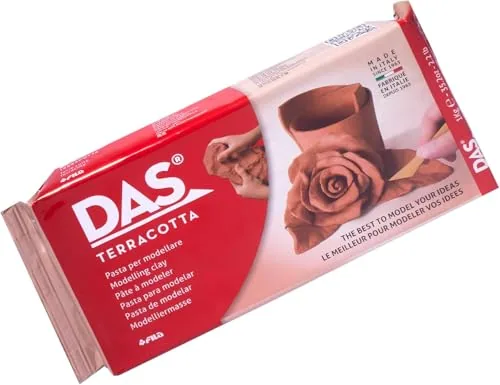
DAS Air-Hardening Modeling Clay, 2.2 lb, Terra Cotta
- Clay body
- Air-hardening
- Weight
- 2.2 lb
- Color
- Terra Cotta
Best for No-kiln sculpting
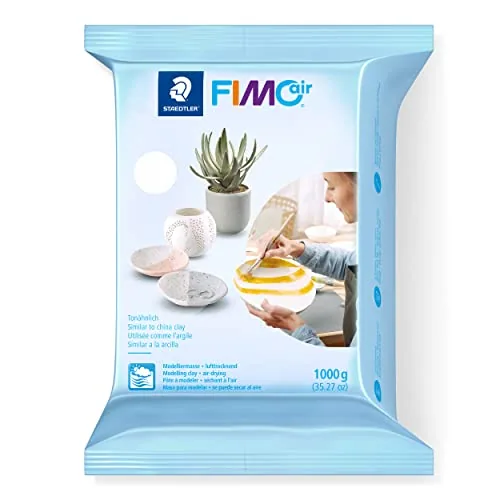
STAEDTLER FIMOair Air Dry Clay, White, 2.2 lb
- Clay body
- Air dry modeling clay
- Weight
- 2.2 lb (1 kg)
- Color
- White
Best for Pottery-style decor without a kiln
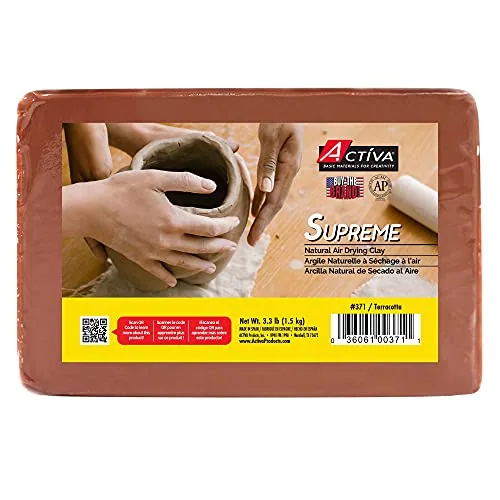
Activa Supreme Air-Dry Clay, Terracotta, 3.3 lb
- Clay body
- Self-hardening natural earth clay
- Weight
- 3.3 lbs (1.5 kg)
- Color
- Terra Cotta
Best for Artists working without a kiln
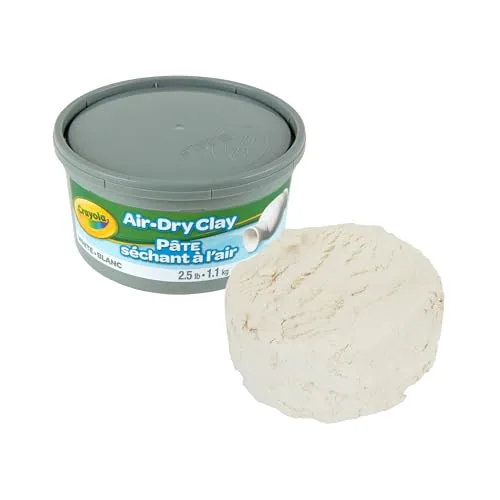
Crayola Air Dry Clay, 2.5 lb Bucket, White
- Clay body
- Natural white earth clay, air dry
- Weight
- 2.5-Pound
- Color
- White
Best for Kids and classroom projects
For full picks, read the best air-dry clay, compare DAS vs Crayola, or browse the no-kiln pottery hub. For classroom work, the kids and classroom hub lists clays with the ages the makers state.
Glossy, matte or natural: getting the finish you want
- High gloss: two or three coats of gloss polyurethane or a gloss varnish, or a thin pour of epoxy resin on flat pieces. Sand lightly with very fine paper between coats for a smoother shine.
- Satin: the most forgiving finish. It hides brush marks and fingerprints better than gloss.
- Matte: keeps a natural clay look. Matte varnish over unpainted clay protects without making it look plastic.
- Stone or ceramic look: paint with a matte or textured paint, then seal with matte varnish. A wash of diluted brown or gray paint wiped back before sealing adds depth.
- Natural, unpainted: a single coat of matte sealer keeps the color of terracotta or white clay while adding some protection.
Test any sealer on a scrap piece first. Some gloss finishes yellow over white clay with time, and some spray sealers react with certain paints.
Mistakes to avoid when sealing air-dry clay
- Sealing too early. Damp clay under a sealer can crack or turn cloudy. Wait until it is fully dry.
- One thick coat. Heavy coats drip, stay tacky and crack. Use thin coats and let each dry.
- Skipping the bottom. Unsealed bottoms pull in moisture from tables and shelves.
- Drying with heat. Ovens, hair dryers and radiators dry the outside first and cause cracks. Air-dry clay should dry at room temperature unless the maker says otherwise.
- Using it for food or drink. Sealed air-dry clay is decor only.
- Spraying indoors. Use spray sealers outside or with strong ventilation, and follow the label's safety directions.
- Expecting a glaze finish. Sealers sit on top of the clay. For true glaze, you need a kiln; see how to glaze pottery.