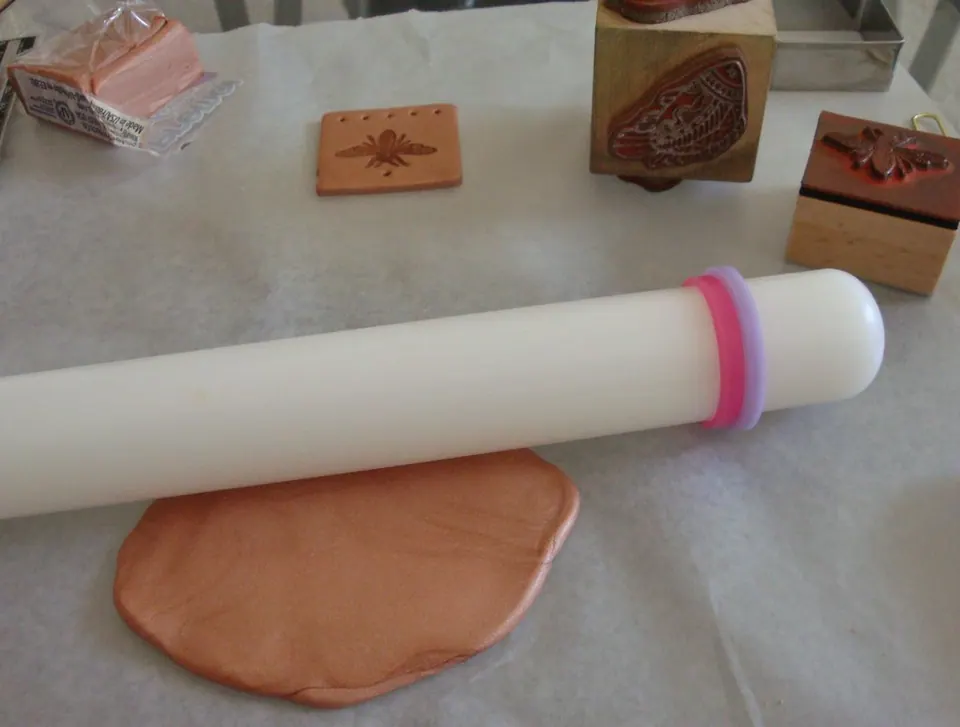
- Air-dry clay vs polymer clay: air-dry clay hardens as water evaporates, usually overnight or longer. Polymer clay stays soft until you bake it, typically 30 minutes in a home oven per the listings.
- Air-dry clay suits larger, lighter-duty pieces such as planters (decorative), trinket dishes, ornaments and sculpture, plus classrooms. Expect some shrinkage, and seal it against moisture.
- Polymer clay suits jewelry, beads, miniatures and color blending. It comes pre-colored, holds fine detail and is strong after baking, but it costs more per pound and needs an oven.
- Neither becomes ceramic, and neither is food-safe. For mugs and plates, you need kiln-fired clay.
Air-dry clay vs polymer clay is the first decision for anyone making clay pieces without a kiln. Both are sold side by side in craft stores, both come in kids' and artists' grades, and both can be painted. They behave very differently, though, from how you work them to how the finished piece holds up.
This explainer compares the two materials neutrally: how each one hardens, what the listings say about cure times, which projects each is good at, and the limits of both. Then it shows picks from each side from several brands, using only the specs each maker lists.
Air-dry clay
Hardens at room temperature; best for bigger pieces, planters, decor and classrooms
BrowsePolymer clay
Stays soft until baked in a home oven; best for jewelry, color work and fine detail
BrowsePicks from each side
Air-dry clay
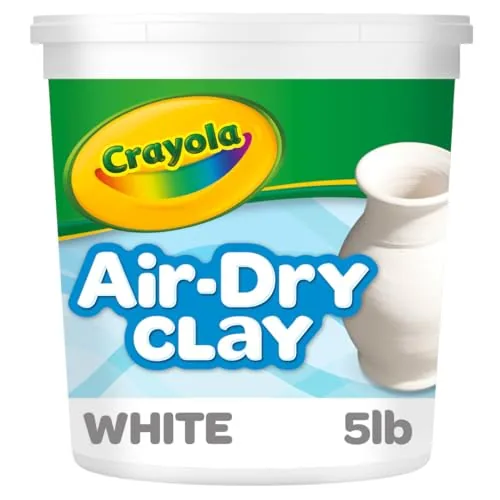
Crayola Air Dry Clay, 5 lbs, White
- Clay amount
- 5 pounds
- Container
- Re-sealable bucket
- Color
- White
Best for Classrooms and kids' projects
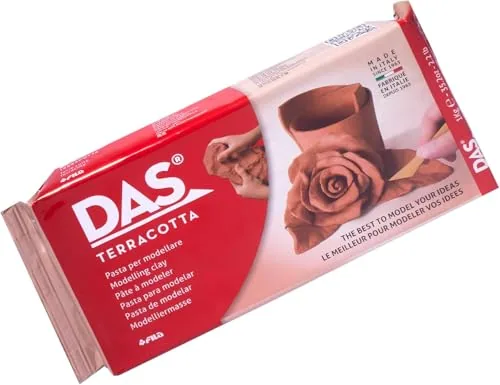
DAS Air-Hardening Modeling Clay, 2.2 lb, Terra Cotta
- Clay body
- Air-hardening
- Weight
- 2.2 lb
- Color
- Terra Cotta
Best for No-kiln sculpting
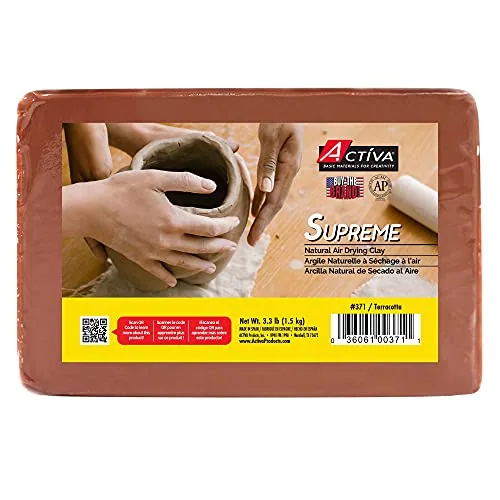
Activa Supreme Air-Dry Clay, Terracotta, 3.3 lb
- Clay body
- Self-hardening natural earth clay
- Weight
- 3.3 lbs (1.5 kg)
- Color
- Terra Cotta
Best for Artists working without a kiln
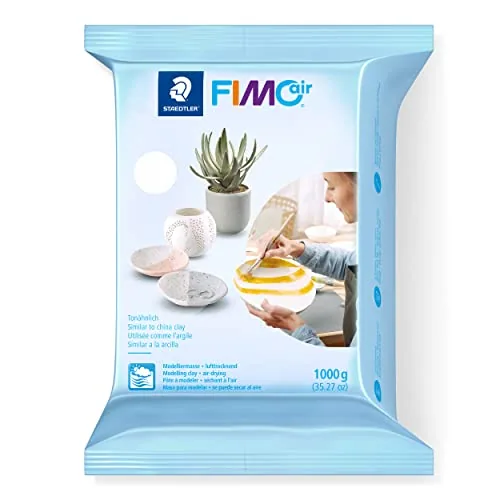
STAEDTLER FIMOair Air Dry Clay, White, 2.2 lb
- Clay body
- Air dry modeling clay
- Weight
- 2.2 lb (1 kg)
- Color
- White
Best for Pottery-style decor without a kiln
Polymer clay
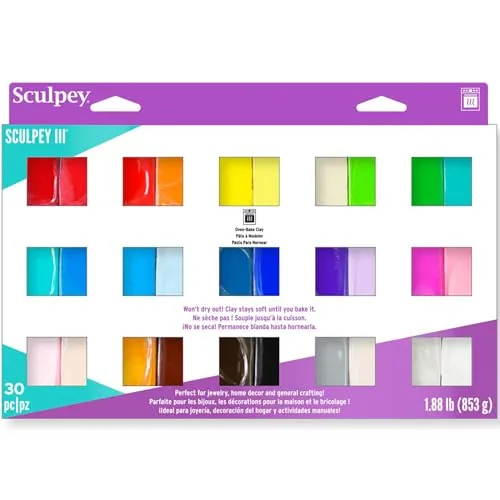
Sculpey III Polymer Clay Sampler, 30 x 1 oz
- Clay body
- Polymer oven bake
- Weight
- 1.88 lb (853 g)
- Count
- 30 Colors
Best for Trying polymer clay
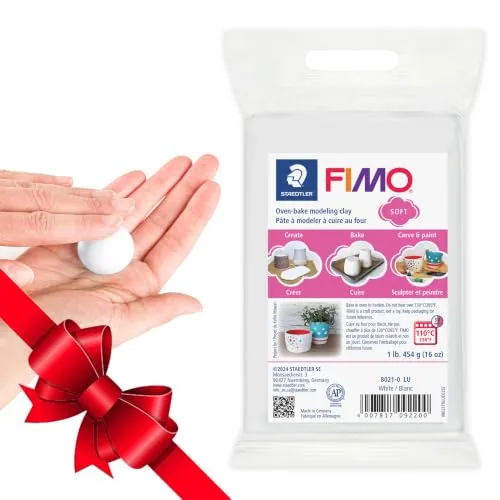
STAEDTLER FIMO Soft Polymer Clay, 1 lb, White
- Clay body
- Oven-bake polymer
- Weight
- 1 lb block
- Color
- White
Best for Beginners in polymer clay
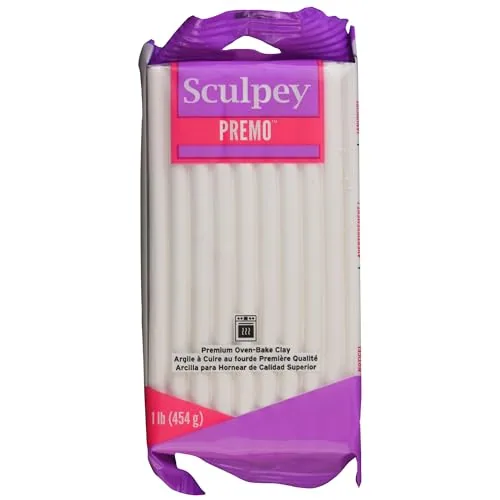
Sculpey Premo Polymer Clay, 1 lb, White
- Clay body
- Polymer oven bake
- Weight
- 1 lb Bar
- Color
- White
Best for Polymer jewelry and caning
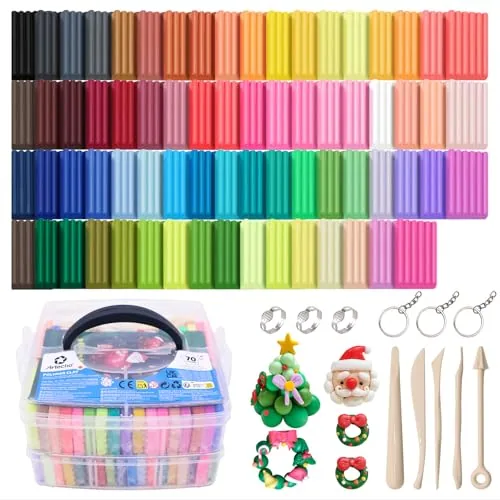
Artecho Polymer Clay Kit, 70 Colors with Tools
- Clay body
- Oven bake polymer
- Size
- 20g / pcs
- Count
- 70 colors
Best for Adults starting polymer jewelry
Air-dry clay vs polymer clay at a glance
The two no-kiln clays, side by side
| Air-dry clay | Polymer clay | |
|---|---|---|
| How it hardens | Water evaporates at room temperature | Baked in a home oven (heat cures the PVC base) |
| Typical cure (from listings) | ~ About 24 hours for 1/4–1/2" (thicker = longer) | ✓ About 30 minutes at the listed temperature |
| Works out of the pack | ✓ Soft, often water-softened | ~ Needs conditioning (kneading), firmer lines more so |
| Stays workable in the open | ✗ Starts drying right away | ✓ Does not air dry |
| Colors | ~ Mostly white, gray, terra cotta; paint after | ✓ Dozens of colors, blend before baking |
| Fine detail | ~ Good with fine clays | ✓ Very good; firm lines hold crisp edges |
| Big pieces | ✓ Practical and cheap per pound | ~ Costly per pound, heavy, oven size limits |
| Shrinkage and cracking | ~ Shrinks as it dries; can crack if dried fast | ✓ Little change in size |
| Strength when done | ~ Can chip; brittle in thin parts | ✓ Strong, some flex in thin parts |
| Water resistance | ✗ Softens with moisture unless sealed | ~ Water-resistant once baked |
| Food-safe | ✗ No | ✗ No |
| Equipment | None | Oven, oven thermometer, baking surface |
Source: Clay at Home summary of manufacturer listing data
How each one hardens and how long it takes
Air-dry clay is clay or a clay-like paste mixed with water and binders. As the water evaporates, it hardens. It never fuses the way fired clay does, which is why it can soften again when wet. Polymer clay is PVC particles in a plasticizer. It stays soft indefinitely until heat cures it.
Listed cure time
Hours. Air-dry figures are for the stated thickness; thicker pieces take longer. Polymer figures are bake time at the listed temperature.
The practical upshot: polymer gives you a finished piece the same evening. Air-dry clay asks for patience, and the patience is what prevents cracks. Dry slowly, away from heaters and sun, and turn pieces so the bottom dries too.
What each clay is best at
Choose air-dry clay for
- Larger pieces: sculpture, decorative planters, catch-all bowls and wall pieces. It is cheap by the pound, and Crayola sells 5 and 10 lb buckets.
- Classrooms and groups: it needs no oven and cleans up with water. Crayola lists the classic pinch, coil, slab and score-and-weld techniques.
- A pottery look without a kiln: terra cotta and stone-gray clays like DAS, Activa or FIMOair read as ceramic once painted and sealed.
- Practicing hand-building: the same joins and techniques transfer to real clay later. See pottery without a wheel.
Choose polymer clay for
- Jewelry and beads: earrings, pendants and charms that need strength in thin parts.
- Color work: blending, marbling and canes. You get the colors in the clay itself, no painting.
- Miniatures and fine detail: firm polymer like Sculpey Premo or FIMO Professional holds sharp edges.
- Projects done in stages: unbaked clay does not dry out, so you can leave a piece for days.
Limits of both: water, food and strength
Air-dry clay softens with moisture unless sealed, so a sealed coat of varnish is the norm for anything handled. Our guide to sealing air-dry clay covers which finish to use. Polymer clay is water-resistant once baked, but it is a plastic, not ceramic.
Strength differs too. Polymer clay is strong after baking, and thin parts have some flex. Air-dry clay can chip at thin edges and is better in chunkier forms. Some air-dry clays are made to reduce this: Activa says its Supreme clay "will not crumble" and can be carved, sanded and drilled when cured.
Kids, safety and the oven
For young children, air-dry clay is the simpler choice: no oven, no adult step at the end. Crayola lists ages 6+ for its white air-dry bucket and 4+ for terra cotta, and Model Magic 3+. Polymer clay needs an adult to run the oven. FIMO Kids is an extra-soft polymer made for small hands. Several Sculpey listings state conformity with ASTM D-4236 and EN 71 AP. Activa Supreme air-dry lists ASTM D4236, ACMI and AP certification.
Follow each maker's baking directions for polymer clay, use an oven thermometer and keep the room ventilated. For more, see the kids and classroom hub and best clay for kids.
Mistakes to avoid
- Drying air-dry clay fast. Heat and sun crack it. Slow is safe.
- Building air-dry pieces solid and thick. Hollow them out or use an armature.
- Guessing polymer bake temperature. Use the package figure. FIMO lists 230 °F for 30 minutes.
- Mixing the two in one piece. Air-dry clay does not bake, and polymer does not air dry. Sculpey does note its air-dry clay can add detail to oven-bake projects, so follow its instructions if you combine them.
- Putting either on a pottery wheel or in a kiln. Use stoneware or earthenware for that. See stoneware vs earthenware vs porcelain.
Other options worth a look
Some materials fall between the two. Padico Modena is an air-dry polymer: it dries in the air with no oven and turns translucent once dry. Creative Paperclay is an air-hardening paper clay, light and strong for its weight. Chavant NSP is an oil-based clay that never dries, used for sculpting models you will mold or cast. Crayola Model Magic is a light, flexible compound for ages 3+.
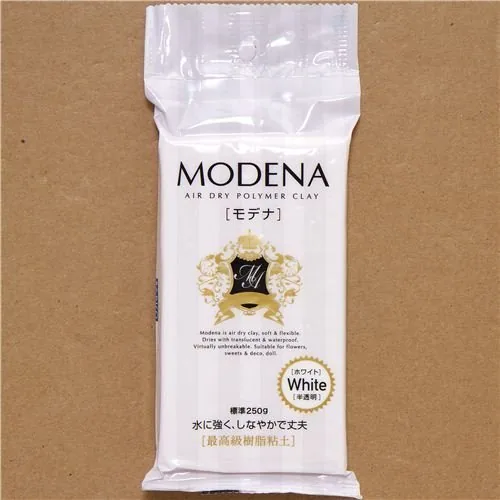
Padico Modena Air Dry Polymer Clay, 250 g, White
- Clay body
- Air dry polymer
- Weight
- 250g (8.8 oz)
- Color
- White, translucent after drying
Best for Clay flowers and miniatures
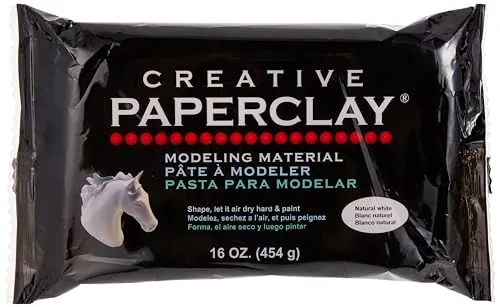
Creative Paperclay Modeling Compound, 16 oz, White
- Clay body
- Air hardening paper clay
- Weight
- 16-Ounce
- Color
- White
Best for Detailed no-kiln sculpting
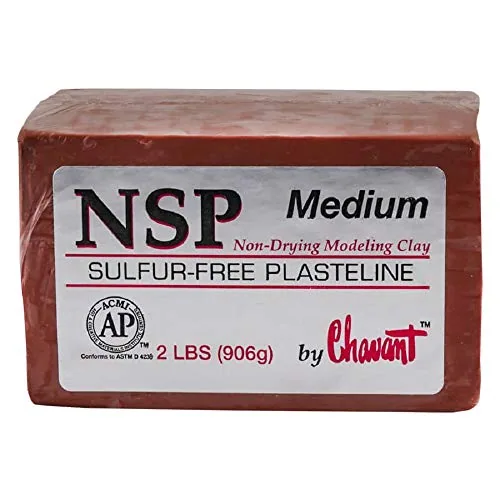
Chavant NSP Medium Oil-Based Clay, Brown, 2 lb
- Clay body
- Non-drying oil based, sulfur free
- Weight
- 2 lb Brick
- Color
- Brown
Best for Sculpting originals for molds
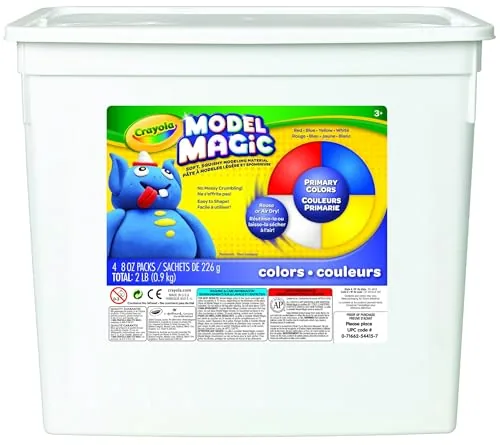
Crayola Model Magic Primary Colors, 2 lb Bucket
- Clay body
- Air-dry modeling material
- Weight
- 4 x 8oz
- Color
- Red, Yellow, Blue & White
Best for Young kids
Brand match-ups on each side: DAS vs Crayola air-dry clay and Sculpey vs FIMO. Roundups: best air-dry clay and best polymer clay. Everything else is in the no-kiln hub and clay category.
How we compared
We summarized manufacturer listings for the air-dry and polymer clays in our catalogue: hardening method, listed cure times, techniques and stated ages. We did not dry, bake or stress-test any clay. Cure times are as listed for the stated thickness or temperature.