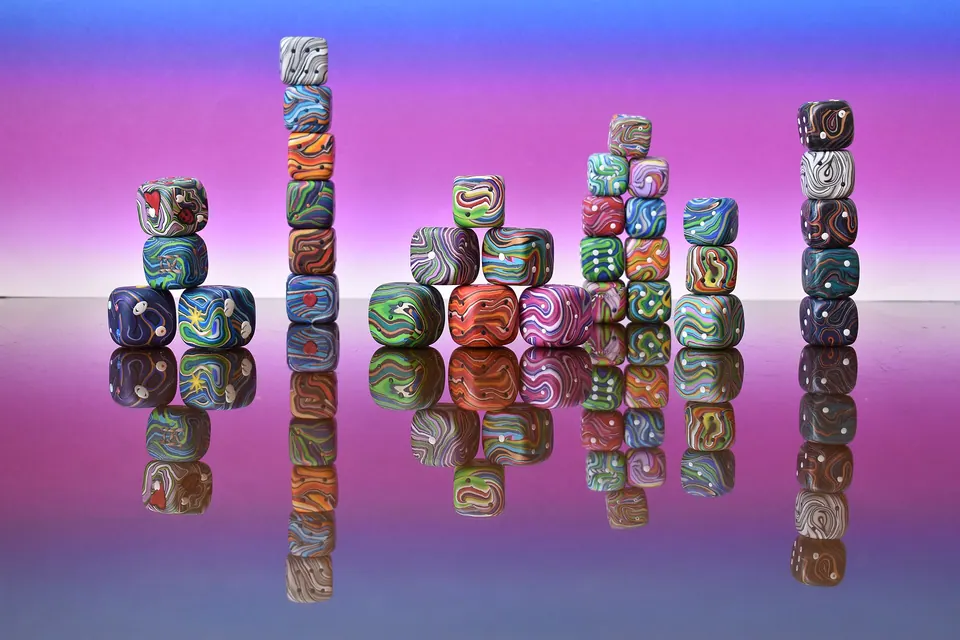
- Sculpey vs FIMO is a close match. Both are oven-bake polymer clays that stay soft until baked in a home oven, with no kiln needed.
- For caning and jewelry that must survive thin edges, compare Sculpey Premo ("flexible, very strong and durable") with FIMO Professional ("firm", with "very high dimensional stability").
- For beginners, Sculpey III and FIMO Soft are the soft, easy-to-condition lines. For kids, FIMO Kids is extra soft, and Sculpey Original is sold for classrooms.
- FIMO's listings state the bake: 230 °F for 30 minutes. Sculpey's listings in our catalogue say to bake "at the recommended temperature" without a number, so follow the package.
Sculpey vs FIMO is the first choice most people make in polymer clay. Sculpey is the American brand (Polyform), and FIMO is made by the German pen company Staedtler. Both make oven-bake polymer clay in several firmness levels, sold in sampler packs and single blocks.
The brands are more alike than different. Both clays stay workable until baked, then harden in a regular home oven, and both can be sanded, drilled and painted afterward. What matters is matching the line to the job. This comparison lines up every Sculpey and FIMO polymer product in our catalogue by firmness, pack size and listed baking directions, using only what the listings say.
Sculpey
Premo for strength and caning, Sculpey III and Original for beginners, Super Sculpey and Souffle for specialist work
BrowseFIMO (Staedtler)
FIMO Soft for beginners, Professional for firm, stable caning, and extra-soft FIMO Kids
BrowsePicks from each side
Sculpey
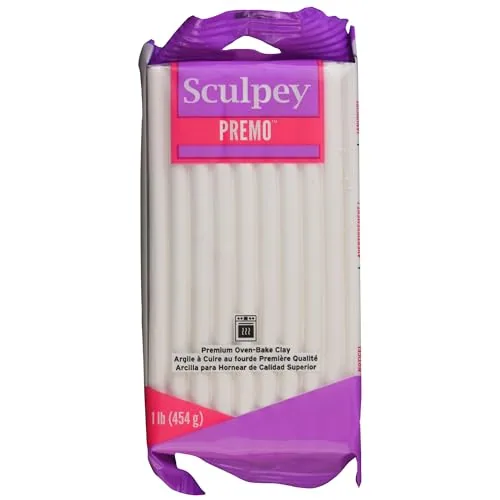
Sculpey Premo Polymer Clay, 1 lb, White
- Clay body
- Polymer oven bake
- Weight
- 1 lb Bar
- Color
- White
Best for Polymer jewelry and caning
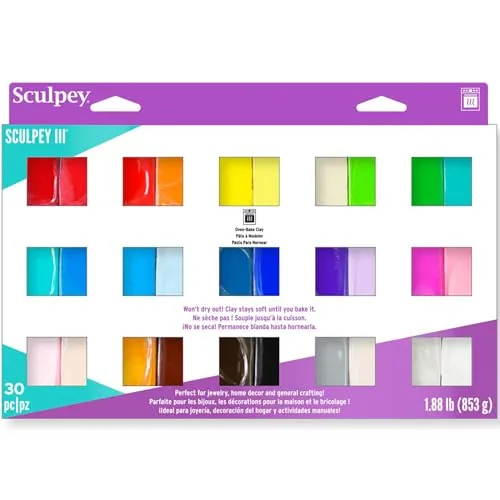
Sculpey III Polymer Clay Sampler, 30 x 1 oz
- Clay body
- Polymer oven bake
- Weight
- 1.88 lb (853 g)
- Count
- 30 Colors
Best for Trying polymer clay
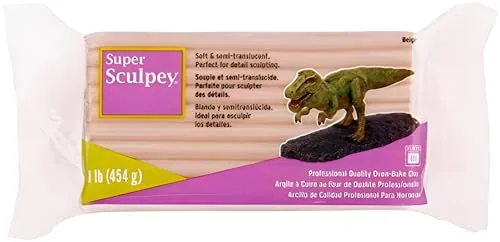
Super Sculpey Beige Polymer Clay, 1 lb
- Clay body
- Polymer oven bake
- Weight
- 1 lb
- Color
- Beige (semi-translucent)
Best for Figure sculptors and model makers
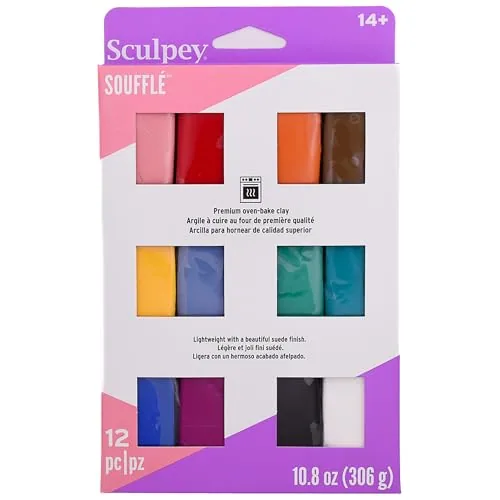
Sculpey Souffle Polymer Clay, 12 Color Set
- Clay body
- Lightweight polymer oven-bake
- Weight
- 10.8 oz
- Count
- 12 color
Best for Polymer jewelry and embellishments
FIMO (Staedtler)
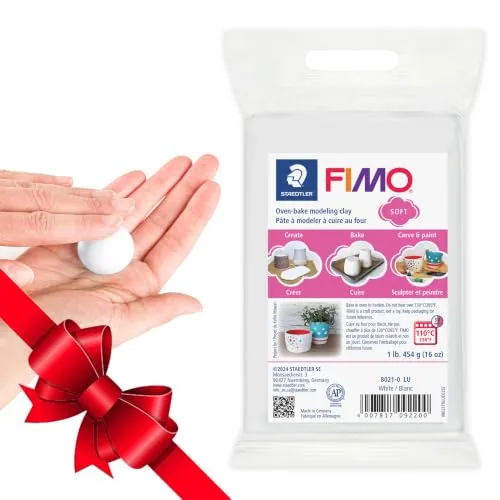
STAEDTLER FIMO Soft Polymer Clay, 1 lb, White
- Clay body
- Oven-bake polymer
- Weight
- 1 lb block
- Color
- White
Best for Beginners in polymer clay
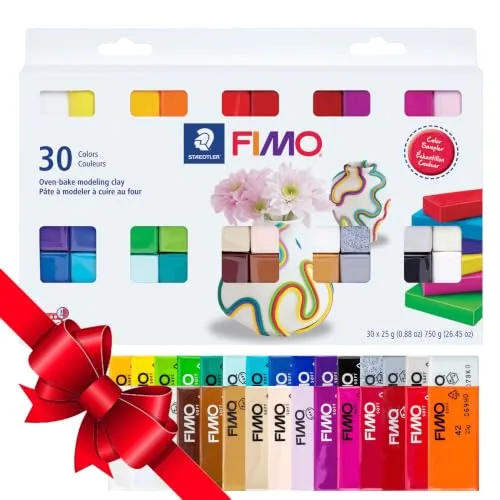
STAEDTLER FIMO Soft Gift Set, 30 Colors
- Clay body
- Oven-bake polymer
- Size
- 25 g half-blocks
- Count
- 30 Colors
Best for A polymer clay starter gift
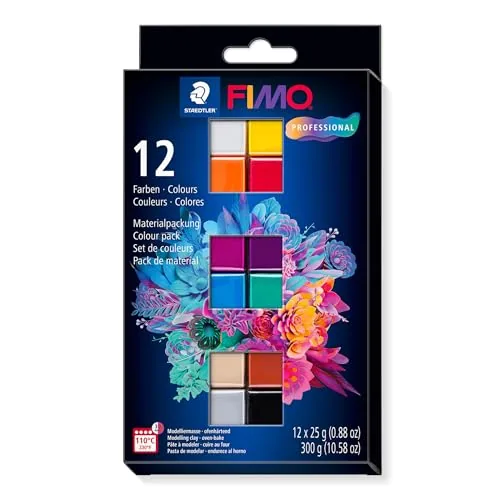
STAEDTLER FIMO Professional Polymer Clay, 12 Colors
- Clay body
- Oven-bake polymer, firm
- Size
- 0.88 oz blocks
- Count
- 12 Colors
Best for Advanced polymer artists
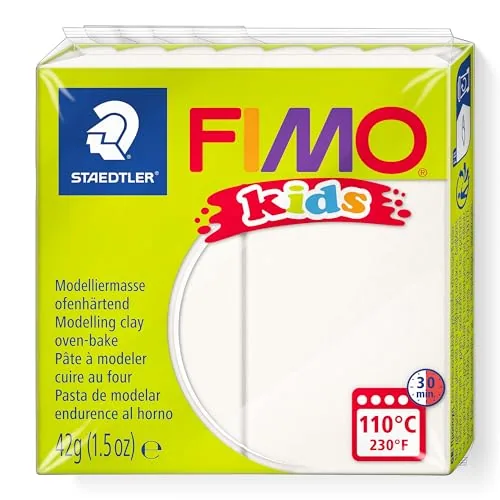
STAEDTLER FIMO Kids Extra Soft Clay, White, 1.5 oz
- Clay body
- Extra soft oven bake polymer
- Weight
- 1.5 oz
- Color
- White
Best for Kids
Sculpey vs FIMO: line against line
Matching lines across the two brands
| Job | Sculpey | FIMO |
|---|---|---|
| Learning, color play | Sculpey III ("soft and easy to use") | FIMO Soft ("especially for beginners") |
| Strong pieces, caning, mokume gane | Premo ("flexible, very strong and durable") | Professional ("firm", "very high dimensional stability") |
| Kids and classrooms | Sculpey Original (sold for classrooms) | FIMO Kids ("extra soft for small hands") |
| Figure sculpting and props | ✓ Super Sculpey (beige, fine detail) | ✗ No equivalent in our catalogue |
| Lightweight jewelry | ✓ Souffle (suede finish, can be cut or sewn) | ✗ No equivalent in our catalogue |
| Liquid clay and bonding | ✓ Liquid Sculpey, Bake & Bond | ✗ Not in our catalogue |
| Air-dry option | Sculpey Air-Dry (terra cotta, porcelain) | FIMOair (white, terracotta) |
| Bake directions in listing | ~ "Recommended temperature", no figure | ✓ 230 °F (110 °C), 30 minutes |
| Safety standards in listing | ✓ ASTM D-4236 and EN 71 (several listings) | ~ Not stated in our listings |
Source: Manufacturer listing data, Clay at Home catalogue
| Product | Clay body | Weight | Count | Bake |
|---|---|---|---|---|
| Sculpey Premo Polymer Clay, 1 lb, White | Polymer oven bake | 1 lb Bar | — | — |
| Sculpey III Polymer Clay Sampler, 30 x 1 oz | Polymer oven bake | 1.88 lb (853 g) | 30 Colors | — |
| Sculpey Original Polymer Clay, 1 lb, White | Polymer oven bake | 1 lb (454 g) | — | — |
| STAEDTLER FIMO Soft Polymer Clay, 1 lb, White | Oven-bake polymer | 1 lb block | — | 230°F for 30 minutes |
| STAEDTLER FIMO Professional Polymer Clay, 12 Colors | Oven-bake polymer, firm | — | 12 Colors | — |
| STAEDTLER FIMO Kids Extra Soft Clay, White, 1.5 oz | Extra soft oven bake polymer | 1.5 oz | — | 230F (110C) for 30 minutes |
Specs as listed by the maker or seller; check the listing before you buy.
Firmness: the difference you feel
Soft clay is easy to condition (knead until pliable) and good for small hands, but it can smear fine detail and slump in warm rooms. Firm clay takes more work at the start, then holds crisp lines. That is why cane makers, who slice patterned logs into thin sheets, usually reach for the firm lines.
- Softest: FIMO Kids (formulated "for small hands", moldable straight from the pack) and Sculpey III.
- Middle: FIMO Soft and Sculpey Original. Easy to work, fine for most crafts.
- Strong and flexible: Sculpey Premo, which Sculpey recommends for caning, mokume gane and mica shift.
- Firm: FIMO Professional. Staedtler lists it for caning, mokume gane and Bargello, with fracture resistance in thin details after baking.
Super Sculpey is its own category: a soft beige clay for sculptors and model makers that, Sculpey says, does not "fill in" after tooling and bakes to a semi-translucent, skin-like finish. Souffle is lightweight, with a suede finish, and flexible enough to cut or even sew after baking. It is useful for earrings.
How much clay is in each pack?
Pack sizes vary a lot, which makes value hard to compare on a store page. Here is the listed weight of each Sculpey and FIMO polymer product in our catalogue, converted to grams.
Listed clay weight per pack
Grams. Converted from listed lb/oz where needed (1 lb = 454 g, 1 oz = 28.35 g). FIMO multi-packs = count x 25 g.
Samplers win for trying colors. The 1 lb blocks win for projects that use a lot of one color, especially white, which you need for mixing pastels. The FIMO Soft 1 lb block is divided into eight portions, which makes measuring color recipes easier.
Baking: temperature, time and your oven
FIMO's listings give a clear schedule: 230 °F (110 °C) for 30 minutes, then let the piece cool completely. Staedtler also says all its oven-hardening FIMO types can be mixed together. Sculpey's listings in our catalogue tell you to bake "at the recommended temperature, time and thickness" without giving a figure, so use the temperature printed on the package of the specific Sculpey line you buy.
Mixing Sculpey and FIMO in one piece is common, but the two brands' schedules may not match. If you combine them, test a small sample first. More no-kiln options are in the no-kiln hub.
For kids and classrooms
FIMO Kids is the obvious kids' pick on texture alone: extra soft, moldable out of the pack, flexible in thin pieces and break-resistant in solid ones after baking. Sculpey Original is sold as a white classroom clay that can be sanded, drilled, carved and painted with water-based acrylics after baking. Sculpey's Original, Premo sampler and Liquid Sculpey listings state conformity with ASTM D-4236 and EN 71 AP. An adult should always handle the oven. See best clay for kids and the kids and classroom hub.
Mistakes to avoid
- Using firm clay without conditioning it. Premo and FIMO Professional need kneading. Warm the clay in your hands before you start.
- Guessing the bake temperature. Use the package figure and a thermometer.
- Expecting polymer clay to go on a pottery wheel or in a kiln. It is oven-bake only. For wheel clay, see stoneware vs earthenware vs porcelain.
- Treating baked polymer as food-safe. Neither brand's listings in our catalogue describe it as food-safe. Keep it for jewelry and decor.
- Confusing polymer and air-dry lines. Sculpey Air-Dry and FIMOair harden in air, not in the oven. Compare them in air-dry vs polymer clay.
Other options worth a look
Other brands are worth a look if you want more colors or a different format. Artecho's kit has 70 colors in 20 g pieces with tools, and lists 120–130 °C for 15–30 minutes. ReArt sells a 1.1 lb white polymer block. Padico's Modena is an air-dry polymer that turns translucent as it dries, with no oven at all.
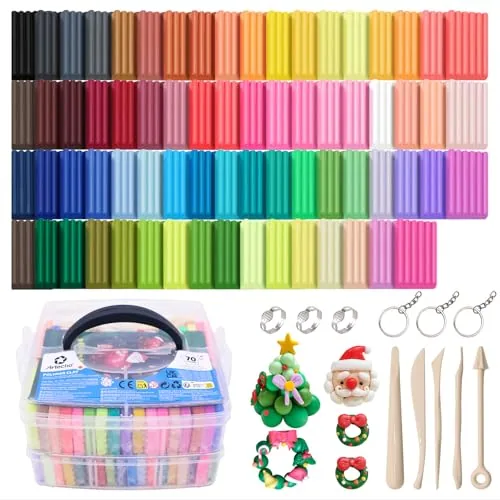
Artecho Polymer Clay Kit, 70 Colors with Tools
- Clay body
- Oven bake polymer
- Size
- 20g / pcs
- Count
- 70 colors
Best for Adults starting polymer jewelry
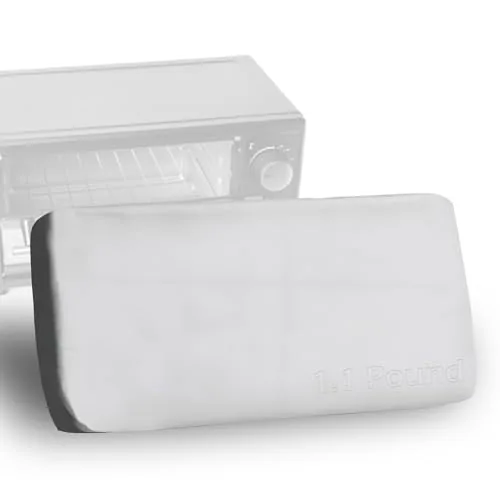
ReArt Oven Bake Polymer Clay, White, 1.1 lb
- Clay body
- Polymer oven bake (PVC)
- Weight
- 1.1 Pound
- Color
- White
Best for Polymer jewelry and decor
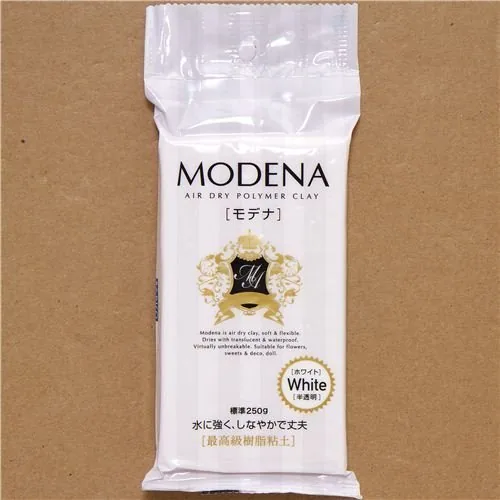
Padico Modena Air Dry Polymer Clay, 250 g, White
- Clay body
- Air dry polymer
- Weight
- 250g (8.8 oz)
- Color
- White, translucent after drying
Best for Clay flowers and miniatures
Compare more in best polymer clay or browse the clay category.
How we compared
We compared manufacturer listings: stated formulation, firmness wording, pack size and baking directions. We did not bake, bend or break-test any clay. Weights are converted from listed values. Check the package for the current baking directions.