
- First real wheel: the Speedball Artista lists a 1/3 HP motor, 11" head and 25 lb centering capacity in a tabletop body that is easy to store.
- Lowest-commitment electric wheel: the VEVOR 450W tabletop lists 11" and 14" heads, a 30-300 RPM Hall-effect pedal and up to 11 lb of clay.
- Room to grow: the Speedball Clay Boss lists a 0.5 HP motor, 14" head, up to 100 lb capacity and a reversing plug.
- Just curious? The National Geographic Hobby wheel is an 8" teen-and-adult taster kit with air-dry clay, not a studio wheel.
The best pottery wheel for beginners is not the cheapest one or the biggest one: it is the wheel that keeps turning when you lean on a centered lump of clay, at a speed you can control with your foot. That comes down to four listed specs — centering capacity, motor, wheel head size and speed control — plus two practical ones, reversing and noise.
Below we rank six wheels from five brands, from a studio-brand tabletop to a full-size floor wheel and one honest starter kit. Every figure is taken from the product listing; where a listing leaves something out, we say "not listed" instead of guessing.
Our picks
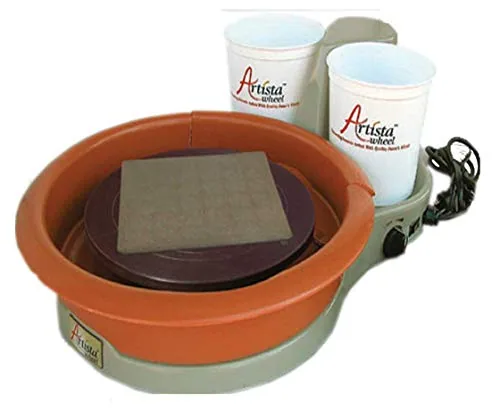
Speedball Artista Potter's Wheel, 1/3 HP, 11"
- Motor
- 1/3 HP
- Wheel head
- 11"
- Centering capacity
- 25lb
- Speed
- 0-220 rpm
The Artista pairs an 11" head with a 1/3 HP motor (about 249 W) and a listed 25 lb centering capacity, which is far more than a beginner throws in one go. The listing describes it as running with very little noise and gives a 30" × 22" footprint, so it suits a spare room or a shared apartment.
Best for: adult beginners who want a studio-brand wheel that stores away
Skip if: you want a foot pedal: speed is set with a hand control
- 25 lb centering capacity listed
- Quiet 1/3 HP motor per the listing
- Two-part splash pan, portable body
- Hand speed control, no pedal
- Reversing is not mentioned in the listing
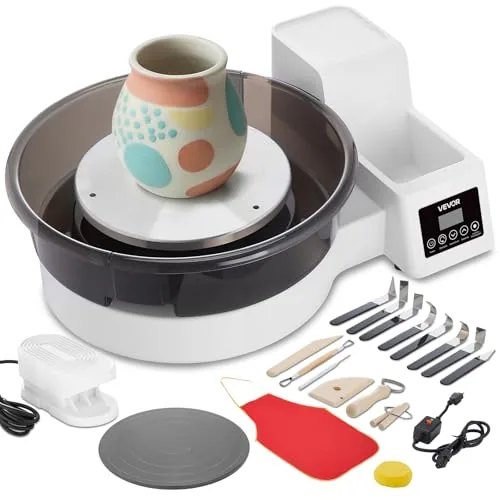
VEVOR 450W Tabletop Pottery Wheel, 11" & 14" Heads
- Motor
- 450W
- Wheel head
- 11" and 14" turntables
- Centering capacity
- up to 11 lbs of clay
- Speed
- 30-300 RPM
VEVOR lists a 450 W motor, a Hall-effect foot pedal from 30 to 300 RPM and two swappable heads, 11" and 14". The listed load is up to 11 lb of clay, which covers mugs, bowls and small vases. A side tool box, detachable basin and two tool sets come in the box.
Best for: trying the wheel at home without a big footprint
Skip if: you plan to throw large pieces from 10 lb or more
- Foot pedal with a 30 RPM low end
- 11" and 14" heads included
- Detachable basin for cleanup
- 11 lb centering capacity
- Noise level not listed
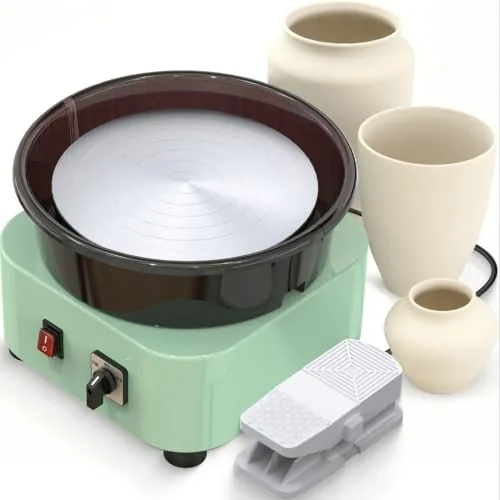
Alldeer PW103MAX 11" 350W Pottery Wheel Kit
- Motor
- 350W brushless
- Wheel head
- 11 inch
- Centering capacity
- 15kg clay loads
- Speed
- 300RPM (foot pedal)
The Alldeer PW103MAX lists a 350 W brushless motor, an 11" head, a foot pedal and a detachable splash tray, plus 19 tools. The seller states "15kg clay loads" (about 33 lb); that is a seller claim on a tabletop motor, so treat it as an upper limit rather than a daily working load.
Best for: adult beginners who want a pedal and a full-size head on a table
Skip if: you need a confirmed reversing switch
- Brushless 350 W motor
- Foot pedal leaves both hands free
- 19-piece tool set
- Top speed listed as 300 RPM, low end not listed
- Reversing not listed
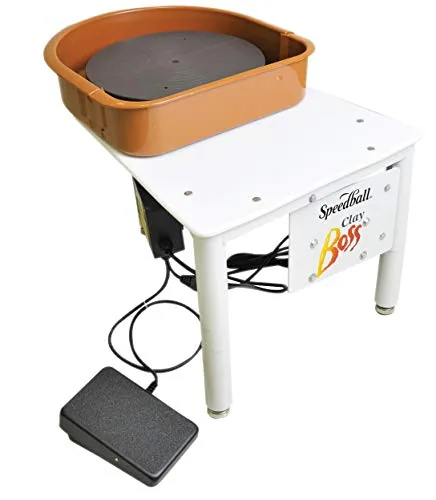
Speedball Clay Boss Pottery Wheel, 0.5 HP, 14"
- Motor
- .5 HP
- Wheel head
- 14"
- Centering capacity
- up to 100lb
- Speed
- 0-240 rpm
The Clay Boss is a full-size floor wheel: a 0.5 HP motor (about 373 W), 14" head, up to 100 lb centering capacity and a foot pedal from 0 to 240 RPM. Its load-sensing control holds speed as you press, and a reversing plug changes direction. Speedball lists a 10-year warranty.
Best for: beginners who already know they will keep throwing
Skip if: you need to pack the wheel away after each session
- Load-sensing speed control
- Reversing plug for left-handers and trimming
- 10-year warranty listed
- Floor wheel, needs a permanent spot
- More wheel than a casual hobbyist needs
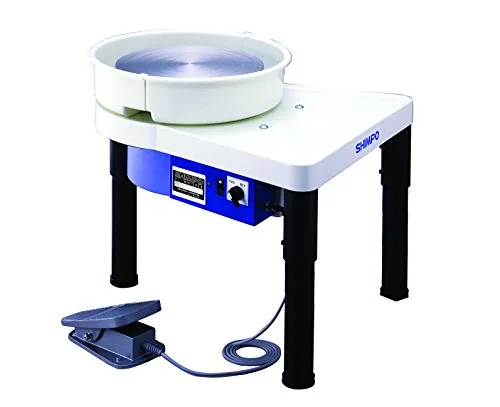
Shimpo VL-Whisper Potter's Wheel
- Motor
- Brushless DC
- Wheel head
- 14 inches
- Reverse
- Reversible
- Controller
- Electronic, maintains speed under load
Shimpo lists a brushless DC motor described as smooth and quiet, an electronic controller that maintains speed under all load conditions, a 14" head and reversibility for left- and right-handed users. Centering capacity and horsepower are not in this listing.
Best for: apartment and shared-wall homes that want a full-size wheel
Skip if: you want the capacity figure on paper before you buy
- Quiet brushless DC motor per the listing
- Holds speed under load
- Reversible
- Centering capacity not listed
- Motor power not listed
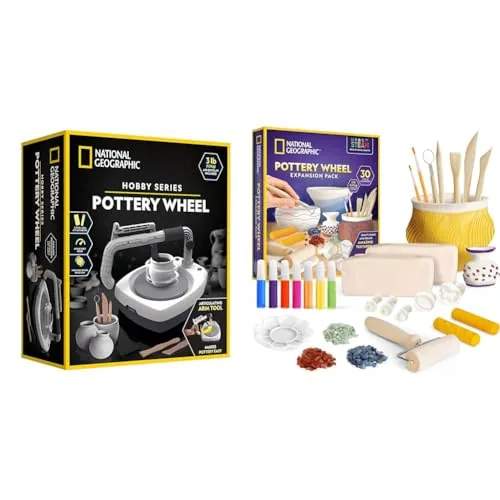
National Geographic Hobby 8" Pottery Wheel Kit
- Wheel head
- 8"
- Direction
- 2-way rotation
- Noise
- 60 decibels
- Clay
- Air-dry clay plus 2 lb refill
National Geographic's Hobby wheel has an 8" head, 2-way rotation and a listed 60 decibels, plus an articulating arm tool that helps you center, open and shape. It ships with air-dry clay and a 2 lb refill, so you can try the motion of throwing without a kiln.
Best for: testing whether the wheel clicks before buying a real one
Skip if: you want to throw stoneware for the kiln
- 60 dB listed
- 2-way rotation for either hand
- Arm tool guides centering
- 8" head and air-dry clay limit what you can make
- Motor and capacity not listed
What makes a good pottery wheel for beginners?
Wheel listings throw around watts, horsepower and RPM. Only a few numbers actually change how your first months go.
Centering capacity
Centering capacity is the most clay the maker says the wheel can center without bogging down. A beginner mug uses roughly a pound of clay and a small bowl two or three, so even 11 lb is enough to learn on. What a higher figure buys you is headroom: a wheel working well below its limit stalls less when you push hard while centering, which is exactly what beginners do.
Motor: watts, horsepower and load-sensing
Studio brands quote horsepower and imported wheels quote watts. One horsepower is about 746 W, so 1/3 HP is about 249 W and 0.5 HP about 373 W. Wattage alone does not tell you torque, though. A brushless motor runs cooler and quieter, and a load-sensing or electronic controller (Clay Boss, VL-Whisper) holds the speed you chose as you press in, so the clay does not slow down under your hands.
Wheel head size
An 11" or 12" head is plenty for learning; 14" gives room for wider plates and for bats with standard pin spacing. Small 6–8" heads belong to kits and miniature work.
Speed control, reversing and noise
A foot pedal frees both hands and is how most teachers expect you to throw. A slow bottom end (VEVOR lists 30 RPM) helps with trimming and decorating. Reversing lets left-handed potters throw clockwise and lets anyone trim in the other direction. For noise, only a few listings give a figure: the VEVOR 350W and National Geographic Hobby list 60 dB, and Speedball and Shimpo describe their motors as quiet.
Compare the beginner wheels by listed specs
Every value below comes from the listing. A dash means the maker does not state it.
| Product | Wheel head | Motor | Speed | Centering capacity | Reverse | Noise |
|---|---|---|---|---|---|---|
| Speedball Artista Potter's Wheel, 1/3 HP, 11" | 11" | 1/3 HP | 0-220 rpm | 25lb | — | — |
| VEVOR 450W Tabletop Pottery Wheel, 11" & 14" Heads | 11" and 14" turntables | 450W | 30-300 RPM | up to 11 lbs of clay | — | — |
| Alldeer PW103MAX 11" 350W Pottery Wheel Kit | 11 inch | 350W brushless | 300RPM (foot pedal) | 15kg clay loads | — | — |
| Speedball Clay Boss Pottery Wheel, 0.5 HP, 14" | 14" | .5 HP | 0-240 rpm | up to 100lb | Reversing plug | — |
| Shimpo VL-Whisper Potter's Wheel | 14 inches | Brushless DC | — | — | Reversible | — |
| National Geographic Hobby 8" Pottery Wheel Kit | 8" | — | — | — | — | 60 decibels |
Specs as listed by the maker or seller; check the listing before you buy.
Listed centering capacity
Pounds of clay. Alldeer's 15 kg converted to 33 lb. Shimpo VL-Whisper and National Geographic do not list capacity.
The jump from 11 lb to 25 lb matters more than it looks: it is the difference between a wheel that works near its limit when you center three pounds and one that barely notices.
Real wheel or starter kit: which do you need?
Starter kit vs real electric wheel
| Starter kit (8" or smaller) | Real wheel (11"+) | |
|---|---|---|
| Clay type | ~ Air-dry clay in the box | ✓ Any wheel clay, including stoneware |
| Kiln-fired pots | ✗ No | ✓ Yes |
| Foot pedal | ~ Some kits | ✓ Most models |
| Centering capacity listed | ✗ Rarely | ✓ Usually |
| Space needed | ✓ A tabletop | ~ Tabletop or a floor spot |
If you want mugs you can drink from, you need a real wheel, wheel clay and access to a kiln — yours or a studio's. If you mostly want to feel the clay spin, a kit like the National Geographic Hobby is a gentle start, and our tabletop wheel picks sit in between.
VEVOR 450W Tabletop Pottery Wheel, 11" & 14" Heads
- Motor
- 450W
- Wheel head
- 11" and 14" turntables
- Centering capacity
- up to 11 lbs of clay
Best for Beginners setting up a tabletop wheel at home
Speedball Artista Potter's Wheel, 1/3 HP, 11"
- Motor
- 1/3 HP
- Wheel head
- 11"
- Centering capacity
- 25lb
Best for Home studios with limited space
National Geographic Hobby 8" Pottery Wheel Kit
- Wheel head
- 8"
- Direction
- 2-way rotation
- Noise
- 60 decibels
Best for Adults and teens trying the wheel
How do you set up your first wheel at home?
- Pick a wipeable spot
A hard floor near water, away from carpet. Clay slurry and trimmings travel further than you expect.
- Get the right clay
Choose a smooth wheel clay that matches the kiln you will use; most studios fire cone 5–6. See our wheel clay picks.
- Add a few tools
A sponge, needle tool, wire, rib and loop tool cover your first projects.
- Plan bats
Bats let you lift a fresh pot off the wheel without distorting it. Check your wheel's pin spacing first.
- Keep clay out of the drain
Clay settles in pipes. Rinse hands and tools in a bucket, then let the sediment settle, or fit a sink trap.
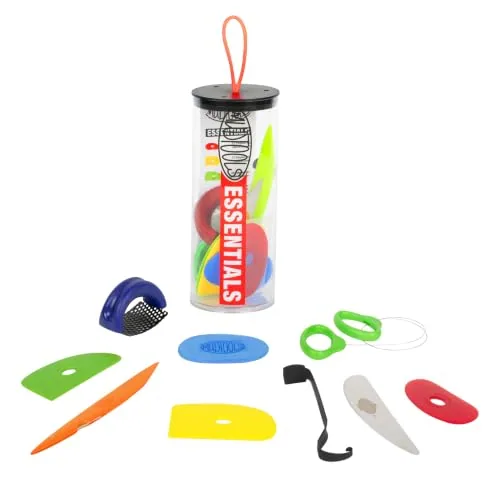
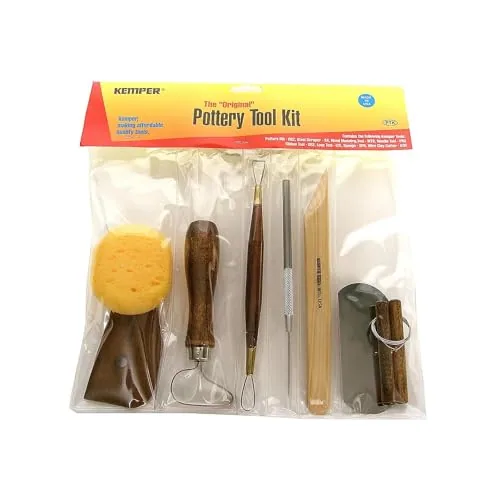
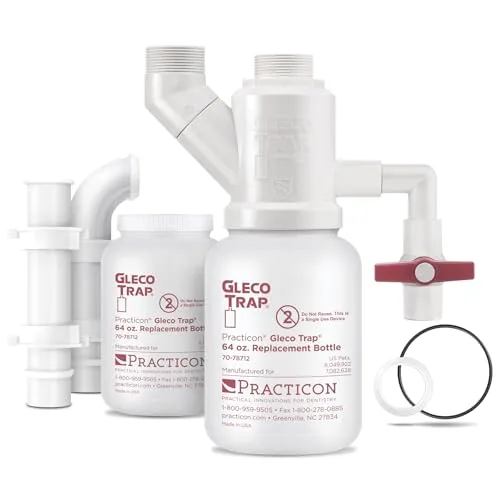
Our how to use a pottery wheel guide walks through centering, opening, pulling and trimming, and the studio checklist lists what to buy at each stage.
Mistakes beginners make when choosing a wheel
- Buying on watts alone. A 450 W tabletop lists 11 lb of capacity; a 1/3 HP (about 249 W) Speedball lists 25 lb. Gearing and controller matter as much as motor size.
- Ignoring the pedal. Hand-lever control works, but most lessons and videos assume a foot pedal.
- Forgetting left-handed throwing. If you are left-handed, check for a reversing switch or plug in the listing.
- Sweeping dried clay. Dry clay dust contains crystalline silica. Wet-wipe and mop instead of sweeping; OSHA sets the workplace limit at 50 µg/m³ averaged over 8 hours.
- Expecting air-dry kit pots to hold water. Air-dry clay is not fired, so it is not waterproof or food-safe.
Which beginner wheel should you choose?
- You live in an apartment: the Speedball Artista or Shimpo VL-Whisper for quiet running, plus the tips in pottery in an apartment and our small-space picks.
- You want the lowest commitment: the VEVOR 450W tabletop with its 30 RPM low end.
- You are sure this is a long-term hobby: the Speedball Clay Boss. Speedball vs Shimpo and VEVOR vs Speedball go deeper.
- You are buying for a teen: the National Geographic Hobby, or see wheels for kids.
For everything else in this category, browse all pottery wheels or the total beginners hub.
We compared listed wheel head size, motor (HP or W, brushless or not), speed range and control, centering capacity, reversing, noise figures and what is included for every wheel in our catalogue. HP was converted at 746 W per HP. We did not throw on these wheels; seller claims are labeled as such and missing figures are marked as not listed.