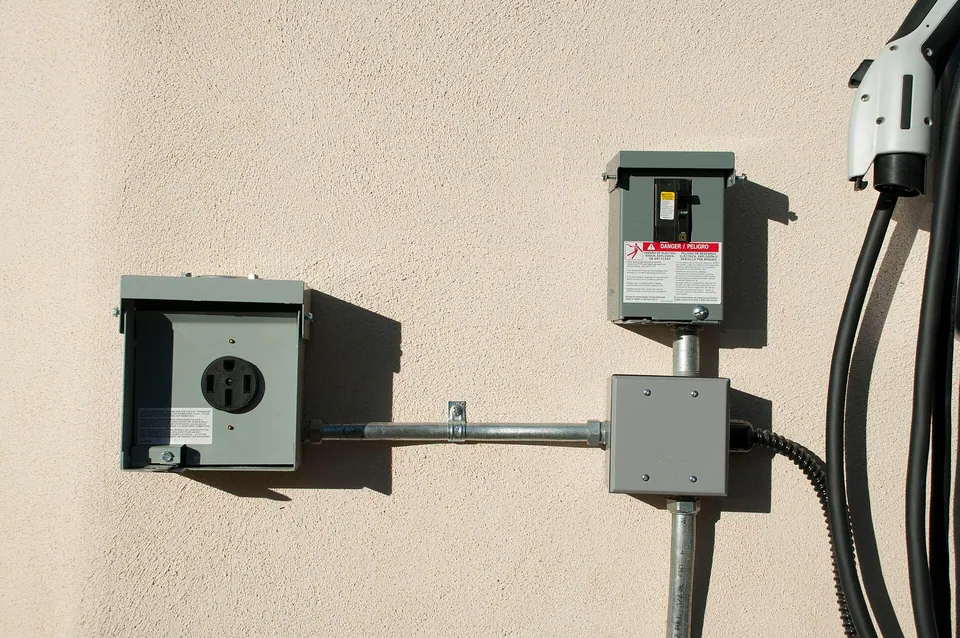
- 120V vs 240V kilns: 120 V kilns are small and run on household voltage, but at 12–15 A they still usually need a dedicated circuit. 240 V kilns hold real production loads and need a dedicated high-amp circuit put in by an electrician.
- The National Electrical Code sizes continuous loads at 125%. A 15 A kiln therefore needs 18.75 A of circuit, which means a 20 A breaker, not a shared 15 A outlet.
- In our catalogue, the 120 V side is Paragon's Xpress E12A (15 A, 2000 °F), Xpress Q11A (12 A, 2350 °F) and SC2 (14 A, 1680 W). The larger side is Skutt's KM818 package, listed at 30 A. Its voltage is not listed, so confirm it.
- Mostly test tiles, jewelry or a few small pieces? 120 V. Regular mug and bowl loads at cone 6? Plan for a larger kiln on a dedicated circuit, usually 240 V.
120V vs 240V kilns is the first real fork in the road when you buy a kiln. It decides how much you can fire per load, what electrical work you need, and often where the kiln can live.
The basic physics is simple. Power is volts times amps, and US household circuits are limited in amps. At 120 V, a kiln cannot draw enough power to heat a big chamber, so 120 V kilns stay small. At 240 V, the same current delivers twice the power, which is how full-size kilns heat big chambers to cone 6 and beyond. This explainer covers the circuit math, what each class can fire, and the picks in our catalogue. Always have a licensed electrician confirm your setup.
120 V kilns
Small chambers on a dedicated household-voltage circuit; test kilns, bisque, low fire, small cone 6–10 loads
BrowsePicks from each side
120 V kilns
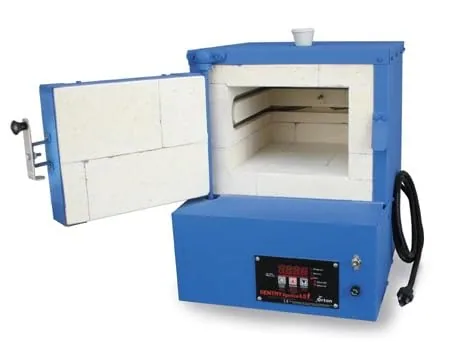
Paragon Xpress E12A 120V Kiln
- Max temperature
- 2000 F
- Voltage
- 120v
- Power
- 15amp
Best for Low-fire and bisque at home
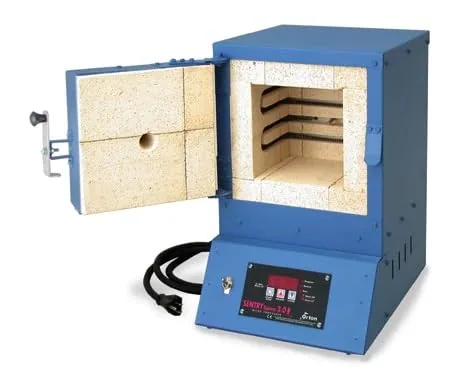
Paragon Xpress Q11A 120V Kiln
- Max temperature
- 2350 F
- Voltage
- 120v
- Power
- 12amp
Best for Test tiles and small high-fire pieces
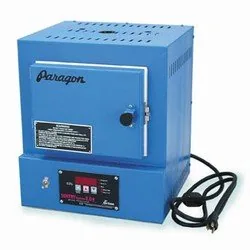
Paragon SC2 120V Digital Kiln, Sentinel Touch
- Voltage
- 120V
- Power
- 14A / 1680W
- Controller
- Sentinel Touch Xpress
Best for Small pieces and test firings at home
240 V kilns
120V vs 240V kilns side by side
The two classes compared
| 120 V kilns | 240 V kilns | |
|---|---|---|
| Typical use | Test tiles, jewelry, glass, a few small pots | Regular production loads |
| Power | Limited: about 1,400–1,800 W in our listings | Much higher; check each model |
| Chamber | Small (6 x 6 x 6.25" to 8.5 x 12 x 6.75" listed) | Large; check each model |
| Circuit | ~ Usually a dedicated 15–20 A circuit | ✓ Dedicated high-amp circuit, always |
| Electrician | ~ Often, to add or confirm the circuit | ✓ Yes |
| Receptacle | Matches the kiln's plug; check the manual | Specific high-amp receptacle or hardwired |
| Cone 6 capable | ~ Some (check listed max) | ✓ Most studio models; check rating |
| Firing cost per load | Lower per load, higher per pot | Higher per load, lower per pot when full |
Source: Clay at Home summary; NEC continuous-load logic per Seattle Pottery Supply
| Product | Voltage | Power | Amps | Max temperature | Interior size | Controller |
|---|---|---|---|---|---|---|
| Paragon Xpress E12A 120V Kiln | 120v | 15amp | — | 2000 F | 8 1/2" W x 12" D x 6 3/4" H | Sentry 3 Key |
| Paragon Xpress Q11A 120V Kiln | 120v | 12amp | — | 2350 F | 6" W x 6" D x 6 1/4" H | Sentry 3 Key |
| Paragon SC2 120V Digital Kiln, Sentinel Touch | 120V | 14A / 1680W | — | — | — | Sentinel Touch Xpress |
Specs as listed by the maker or seller; check the listing before you buy.
The 125% rule: how big a circuit does a kiln need?
The National Electrical Code treats a load that runs at full current for three hours or more as continuous. A kiln firing runs for hours, so the circuit is sized at 125% of the kiln's draw. Put the other way, the kiln may use only 80% of the breaker's rating.
Circuit needed under the 125% rule
Amps. Listed kiln draw x 1.25. The two 240 V rows are worked examples, not products.
Breaker size vs largest continuous kiln draw
| Breaker | 80% continuous limit |
|---|---|
| 15 A | 12 A |
| 20 A | 16 A |
| 30 A | 24 A |
| 40 A | 32 A |
| 50 A | 40 A |
| 60 A | 48 A |
So the Q11A (12 A) sits right at the limit of a 15 A circuit with nothing else on it. The SC2 (14 A) and E12A (15 A) need a 20 A circuit. Most household outlets share a 15 A circuit with lights and other outlets, which is why "plug-in" does not mean "any outlet". Run your kiln's numbers through the outlet checker.
Watts, chamber size and what fits
Power is volts x amps. From the listings, the E12A works out to about 1,800 W (120 V x 15 A), the Q11A to about 1,440 W (120 V x 12 A), and Paragon lists the SC2 at 1,680 W. That is enough to heat a small chamber hot. The Q11A lists 2350 °F. It is not enough to heat a big chamber full of pots.
The listed interiors show it. The E12A is 8.5 x 12 x 6.75", about 689 cubic inches. The Q11A is 6 x 6 x 6.25", 225 cubic inches. That is room for a few small bowls or mugs on their sides in the E12A, and test tiles or one or two tiny pieces in the Q11A. A typical full-size 240 V studio kiln has many times that volume, which is why it fires a week's worth of work at once.
Some buildings supply 208 V rather than 240 V. Kilns are often built for one or the other, so tell the seller and your electrician which you have.
What each class can fire
Match the kiln's listed max temperature to your clay's cone on Orton's chart. Cone 06–04 bisque runs 1828–1945 °F and cone 5–6 runs 2167–2232 °F at 108 °F/hr. See the cone chart.
Listed 120 V max temperatures against cone bands
°F, Orton self-supporting cones at 108 °F/hr
A 120 V kiln can reach high temperatures, as the Q11A shows. Its limit is volume, not heat. If your work is cone 6 stoneware and you make more than a few pieces a week, the 120 V route means many small firings. The SC2 and Skutt KM818 listings give no max temperature, so ask the maker.
The larger option in our catalogue: Skutt KM818
Our catalogue's only full studio kiln is the Skutt KM818 package, sold with a furniture kit and a vent. The listing says "30 Amp" but gives no voltage, cone or chamber size. If 30 A is the kiln's draw, it needs 37.5 A of circuit, so a 40 A breaker. If 30 A is the breaker, the kiln draws 24 A or less. Either way, this is dedicated wiring by an electrician. Get Skutt's spec sheet before you order. See Skutt vs Paragon for more.
Firing cost: per load vs per pot
Energy use is roughly the kiln's kilowatts x the hours its elements are on. A small 120 V kiln uses less per firing, but a big kiln full of pots usually costs less per piece. The U.S. average residential rate was 18.16 cents per kWh in August 2026 (preliminary), per the EIA. The kiln firing cost calculator uses state rates and the wattage of real kilns. Our guide how much it costs to fire a kiln walks through the math.
Mistakes to avoid
- Plugging a 15 A kiln into a shared 15 A circuit. It needs a 20 A circuit under the 125% rule.
- Buying the kiln before the electrician visits. Panel capacity and run length may decide the model for you.
- Ignoring 208 V. A 240 V kiln on 208 V heats more slowly and may not reach top temperature.
- Skipping ventilation and clearances. Follow the maker's distances from walls and its venting guidance.
- Buying a budget "kiln" listed at 2192 °F. It cannot reach cone 6 (2232 °F). See best 120V kilns.
Other options worth a look
Whatever voltage you choose, these items from other brands help. Orton junior cones (cone 6, box of 50) confirm what a firing reached. Weysat makes 7.1" square shelves for small kilns and 13" round ones for larger kilns. Penguin Pottery kiln wash protects shelves from drips.
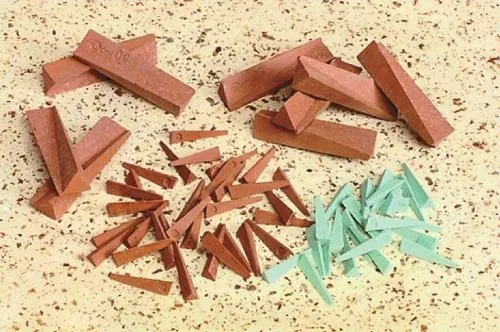
Orton Junior Pyrometric Cones, Cone 6, Box of 50
- Max cone
- #6
- Count
- Box of 50
- Size
- Small (junior)
Best for Kiln-sitter firings to cone 6
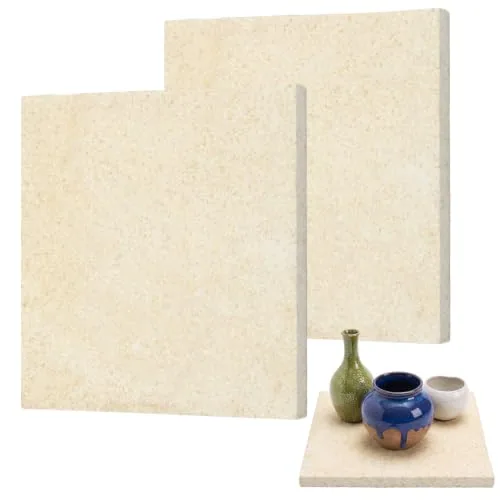
Weysat 7.1" Square Kiln Shelf, 2-Pack
- Max temperature
- 2280°F
- Size
- 7.1 x 7.1 inches
- Thickness
- 0.47 inch
Best for Small 120V and test kilns
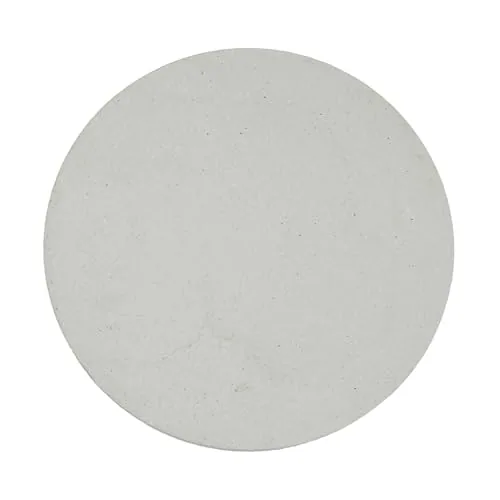
Weysat 13" Round Kiln Shelf, 2-Pack
- Max temperature
- 2282°F
- Size
- 13"
- Thickness
- 0.5 inches
Best for Mid-size round kilns

Penguin Pottery Liquid Kiln Wash, 16 oz
- Size
- 16 fl oz (1 Pint)
- Form
- Ready to use liquid
Best for Protecting new kiln shelves
Read the kiln electrical requirements guide, compare models in best kiln for home pottery, or browse the kilns category. Short on space? See the small space hub.
How we compared
We used the kiln listings in our catalogue, Orton's cone chart, EIA electricity data and the NEC continuous-load rule as explained in kiln-maker and supplier install guides. We did not install or fire these kilns. This is a planning aid, not electrical advice.