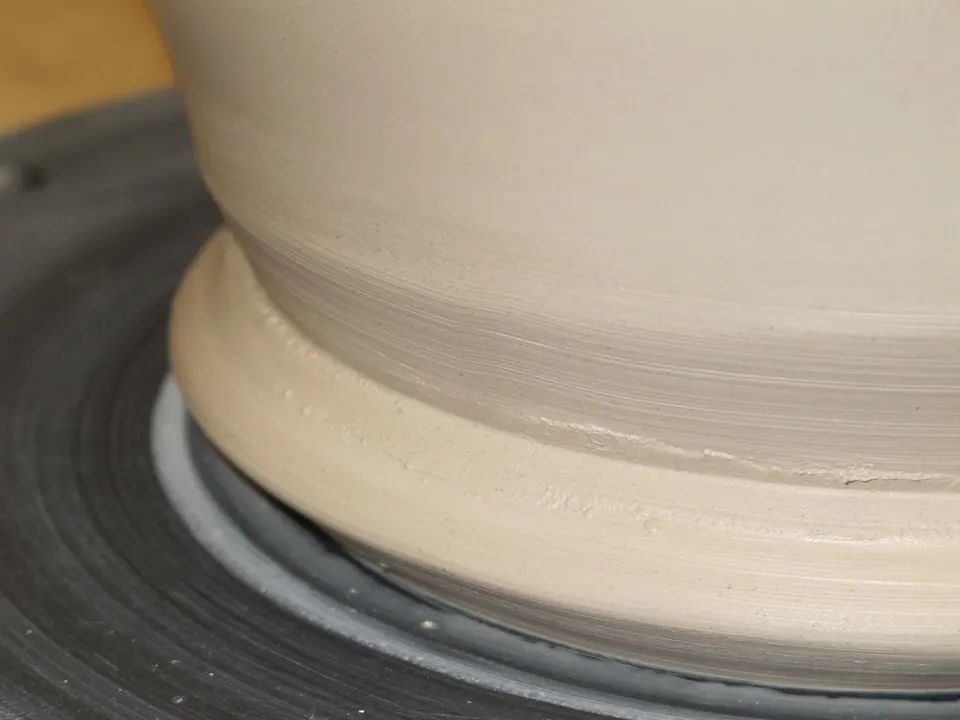
- The best trimming tool for most wheel throwers is a dual-ended metal tool like the Mudtools Do-All (kanna spade + curled loop) or a Xiem titanium-fused loop.
- Want an edge that stays sharp longer? Tungsten carbide (YVIEHTTEM) is harder than steel but chips if dropped.
- On a tight budget, Kemper ribbon sets and GBSCLOVER stainless loops cover the shapes for little outlay.
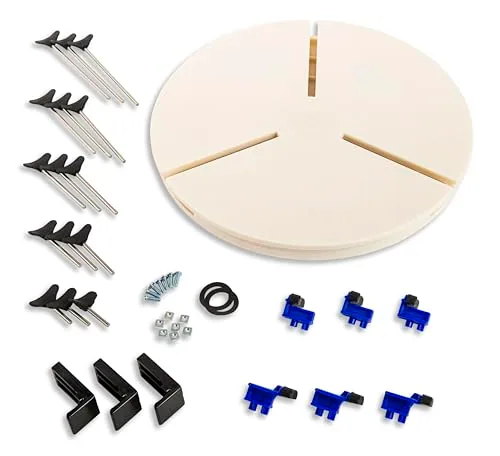
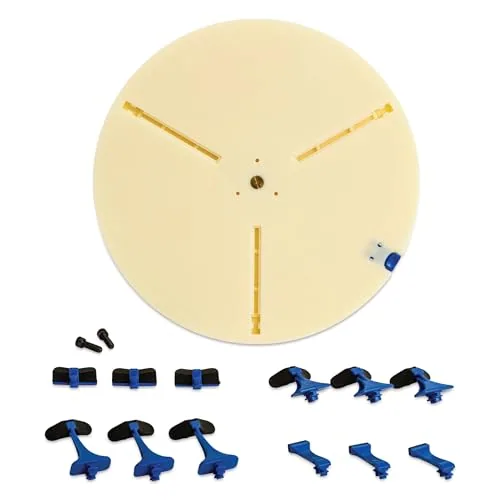
- A trimming chuck such as the Giffin Grip holds the pot; it is not a trimming tool, but it makes trimming much easier.
The best trimming tools for pottery shave leather-hard clay in clean ribbons instead of chattering, reach into a foot ring without gouging, and stay sharp long enough that you are not fighting the tool. Most potters own two or three: a broad loop for removing weight, a pointed or square edge for the foot, and something small for detail.
We compared eight trimming tools from Mudtools, Xiem, DiamondCore, Kemper, YVIEHTTEM and GBSCLOVER on blade material, shape and handle as listed by each maker. We did not trim with them. If you are new to the wheel, start with how to use a pottery wheel, which covers when your pot is ready to trim.
Our picks
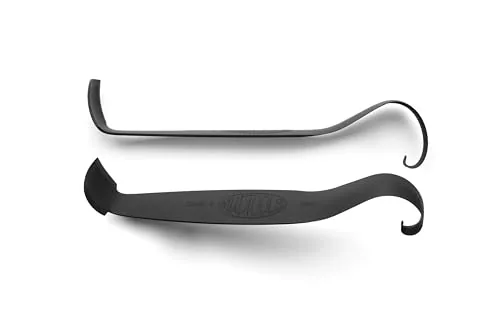
Mudtools Do-All Trimming Tool, Kanna & Loop
- Material
- Metal
- Ends
- Kanna spade + curled loop
The Do-All pairs a sharpened kanna spade with a curled loop on one metal tool. Mudtools says the spade refines feet on tea bowls, bowls and plates, while the broad curve smooths and the tight curve handles detail, which means less tool switching mid-trim.
Best for: bowls and plates, one-tool trimming
Skip if: you want a soft or padded grip
- Two trimming profiles on one tool
- Sharpened kanna spade
- Maker gives simple care advice (wax or oil)
- All-metal; no grip material listed
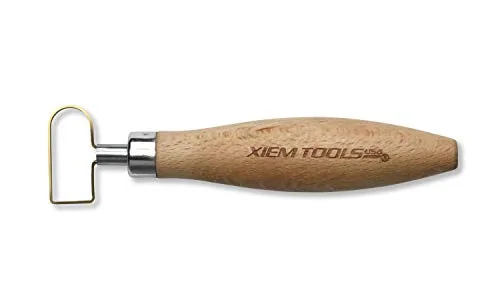
Xiem Titanium-Fused Trimming Tool, Medium Multi
- Material
- Tempered stainless steel, titanium nitride coat
- Shape
- Medium Multi-Function
- Handle
- Beech hardwood
Xiem hand-crafts the blade from high-carbon tempered stainless steel and fuses a thin titanium nitride layer for hardness, less friction and rust resistance. Xiem pitches it as an alternative to carbide without the risk of shattering if dropped. The medium multi-function shape is the versatile choice.
Best for: regular trimming sessions
Skip if: you only trim a few pots a year
- Titanium nitride coated blade
- Hand-sanded beech handle
- Less brittle than carbide per the maker
- One shape per tool; buy two for full coverage
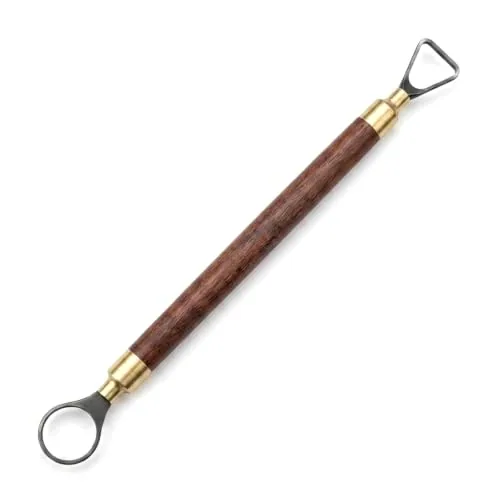
YVIEHTTEM Tungsten Carbide Trimming Tool
- Material
- Tungsten carbide
- Handle
- Hardwood, brass ferrule
- Ends
- Triangular + round
YVIEHTTEM lists ultra-hard tungsten carbide loops on a hardwood handle with a brass ferrule: a triangular head for crisp foot rings and a round head for contours. Carbide holds an edge longer than steel, which helps with groggy stoneware.
Best for: groggy clay, crisp foot rings
Skip if: you work over a hard floor and drop tools
- Tungsten carbide edges
- Two shapes on one tool
- Brass ferrule
- Carbide can chip if dropped
- Lesser-known brand; few specs beyond materials
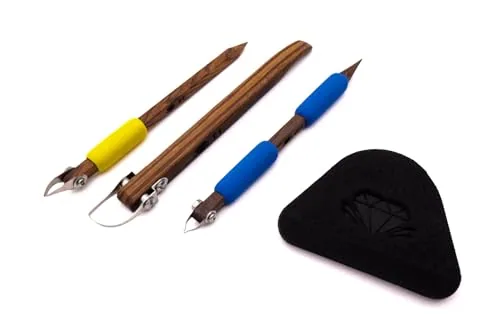
DiamondCore Carving & Trimming Set 1, 4 pc
- Pieces
- 4
- Material
- Stainless steel blades
- Includes
- P1, T1, FP1, SP1 sponge
DiamondCore's Set 1 bundles the T1 trimming tool (paddle handle, curved blade), P1 V-tip carving tool, FP1 1 mm U-tip and an SP1 sponge. The listing says stainless steel blades and a 90-day maker warranty.
Best for: potters who trim and carve sgraffito
Skip if: you only need one loop
- Trimming plus two carving tips
- Stainless blades
- 90-day warranty listed
- Only one dedicated trimming tool in the set
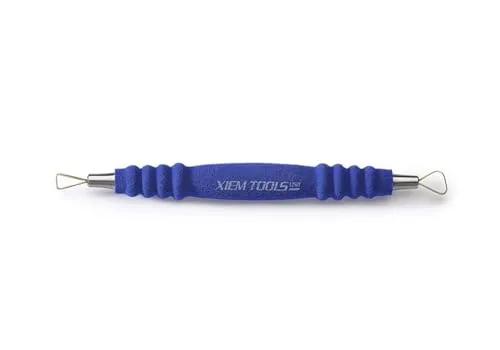
Xiem Mini Titanium-Fused Double-End Tool
- Material
- Tempered stainless steel, titanium nitride coat
- Length
- Approximately 6"
- Handle
- Soft foam sleeve
Xiem's mini double-end tool is about 6 inches long with titanium-fused blades and a soft foam sleeve. Small loops reach inside narrow feet, under handles and into carved lines.
Best for: small pieces, cups, detail
Skip if: you trim big bowls
- Two mini ends
- Foam grip
- Titanium nitride coat
- Too small for removing lots of clay
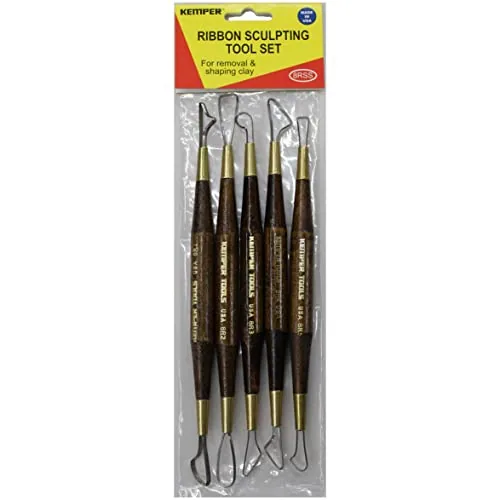
Kemper Ribbon Tools Set, 5 pc, 8"
- Pieces
- 5
- Size
- 8" (20 cm)
Kemper's 8R1–8R5 set gives five 8-inch ribbon tools in different shapes. The listing is minimal, but ribbon tools are the classic, inexpensive way to try several profiles before buying a premium one.
Best for: learning which shapes you like
Skip if: you want the sharpest edge
- 5 shapes
- 8-inch length
- Thin listing; check photos for shapes
- Ribbon steel dulls faster than carbide
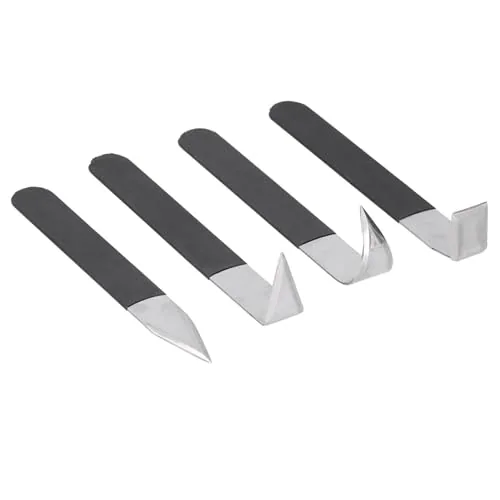
GBSCLOVER Stainless Trimming Tools, 4 pc
- Pieces
- 4
- Material
- Stainless steel
- Size
- 5.9x0.74in
- Handle
- Rubber
GBSCLOVER lists four stainless steel trimming tools measuring 5.9 x 0.74 inches with rubber sleeve handles and a 90-day warranty. A cushioned grip helps on longer sessions.
Best for: beginners and spare sets
Skip if: you want named, replaceable pro tools
- 4 tools
- Rubber grips
- 90-day warranty listed
- Blade profiles not described in detail
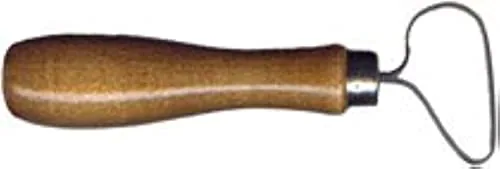
Kemper LT5 Loop Tool, No. 5
The Kemper LT5 is a single No. 5 loop tool that listings say is made in the United States. It is a simple, replaceable workhorse to keep beside the wheel.
Best for: a spare loop or class kit
Skip if: you want a kanna or carbide edge
- Single No. 5 loop
- Made in the United States per the listing
- Listing gives almost no specs
What makes the best trimming tools for pottery?
- Blade material. Plain or stainless steel is affordable and easy to sharpen. Titanium-nitride coated steel (Xiem) is harder and slicker. Tungsten carbide stays sharp longest but is brittle.
- Shape. A wide, rounded loop removes weight fast. A pointed or triangular edge cuts the inside and outside of a foot ring. A flat kanna spade levels bottoms and refines edges.
- Size. Mini tools reach into cups and under handles; bigger heads suit bowls and plates.
- Handle. Wood gives feedback; rubber or foam sleeves cushion longer sessions.
- Ends. Double-ended tools save switching.
Trimming and carving edges per purchase
Counted from each listing: tool ends or separate tools (sponges excluded)
More edges do not mean a better tool. One well-shaped, sharp edge removes clay faster and more cleanly than five dull ones.
Trimming tools compared
| Product | Material | Ends | Handle | Pieces | Size |
|---|---|---|---|---|---|
| Mudtools Do-All Trimming Tool, Kanna & Loop | Metal | Kanna spade + curled loop | — | — | — |
| Xiem Titanium-Fused Trimming Tool, Medium Multi | Tempered stainless steel, titanium nitride coat | — | Beech hardwood | — | — |
| YVIEHTTEM Tungsten Carbide Trimming Tool | Tungsten carbide | Triangular + round | Hardwood, brass ferrule | — | — |
| DiamondCore Carving & Trimming Set 1, 4 pc | Stainless steel blades | — | — | 4 | — |
| Xiem Mini Titanium-Fused Double-End Tool | Tempered stainless steel, titanium nitride coat | — | Soft foam sleeve | — | — |
| Kemper Ribbon Tools Set, 5 pc, 8" | — | — | — | 5 | 8" (20 cm) |
| GBSCLOVER Stainless Trimming Tools, 4 pc | Stainless steel | — | Rubber | 4 | 5.9x0.74in |
| Kemper LT5 Loop Tool, No. 5 | — | — | — | — | — |
Specs as listed by the maker or seller; check the listing before you buy.
Blade materials at a glance
| Steel / stainless | Titanium-fused steel | Tungsten carbide | |
|---|---|---|---|
| Edge life | ~ Shortest | ✓ Longer | ✓ Longest |
| Survives a drop | ✓ Usually | ✓ Maker says less brittle | ✗ Can chip or snap |
| Rust resistance | ~ Stainless better | ✓ Listed | ✓ Good |
| Groggy clay | ~ Dulls faster | ✓ Good | ✓ Best |
| Picks here | Kemper, GBSCLOVER, Mudtools, DiamondCore | Xiem | YVIEHTTEM |
How to trim a pot step by step
- Wait for leather-hard
The clay should be firm enough to hold its shape when inverted but still cool and slightly damp. Too wet and it smears; too dry and it chatters or cracks.
- Center the pot upside down
Tap-center it on the wheel head or a bat and hold it with clay lugs or a trimming chuck.
- Mark the foot
Use a needle tool or the point of a trimming tool to mark where the foot ring will sit.
- Remove weight with a broad loop
Hold the tool firmly, brace your hands together and take thin, steady passes at moderate speed.
- Cut the foot ring
Switch to a pointed or triangular edge for the inside and outside of the foot.
- Refine and burnish
Use a kanna or rib to smooth the surface, then check floor thickness by tapping. Learn to avoid the S-cracks and bottom cracks covered in why pottery cracks.
Which trimming tool shape does what?
Listings often name a shape without explaining it. Use this as a decoder when you compare tools.
Trimming tool shapes
| Shape | What it does well | Where it struggles | Example here |
|---|---|---|---|
| Broad round loop | Removes weight from bowl bottoms fast | Tight corners | Mudtools Do-All curled loop |
| Teardrop / pointed | Inside and outside of foot rings | Large flat areas | Xiem small teardrop, YVIEHTTEM triangle |
| Kanna spade | Leveling bottoms, crisp edges, refining | Hollowing deep feet | Mudtools Do-All |
| Square or flat ribbon | Straight walls, bevels, cylinders | Curved bowls | Kemper ribbon set |
| Mini loops | Cups, handles, carved lines | Removing a lot of clay | Xiem mini double-end |
If you can buy only two tools, pick one broad shape and one pointed shape. That pairing covers almost every bowl, mug and plate foot. Add a kanna or mini loop later when you know what slows you down.
Hand position matters as much as the tool. Brace the hand holding the tool against your other hand or a tool rest, keep the edge at a consistent angle and let the wheel do the work. Slow the wheel as you approach the final thickness.
Do you need a Giffin Grip to trim?
No, but many home potters like one. A trimming chuck holds the pot centered without clay lugs, which speeds up batches of mugs and bowls. The Giffin Grip Model 10 listing includes rods and sliders and states a 90-day money-back guarantee with 10 years of free replacement for parts that wear out or break in normal studio use. The Mini listing says it fits all standard wheel sizes and is assembled.
Giffin Grip Model 10 Trimming Chuck
- Size
- 14 inches
- Includes
- Rods and sliders
Best for Potters who trim a lot
Giffin Grip Mini Trimming Chuck
- Fit
- All standard wheel sizes
- Assembly
- Is assembled
Best for Trimming small pots
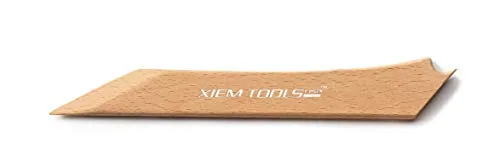
Xiem Foot Shaper, Large
- Material
- Beechwood
- Size
- Large
- Length
- 8.5 inches
Best for Shaping feet on thrown pots
The Xiem Foot Shaper (8.5 inches, beechwood) is another helper: one end cuts and scrapes, the concave end forms a consistent foot. Browse more trimming helpers in the pottery wheels category, including bats from best wheel bats.
Which trimming tools for beginners, small pots and big bowls?
- Beginners: one Mudtools Do-All or a Xiem medium multi-function tool, plus a budget set to learn shapes. Start in the beginners hub.
- Mugs and cups: add the Xiem mini double-end for tight feet and handle joins.
- Large bowls and plates: a broad loop or kanna removes weight; consider a trimming chuck for big diameters.
- Groggy stoneware: carbide or titanium-fused blades hold their edge longer.
- Carving and sgraffito: DiamondCore's set covers both trimming and fine lines.
Trimming mistakes to avoid
- Trimming too wet. The tool drags and the pot distorts.
- Trimming too dry. The tool chatters, leaves ridges and can crack the foot.
- Using a dull tool. You press harder and gouge. Sharpen steel tools or replace them.
- Dropping carbide. Keep carbide tools in a bag or holder, not loose on the splash pan.
- Leaving the floor too thick or too thin. Uneven floors crack in drying and firing.
- Storing tools wet. Dry metal tools after each session to prevent rust.
We compare manufacturer specs and listing data (power, capacity, size, voltage, temperature or cone rating, firing range, what is included) and what the maker says each product is for. We did not throw on, fire or lab-test these products, and we never show invented scores, ratings or prices.