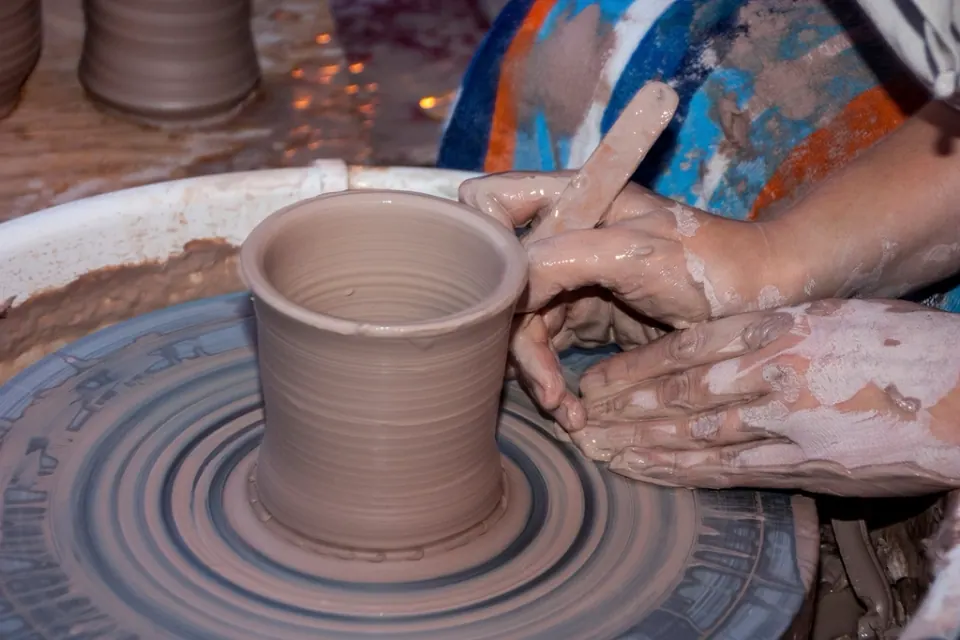
- The best pottery rib to start with is a soft polymer kidney such as the Mudtools Shape 1 Red (R1), listed as very soft and made in the USA.
- For compressing and finishing in tight spots, the Xiem soft silicone rib SCR5 (4.25 x 2.2 in, 1/4 in thick) is a good second rib.
- Wood ribs such as Kemper RB4 and the MKM Craftsman W7a shape and lift walls; steel ribs like Xiem 1C scrape and refine leather-hard clay.
- Building a set on a budget? Byllstore (6 beech ribs) and Sherr (12 rubber ribs) give you several shapes at once.
The best pottery ribs are the ones whose flexibility and edge match what you are doing: soft and flexible to compress a bowl floor or smooth a curve, firm to straighten a cylinder wall, metal to scrape and refine leather-hard clay. Most potters end up with three or four ribs in different materials rather than one perfect rib.
Ribs are also among the cheapest upgrades in pottery. A better rib will not fix centering, but it does make walls smoother, floors stronger and finishing faster, which shows in every pot you make.
We compared eight ribs from Mudtools, Xiem, Kemper, MKM, Byllstore and Sherr on listed material, size, flex rating and shape. Nothing here is based on our own throwing; specs come from makers' listings. New to the wheel? Read how to use a pottery wheel and how to make a mug to see where ribs fit in.
Our picks
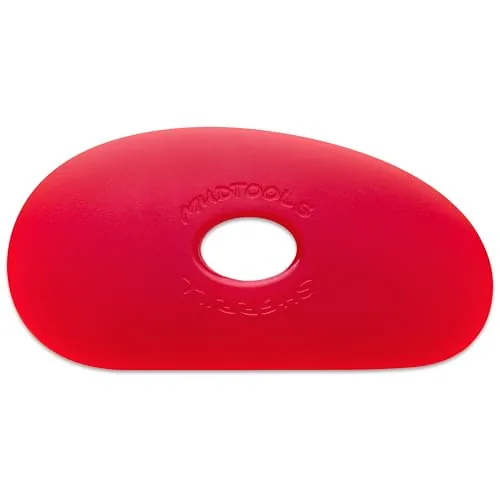
Mudtools Shape 1 Kidney Rib, Red Very Soft (R1)
- Material
- Polymer
- Shape
- Shape 1
- Flex
- Red - Very Soft (R1)
- Made in
- USA
Mudtools calls Shape 1 its all-around workhorse: a classic kidney profile large enough to cover surface area and small enough for tight curves. It is made from Mudtools' flexible polymer, rated Red, very soft (R1), and the maker says the edge resists burrs and becomes burnished with use. Made in the USA.
Best for: first rib, smoothing and compressing
Skip if: you want a stiff rib for straight walls
- Very soft flex for curves
- Burr-resistant polymer per the maker
- Made in the USA
- Too soft to straighten tall walls
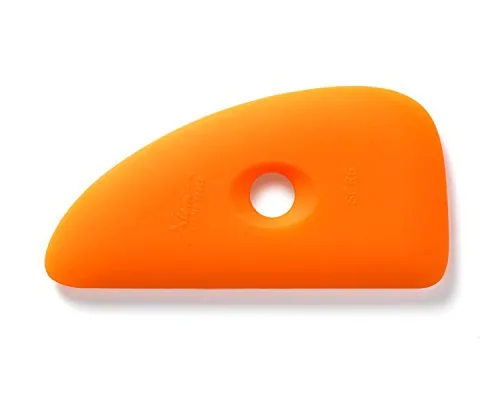
Xiem Soft Silicone Clay Rib, SCR5
- Material
- Silicone
- Size
- 4.25" x 2.2"
- Thickness
- 1/4"
Xiem's SCR5 is a soft silicone rib about 4.25 x 2.2 inches and 1/4 inch thick. Xiem says its silicone ribs are heat, solvent, stain and crack resistant, and suit shaping, smoothing and finishing in tight areas.
Best for: finishing and compressing tight spots
Skip if: you need a sharp scraping edge
- Size listed: 4.25 x 2.2 in
- 1/4 in thickness for control
- Silicone resists stains and cracking
- One shape; Xiem sells others separately
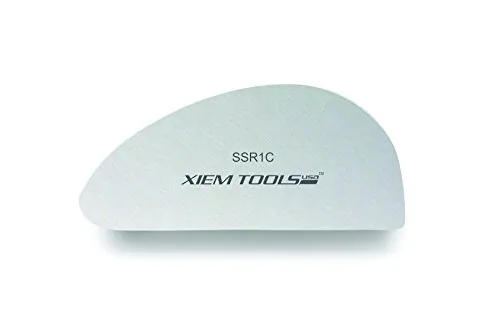
Xiem Stainless Steel Clay Rib, 1C
- Material
- Stainless steel
- Size
- 4" x 1.8"
Xiem's stainless rib 1C measures about 4 x 1.8 inches. Xiem lists it for shaping, trimming, cutting, smoothing and finishing leather-hard clay, polymer clay, wax and plaster, so it doubles as a hand-building scraper.
Best for: refining leather-hard surfaces, hand-building
Skip if: you only throw soft clay
- Flexible cutlery stainless steel
- Works on several materials per the listing
- Edge can dig into soft, wet clay
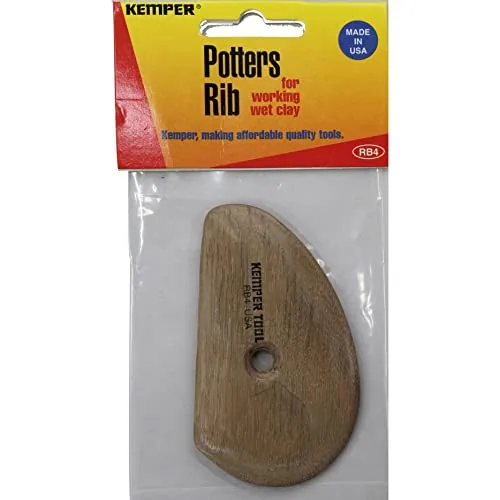
Kemper Hardwood Potter's Rib RB4, 3-1/2"
- Material
- Hardwood
- Size
- 3-1/2" (8.9 cm)
The Kemper RB4 is a 3-1/2 inch (8.9 cm) hardwood potter's rib. Wood ribs are firm, so they lift and straighten walls and wick a little water. A note: the listing data shows a unit count of 12, so confirm whether it is a single rib or a pack.
Best for: lifting and straightening walls
Skip if: you want flex for bowls
- Hardwood, classic profile
- 3-1/2 in size listed
- Pack count unclear on the listing
- Wood can swell if left soaking
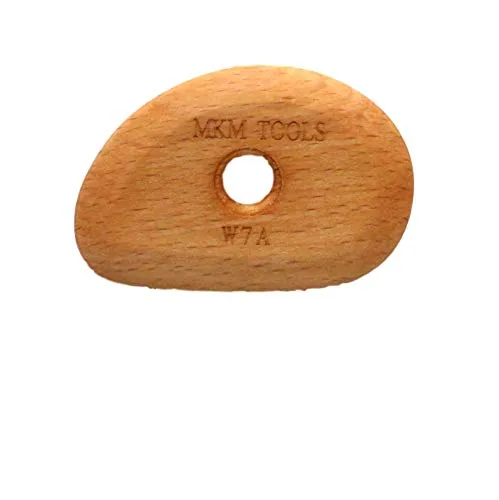
MKM Craftsman Series Wood Rib, W7a
- Material
- Medium hard wood
- Size
- 2.875" x 1.875"
MKM's Craftsman Series is 28 wood rib shapes in medium-hard wood with relatively sharp straight edges. W7a measures about 2.875 x 1.875 inches; MKM describes rib 7a as great for working the inside of forms. Ribs with the same number but a/b/c letters share a curve in different sizes.
Best for: bowl interiors, profile control
Skip if: you want one rib for everything
- Precise curve for interiors
- Clear size listed
- Part of a 28-shape system
- Small; one specific profile
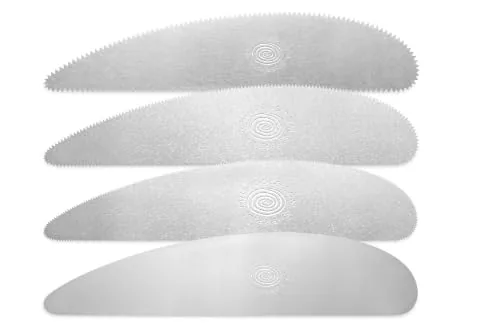
Mudtools SSL12 Long Scraper Rib, 12 TPI, 6"
- Material
- Stainless steel
- Size
- 6 in
- Teeth
- 12 per inch
Mudtools' SSL12 is a 6-inch stainless scraper rib with 12 teeth per inch, the most aggressive edge in its Long Scraper line. Mudtools lists it for fast clay removal, scoring joints and drawing texture across wide or tall forms.
Best for: hand-building, scoring, leveling
Skip if: you want smooth finishes from one tool
- 6 in reach
- 12 TPI aggressive bite
- Cutlery-grade stainless
- Toothed edge leaves marks you must smooth
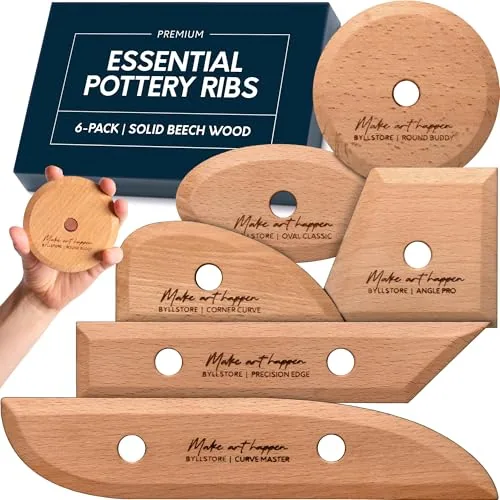
Byllstore Essential Pottery Ribs, 6-Pack
- Pieces
- 6
- Material
- Solid beech wood
Byllstore's set is six shaped ribs in solid beech, sanded for grip, for shaping, trimming, smoothing and refining. Six shapes help you discover which profiles you actually use before buying premium singles.
Best for: beginners building a rib collection
Skip if: you need flexible ribs
- 6 shapes
- Solid beech wood
- Individual sizes not listed
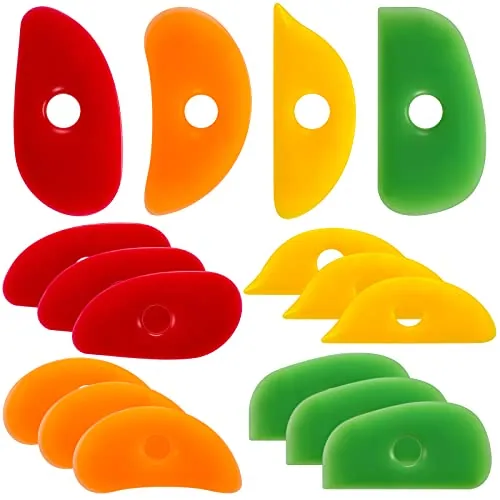
Sherr Rubber Pottery Ribs, 12 pc
- Pieces
- 12 (4 shapes)
- Material
- Rubber
- Size
- 10 x 3.97 cm
Sherr lists 12 rubber ribs in four shapes and four colors, each about 10 x 3.97 cm with a thumb hole for grip. A dozen flexible ribs suit a class, a shared studio or a home potter who wants spares.
Best for: classrooms and spare ribs
Skip if: you want named flex ratings
- 12 pieces, 4 shapes
- Thumb hole grip
- Size listed
- Flex per color not explained
How to choose the best pottery ribs
Think in two dimensions: material (which sets how the edge behaves) and flex (which sets how much the rib follows a curve).
Rib materials compared
| Polymer / rubber | Silicone | Wood | Stainless steel | |
|---|---|---|---|---|
| Flex | ✓ Soft to firm | ✓ Soft to firm | ✗ Rigid | ~ Thin and springy |
| Compressing floors and rims | ✓ Yes | ✓ Yes | ~ Possible | ✗ Not ideal |
| Straightening walls | ~ Firm grades | ~ Firm grades | ✓ Yes | ✓ Yes |
| Scraping leather-hard clay | ✗ No | ✗ No | ~ Yes | ✓ Best |
| Picks here | Mudtools R1, Sherr | Xiem SCR5 | Kemper RB4, MKM W7a, Byllstore | Xiem 1C, Mudtools SSL12 |
- Flex rating. Mudtools color-codes flex: Red very soft, Yellow soft, Green medium, Blue firm. Start soft, add firmer later.
- Shape. Kidney shapes are all-rounders. Straight edges suit cylinders. Curves like MKM 7a match bowl interiors.
- Size. Bigger ribs cover more surface; smaller ones reach inside mugs.
- Edge. Burr-free polymer edges glide; sharp steel edges cut and refine.
Pottery ribs by size
Longest listed dimension per rib
Inches, as listed (Sherr converted from 10 cm). Ribs without a listed size are not shown.
Small ribs (under 3.5 inches) fit inside cups and small bowls. Ribs around 4 inches are the everyday size. Longer ribs and scrapers help on tall cylinders, wide plates and slab work.
| Product | Material | Flex | Size | Pieces | Made in |
|---|---|---|---|---|---|
| Mudtools Shape 1 Kidney Rib, Red Very Soft (R1) | Polymer | Red - Very Soft (R1) | — | — | USA |
| Xiem Soft Silicone Clay Rib, SCR5 | Silicone | — | 4.25" x 2.2" | — | — |
| Xiem Stainless Steel Clay Rib, 1C | Stainless steel | — | 4" x 1.8" | — | — |
| Kemper Hardwood Potter's Rib RB4, 3-1/2" | Hardwood | — | 3-1/2" (8.9 cm) | — | — |
| MKM Craftsman Series Wood Rib, W7a | Medium hard wood | — | 2.875" x 1.875" | — | — |
| Mudtools SSL12 Long Scraper Rib, 12 TPI, 6" | Stainless steel | — | 6 in | — | — |
| Byllstore Essential Pottery Ribs, 6-Pack | Solid beech wood | — | — | 6 | — |
| Sherr Rubber Pottery Ribs, 12 pc | Rubber | — | 10 x 3.97 cm | 12 (4 shapes) | — |
Specs as listed by the maker or seller; check the listing before you buy.
Which rib for which pot?
Ribs are easiest to choose by the form you make most. Match the rib to the job, not to a brand.
Rib choice by form
| Form | Main rib | Second rib | Why |
|---|---|---|---|
| Mugs and cylinders | Firm wood or straight steel | Soft polymer for the floor | Straight walls need a rigid edge; floors still need compression |
| Bowls | Curved rib matching the interior | Soft kidney | A curve that matches the bowl leaves a smooth, even inside |
| Plates | Large soft rib | Steel rib for the underside | Wide floors need lots of compression to resist cracking |
| Slab boxes and trays | Stainless scraper | Steel rib | Scoring, leveling and smoothing seams |
| Small cups and details | Small silicone rib | Mini wood rib | Fits inside narrow openings |
If you cannot decide, start with a soft kidney and a wood rib and keep a note of what feels clumsy. That tells you which rib to add next. Potters who throw a lot of bowls almost always end up with at least one curved rib; potters who make mugs reach for straight, firm edges.
Water matters too. Wet ribs glide; dry ribs drag. Keep your rib in your hand rather than in the bucket between passes, and dip only the edge. A rib that is too wet adds slurry; one that is too dry can grab and twist a thin wall.
How to use a rib on the wheel
- Compress the floor
After opening, press a soft rib across the floor from center outward a few times. Compression helps prevent the S-cracks described in why pottery cracks.
- Remove slip after pulling
Hold the rib lightly against the outside wall as the wheel turns to remove slurry and reveal the form.
- Shape and straighten
Support the inside with your fingers while a firmer wood or steel rib presses from the outside to define the profile.
- Refine the inside of bowls
A curved rib that matches the bowl interior gives a smooth, even curve.
- Finish rims and edges
A soft silicone rib or a sponge smooths the rim without thinning it.
Ribs for hand-building, beginners and classrooms
- Hand-building: a stainless scraper (Mudtools SSL12) levels slabs and scores joins; a steel rib smooths seams. See pottery without a wheel and the hand-building category.
- Total beginners: one soft polymer kidney plus one wood rib covers most of the first month. Most pottery tool kits already include a wood rib.
- Classrooms: Sherr's 12 rubber ribs or Byllstore's 6 beech ribs spread across a table. More in the kids and classroom hub.
- Upgrading: add a firmer polymer rib for big bowls or straight walls.
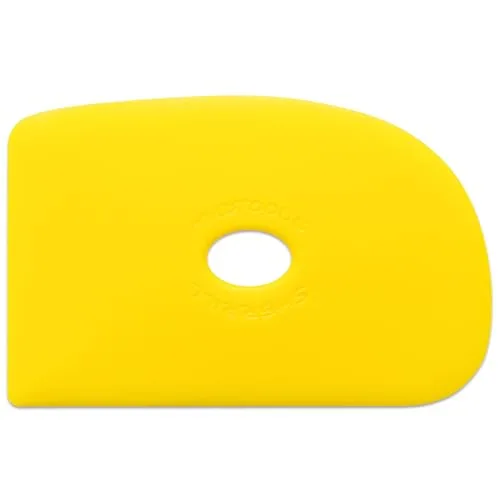
Mudtools Shape 2 Polymer Rib, Yellow Soft (Y2)
- Material
- Polymer
- Shape
- Shape 2
- Flex
- Yellow - Soft (Y2)
Best for Smoothing thrown walls
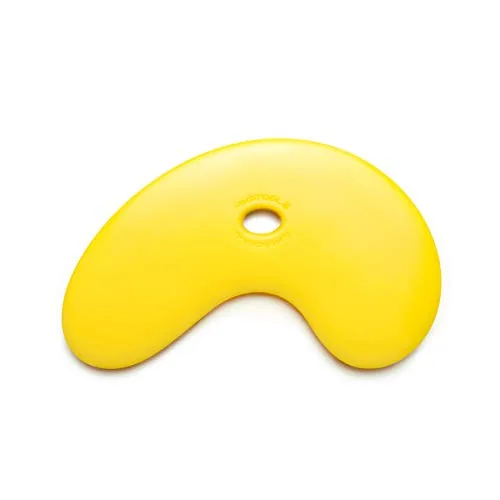
Mudtools Large Bowl Rib, Yellow Soft
- Material
- Polymer
- Size
- Large
- Flex
- Yellow - Soft
Best for Throwing bowls
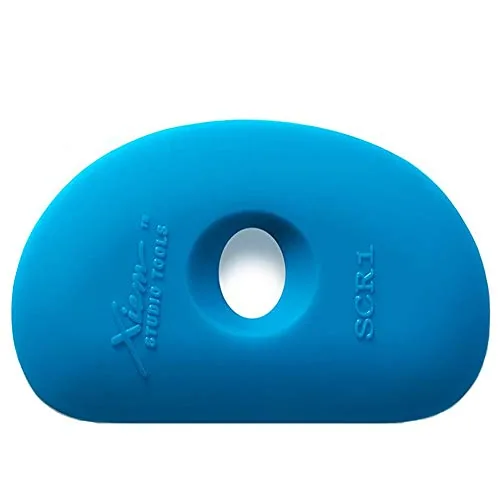
Xiem Firm Silicone Clay Rib Set, 8 pc
- Pieces
- 8
- Material
- Silicone
- Thickness
- 1/4"
Best for A full rib collection
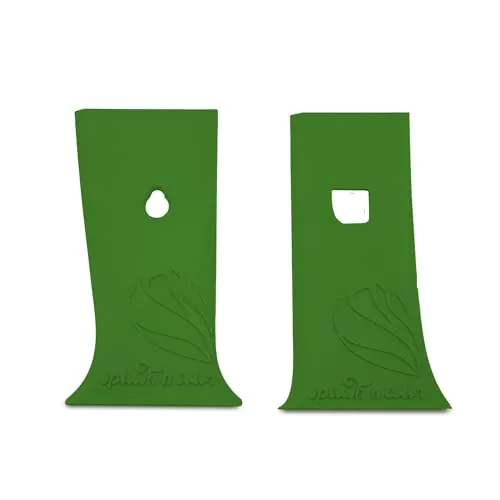
SplashNColor ABS Texture Ribs, Set D, 2-Pack
- Pieces
- 2
- Material
- ABS plastic
Best for Adding texture to walls
Those four step-ups are the Mudtools Yellow Shape 2 (the maker calls it its original workhorse for throwing, smoothing and compressing), the Mudtools Large Bowl Rib, Xiem's complete set of 8 firm silicone ribs and SplashNColor ABS texture ribs.
Mistakes to avoid with pottery ribs
- Using a rigid rib on soft, thin walls. It can collapse the form. Start soft.
- Skipping floor compression. Uncompressed floors are a common cause of cracks.
- Pressing too hard with steel. Steel ribs cut; let the wheel do the work.
- Leaving wood ribs in the water bucket. Wood can swell, warp or split.
- Ignoring burrs. Cheap cut plastic ribs can develop burrs that scratch the surface; check edges and sand lightly if needed.
We compare manufacturer specs and listing data (power, capacity, size, voltage, temperature or cone rating, firing range, what is included) and what the maker says each product is for. We did not throw on, fire or lab-test these products, and we never show invented scores, ratings or prices.