- The best respirator for pottery for most home potters is a reusable P100 half mask. The 3M 6291 kit (medium) comes with 2091 P100 filters and is listed as NIOSH approved.
- N95 vs P100: an N95 filters at least 95% of non-oil particles; a P100 filters 99.97% and is oil-proof. Either only works if it seals on your face.
- Low-profile option: the GVS Elipse P100 (small/medium) with filters included. For a built-in fit check, the Klein Tools 60552 (M/L) lists a push-in check and a sample port.
- A respirator is the last line of defense. Wet cleaning, no dry sweeping and good ventilation come first. HEPA air purifiers help with airborne dust but are not vacuums.
The best respirator for pottery is one that NIOSH has approved for particulates, fits your face well enough to seal and is comfortable enough that you actually wear it when you mix dry glaze, pour clay powder, sand greenware or clean up. Dried clay and many glaze materials contain crystalline silica, and the dust you cannot see is the dust that matters.
We compared eight respirators from 3M, GVS, Klein Tools, Honeywell and Moldex using listing data: filter class, size, seal material, what is included and whether the listing states NIOSH approval. We did not fit test them. Nothing here is medical advice; for health questions, talk to a clinician. For the full safety picture, read pottery studio safety.
Our picks
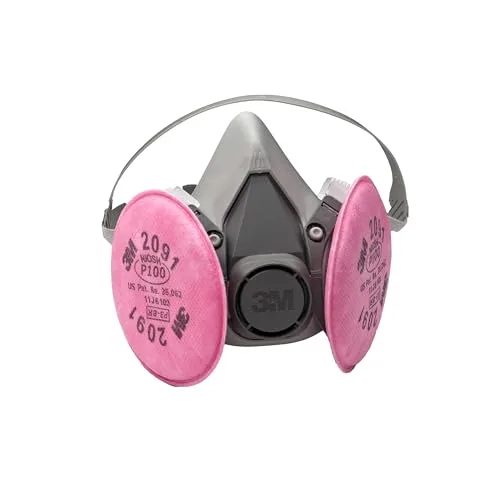
3M 6291 Half Mask Kit w/ P100 Filters, Medium
- Filter rating
- P100
- Size
- Medium
- Includes
- Half facepiece + 2091 P100 filters
3M's 6291 kit combines a medium half facepiece with 2091 P100 particulate filters on a bayonet connection. The listing states NIOSH approved for environments containing certain oil and non-oil based particles, and describes a soft, lightweight facepiece with easy-to-adjust straps.
Best for: most home potters, medium face size
Skip if: medium does not fit you; buy the size that seals
- P100 filters included
- NIOSH approval stated on the listing
- Bayonet filters easy to replace
- Medium only in this kit
- Non-silicone facepiece
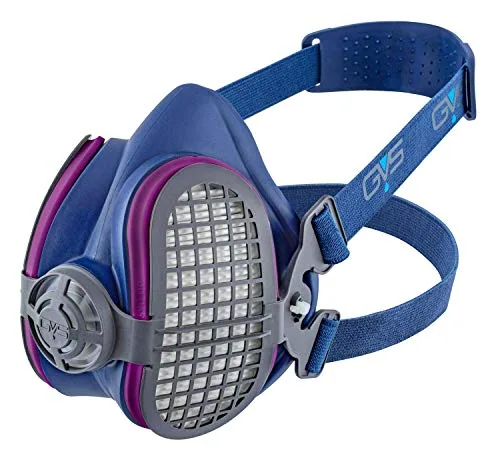
GVS Elipse P100 Dust Half Mask, S/M
- Filter rating
- P100
- Size
- Small-Medium
- Filters
- Replaceable, included
GVS lists the Elipse as a P100 dust half mask in small/medium with replaceable, reusable filters included, made from a soft, odorless thermoplastic elastomer without latex. Its compact shape leaves room for safety glasses.
Best for: smaller faces, glasses wearers
Skip if: you need a large size
- P100 filters included
- Compact; full field of vision per listing
- Latex-free
- NIOSH approval number not shown in our listing data; confirm on the NIOSH list
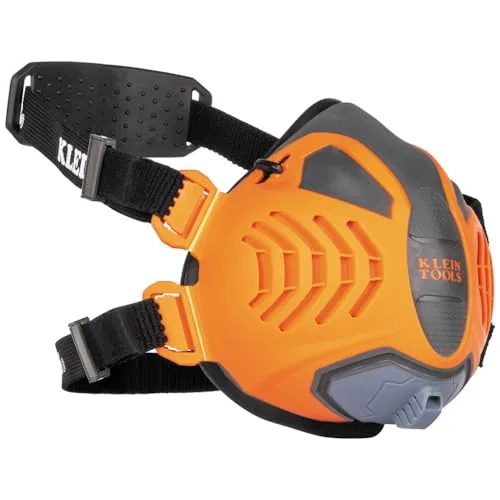
Klein Tools 60552 P100 Half-Mask Respirator, M/L
- Filter rating
- P100
- Size
- M/L
- Filters
- Replaceable
Klein Tools lists its 60552 as NIOSH P100 rated, in M/L, with a simple push-in fit check to validate the face seal, a downward exhalation valve to reduce glasses fogging and a sample port for fit testing. Replacement filters (60554) are sold separately.
Best for: anyone who wants an easy seal check
Skip if: you have a small face
- Push-in fit check
- Fit-test sample port
- Down-facing valve
- M/L only
- Replacement filters sold separately
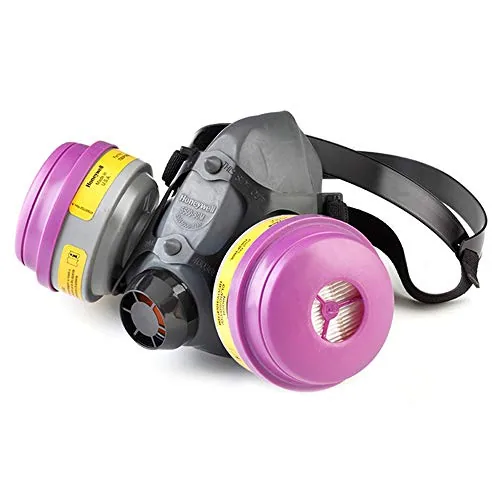
Honeywell Reusable Half Mask MC/P100, Large
- Filter rating
- MC/P100
- Size
- Large
- Includes
- 2 multi-contaminant P100 cartridge/filters
Honeywell's convenience pack includes a large reusable half mask and two multi-contaminant P100 cartridge/filter combos for gases, vapors and particulates. The P100 part handles clay dust; the gas and vapor part matters if you also use solvents for other crafts. For clay alone, it is more than you need.
Best for: potters who also paint, finish or use solvents
Skip if: you only need dust protection
- MC/P100 cartridges included
- Threaded cartridges resist accidental disconnection
- Latex-free
- Large size
- Heavier cartridges than particulate-only filters
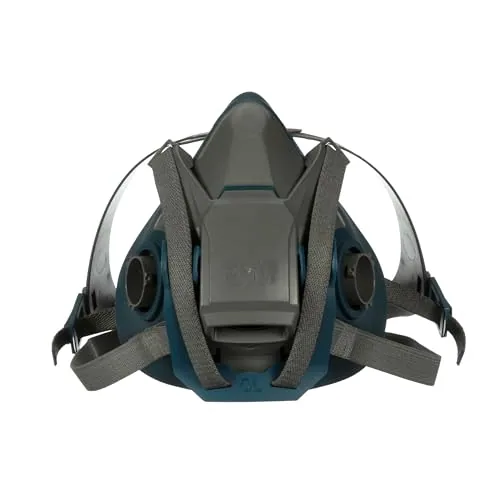
3M 6503QL Rugged Comfort Half Mask, Large
- Filter rating
- Uses 3M cartridges/filters (sold separately)
- Size
- Large
- Seal
- Silicone
3M's 6503QL Rugged Comfort is a large half mask with a silicone face seal, a quick-latch drop-down to take it on and off, a Cool Flow exhalation valve and an adjustable head cradle. The listing states NIOSH approval with 3M cartridges and filters, which are sold separately.
Best for: longer sessions, large faces
Skip if: you want filters in the box
- Silicone seal
- Quick-latch drop-down
- NIOSH approval stated with 3M filters
- Filters sold separately; pair with 2091 or 2097 P100
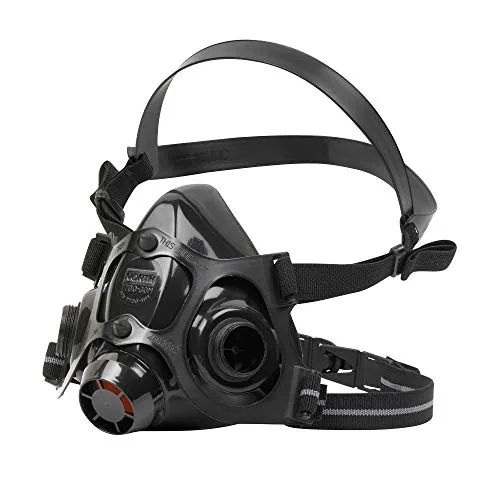
Honeywell North 7700 Silicone Half Mask, Small
- Filter rating
- Uses North threaded cartridges (not stated as included)
- Size
- Small
- Material
- Silicone
Honeywell's North 7700 is a silicone half mask in size small, listed as NIOSH approved, with a contoured face seal of variable thickness and threaded cartridge connectors. Small sizes are hard to find, and fit beats features.
Best for: small faces wanting silicone
Skip if: you want filters included
- Size small
- Silicone, contoured seal
- NIOSH approved per title
- Cartridges not stated as included; buy North P100 filters
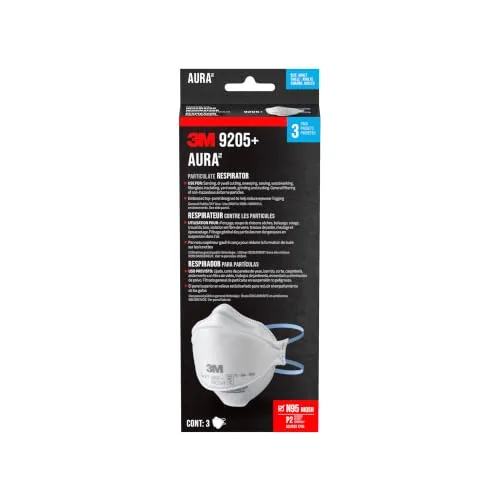
3M Aura 9205+ N95 Respirators, 3-Pack
- Filter rating
- N95
- Pieces
- 3
- Design
- 3-panel, low-profile
The 3M Aura 9205+ is a three-panel, low-profile N95, listed as NIOSH approved for at least 95% filtration of certain non-oil based particles. An embossed top panel is designed to help reduce eyewear fogging, and a chin tab helps positioning.
Best for: occasional dusty tasks, guests, classes
Skip if: you mix dry materials often
- NIOSH approved N95
- Low-profile 3-panel design
- No filters to swap
- Disposable
- 3 per pack
Moldex 2200 N95 Respirators, M/L, 20-Pack
- Filter rating
- N95
- Size
- Medium/Large
- Pieces
- 20
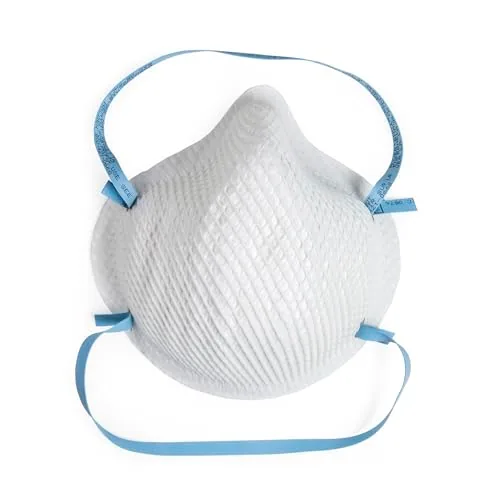
Moldex 2200 N95s come 20 to a pack in medium/large, listed as NIOSH approved. Moldex describes a Dura-Mesh shell that resists collapse in heat and humidity, a molded nose bridge without a metal band and a two-strap design.
Best for: shared studios, regular cleanup days
Skip if: you need a small size
- 20 masks
- NIOSH approved per listing
- Shell resists collapse
- M/L only
- No exhalation valve listed
Why do potters need a respirator?
Clay and many glaze materials contain crystalline silica. Wet clay is not the issue; dry dust is. Dust rises when you mix dry glaze or clay powder, sand or scrape dry pieces, sweep, or shake out towels and aprons.
N95 vs P100: which is the best respirator for pottery?
Both are NIOSH particulate classes. The letter tells you about oil resistance (N = not oil resistant, P = oil-proof); the number tells you minimum filter efficiency. Clay and glaze dust are not oily, so the main difference for potters is the efficiency and the mask style.
Particles that can pass the filter media, per 10,000
Computed from minimum efficiency: N95 = 95%, P100 = 99.97%. Assumes a perfect seal; any gap around the edge lets in far more.
Disposable N95 vs reusable P100 half mask
| Disposable N95 | Reusable P100 half mask | |
|---|---|---|
| Minimum filter efficiency | 95% | ✓ 99.97% |
| Seal | ~ Depends on shape and straps | ✓ Rubber or silicone facepiece |
| Cost over time | ~ Replace often | ✓ Replace filters only |
| Comfort for short tasks | ✓ Light | ~ Heavier |
| Mixing dry glaze or clay | ~ Acceptable if it seals | ✓ Preferred |
| Sizes here | M/L or one size | S, S/M, M, M/L, L |
For frequent dry-material work, a P100 half mask is the better choice. For a quick cleanup day or for guests, a well-fitting N95 is reasonable. Check any model on the NIOSH certified equipment list via NPPTL before you buy.
How to get a half mask to fit
- Pick your size
Half masks come in sizes. A small face in a large mask will leak at the chin or nose. Several picks here are size-specific: Honeywell 7700 small, GVS S/M, 3M 6291 medium, Klein M/L, 3M 6503QL and Honeywell MC/P100 large.
- Shave the seal area
Beards and stubble under the seal stop it sealing. If you cannot shave, ask a safety supplier about loose-fitting powered respirators.
- Put it on correctly
Cup the mask over nose and chin, then fasten the head cradle and neck straps. Tighten evenly; do not crank one strap.
- Do a user seal check every time
Follow the maker's instructions: typically cover the filters and inhale gently (the mask should pull in) and cover the exhalation valve and exhale gently (it should bulge slightly). Klein's 60552 lists a push-in fit check.
- Replace filters on schedule
Follow the filter maker's change guidance, and replace sooner if breathing gets harder or filters are damaged or dirty.
Respirators compared
| Product | Filter rating | Size | Filters | Includes | Seal | Pieces |
|---|---|---|---|---|---|---|
| 3M 6291 Half Mask Kit w/ P100 Filters, Medium | P100 | Medium | — | Half facepiece + 2091 P100 filters | — | — |
| GVS Elipse P100 Dust Half Mask, S/M | P100 | Small-Medium | Replaceable, included | — | — | — |
| Klein Tools 60552 P100 Half-Mask Respirator, M/L | P100 | M/L | Replaceable | — | — | — |
| Honeywell Reusable Half Mask MC/P100, Large | MC/P100 | Large | — | 2 multi-contaminant P100 cartridge/filters | — | — |
| 3M 6503QL Rugged Comfort Half Mask, Large | Uses 3M cartridges/filters (sold separately) | Large | — | — | Silicone | — |
| Honeywell North 7700 Silicone Half Mask, Small | Uses North threaded cartridges (not stated as included) | Small | — | — | — | — |
| 3M Aura 9205+ N95 Respirators, 3-Pack | N95 | — | — | — | — | 3 |
| Moldex 2200 N95 Respirators, M/L, 20-Pack | N95 | Medium/Large | — | — | — | 20 |
Specs as listed by the maker or seller; check the listing before you buy.
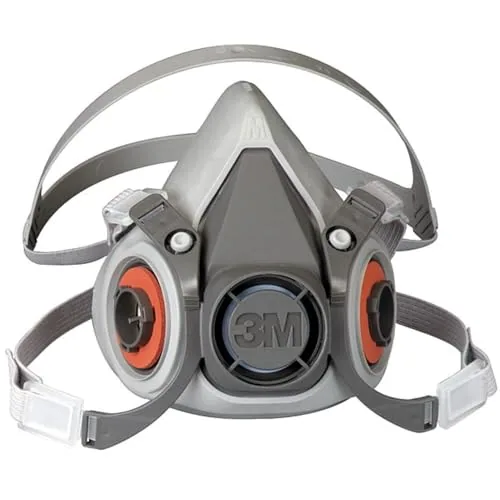
3M 6200 Half Mask Facepiece, Medium
- Filter rating
- Uses 3M 6000 Series cartridges (sold separately)
- Size
- M
Best for Building a reusable mask setup
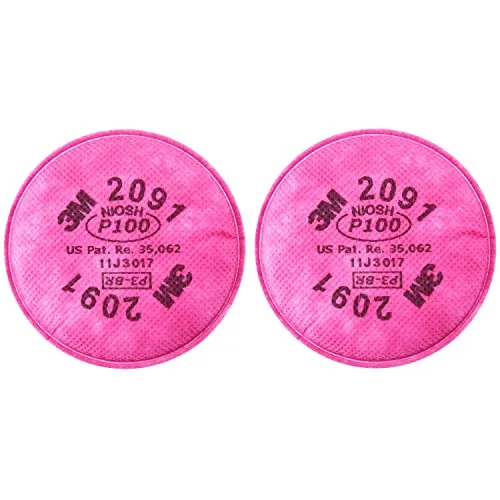
3M 2091 P100 Particulate Filters, 3 Pairs
- Filter rating
- P100
- Efficiency
- 99.97%
- Pieces
- 3 pairs (6 filters)
Best for Refilling a 3M half mask
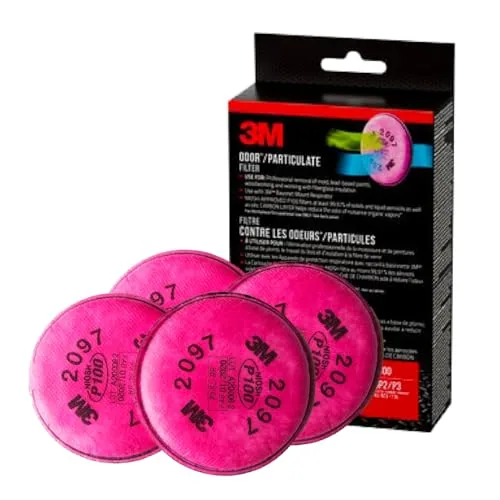
3M 2097 P100 Odor/Particulate Filters, 2 Pairs
- Filter rating
- P100
- Efficiency
- 99.97%
- Pieces
- 2 pairs
Best for Particulates plus mild odors
Building your own 3M setup? The 6200 medium facepiece takes 6000 series cartridges or, with bayonet filters, the 2091 P100 (3 pairs) or 2097 P100 with odor relief (2 pairs). The 2097 listing says for workplace/occupational use.
When should you wear a respirator in the studio?
- Always: mixing dry glaze materials or dry clay powder, sanding or scraping dry greenware or bisque, emptying dust-collecting bags or filters, cleaning a dusty space for the first time, and breaking up dry scraps for reclaiming clay.
- Usually: spraying glaze (see how to glaze pottery), mixing kiln wash from powder, sweeping up any dry spill (better: mist it and wipe).
- Not usually needed: throwing and hand-building with wet clay, brushing ready-mixed glazes, wet sponging.
- Kilns: fumes during firing are a ventilation question, not a dust-mask question. Vent the kiln and keep the room ventilated. See kiln electrical requirements and the kilns category for vents.
HEPA air purifiers: helpful, but not a vacuum
A HEPA room air purifier pulls fine dust out of the air while it runs. It does not pick up dust that has already settled on floors, shelves and tables, and it does not replace wet cleaning. Our catalogue has room purifiers but no HEPA vacuums, so for floors use damp mopping and wet wiping.
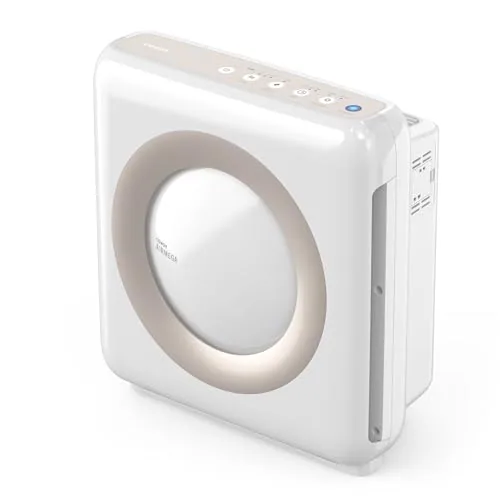
Coway Mighty AP-1512HH HEPA Air Purifier
- Filter rating
- HEPA, 99.97% of 0.3 micron
- Size
- 16.8 x 18.3 x 9.7
- Room size
- Up to 1,748 ft² (in 60 min)
Best for Living spaces shared with a studio
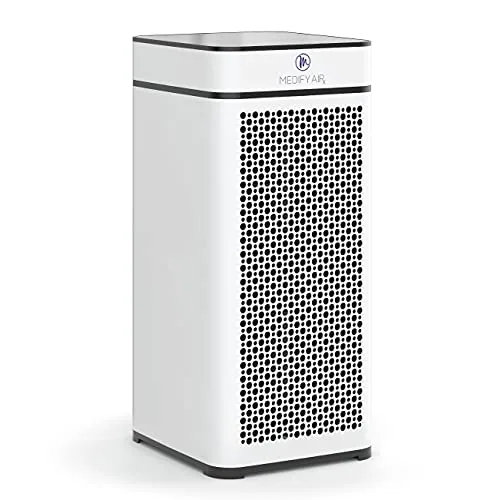
Medify MA-40 H13 HEPA Air Purifier
- Filter rating
- HEPA H13
- Room size
- 1,793 ft² in 1 hr
- CADR
- 406
Best for Larger rooms with ongoing dust
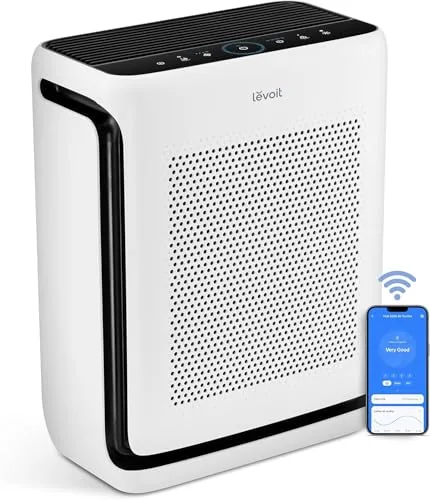
LEVOIT Vital 200S-P Smart HEPA Air Purifier
- Size
- 15.6"D x 8.5"W x 19.8"H
- Room size
- Up to 1875 ft²
- CADR
- Smoke 250 CFM
Best for Ongoing airborne dust in a home studio
Coway lists the AP-1512HH with a HEPA filter capturing 99.97% of 0.3 micron particles and coverage up to 1,748 sq ft in 60 minutes. Medify lists an H13 HEPA filter and a CADR of 406 for the MA-40. LEVOIT lists a smoke CADR of 250 CFM and coverage up to 1,875 sq ft for the Vital 200S-P. Room coverage claims are the makers' figures. More dust-control gear is in the studio setup and safety category and the small space hub.
Respirator mistakes to avoid
- Using a cloth or surgical mask. These are not NIOSH-approved respirators.
- Wearing the wrong size. A leaky seal defeats any filter.
- Pulling the mask down to talk. Dust gets inside; take it off away from the dusty area.
- Storing it on the bench. Keep it in a sealed bag so the inside stays clean.
- Relying on the mask alone. Wet cleaning and ventilation reduce dust for everyone in the home, including people who are not wearing one.
- Skipping the NIOSH check. Confirm the approval on the NIOSH list, especially for less familiar brands.
We compare manufacturer specs and listing data (power, capacity, size, voltage, temperature or cone rating, firing range, what is included) and what the maker says each product is for. We did not throw on, fire or lab-test these products, and we never show invented scores, ratings or prices.