- Honest note: there are no wall-mounted extruders and no 2-inch barrel hand extruders in our catalogue. What we have are small clay guns, handle-strip cutters and coil dies.
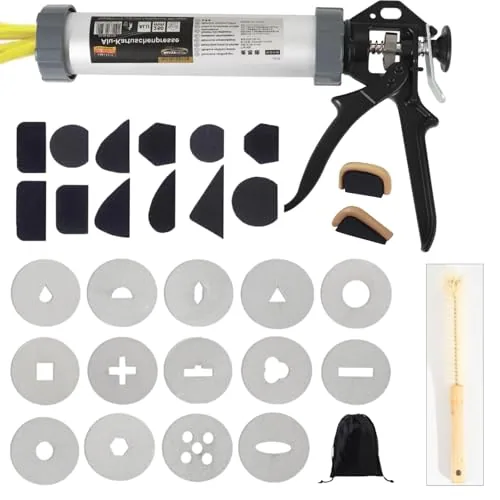
- The best clay extruder here for potters is the Griiyakii clay gun: an aluminum gun with 14 plates (2.28-inch discs) plus 12 mug handle forms.
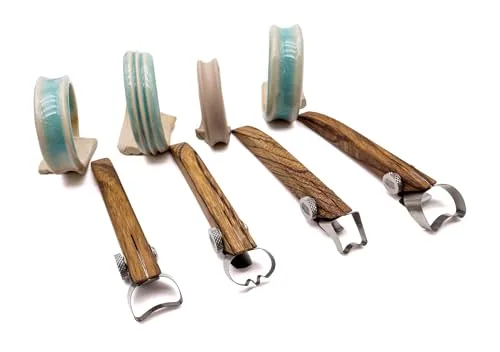
- For pulled-look mug handles without a barrel, the DiamondCore Handheld Extruder 4-pack cuts clean strips in four profiles from a block of clay.
- CZWESTC, COMIART and VORCOOL guns with 20 discs suit polymer clay, sprigs and fine trim. They are small and will struggle with stiff stoneware.
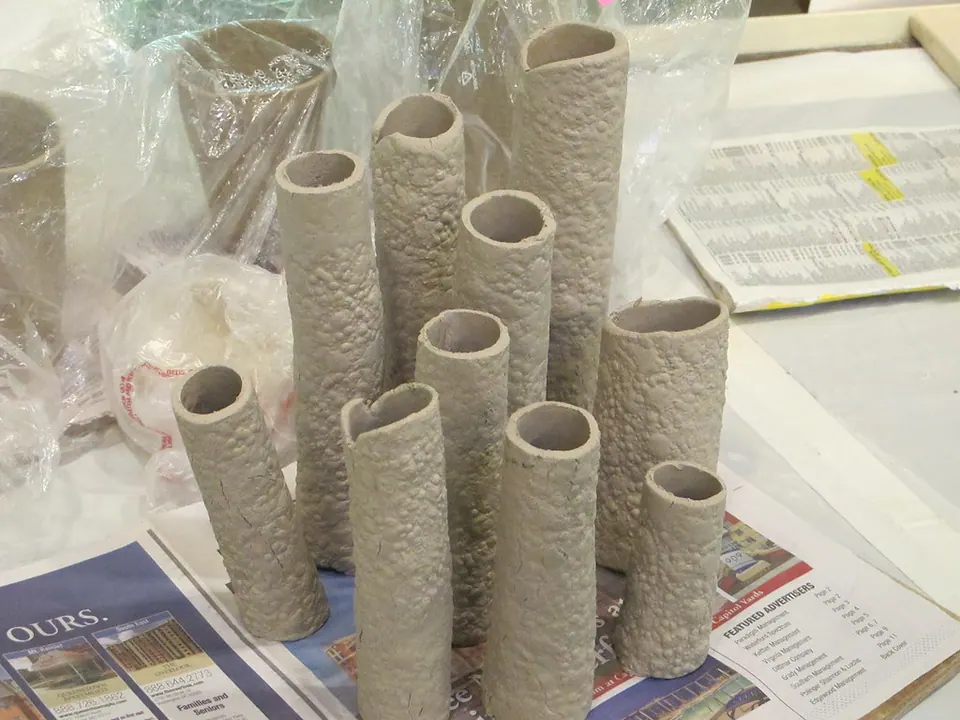
The best clay extruder pushes clay through a die to make identical coils, handles, rims or trim, so you spend less time rolling and more time building. Studio extruders range from wall-mounted barrels to hand-held guns the size of a caulk gun; hobby-scale clay guns are smaller still.
We reviewed every extruder-type product in our catalogue and found six worth listing from Griiyakii, DiamondCore, CZWESTC, COMIART, VORCOOL and LittleChip. None is a wall-mounted studio extruder, so we say plainly what each one can and cannot do, based only on listing specs. We did not extrude clay with them. For hand-building basics, see how to make pottery without a wheel.
Our picks
Griiyakii Clay Gun w/ 14 Plates + Handle Forms
- Material
- Aluminum
- Dies count
- 14
- Extras
- 12 mug handle forms
- Disc diameter
- 2.28"
Griiyakii's lightweight aluminum gun comes with 14 die plates (2.28-inch diameter, 0.16-inch thick) and 12 mug handle forms. The handle forms are the useful extra: you extrude a strip, drape it over a form and let it firm up into a consistent handle shape.
Best for: mug handles, coils and trim on small pieces
Skip if: you need thick coils from firm stoneware
- 14 die plates
- 12 mug handle forms included
- Disc size listed (2.28 in)
- Hand-squeeze gun; small capacity
- Soft clay works best
DiamondCore Handheld Extruder 4-Pack, Set 1
- Pieces
- 4
- Blade
- Stainless steel
- Handle
- Wood
DiamondCore calls these handheld extruders, but they work like a loop tool: you drag the stainless blade through a block of clay to cut a strip. The 4-pack (R4 Concave, R204 Concave XL, R101 Concave XS, R8 Double Line) has an adjustable-depth ski and a thumb screw for thickness. DiamondCore says they are made in the USA.
Best for: mug handles and vessel feet
Skip if: you want round coils
- 4 profiles
- Adjustable thickness
- Stainless angled blade
- Cuts strips, does not press clay through a die
- Profiles are fixed per tool
CZWESTC Clay Extruder Gun w/ 20 Discs
- Material
- Aluminum alloy body, stainless steel discs
- Dies count
- 20
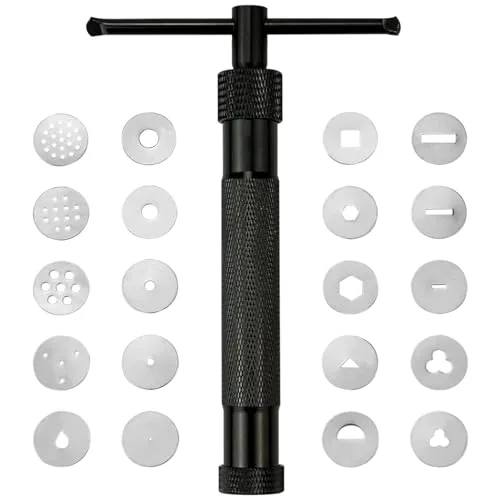
CZWESTC lists a black-coated aluminum body and 20 stainless steel discs in geometric shapes (circles, squares, triangles, hexagons, teardrops). The listing pitches it for fondant, polymer clay and ceramic clay, so expect small-scale output.
Best for: polymer clay, sprigs and fine ceramic trim
Skip if: you work in firm stoneware
- 20 stainless discs
- Metal body
- Sized for craft and cake work
- Do not swap between food and clay use
COMIART Clay Extruder Gun w/ 20 Discs
- Material
- Stainless steel barrel and discs
- Dies count
- 20
- Weight
- 3.2 oz
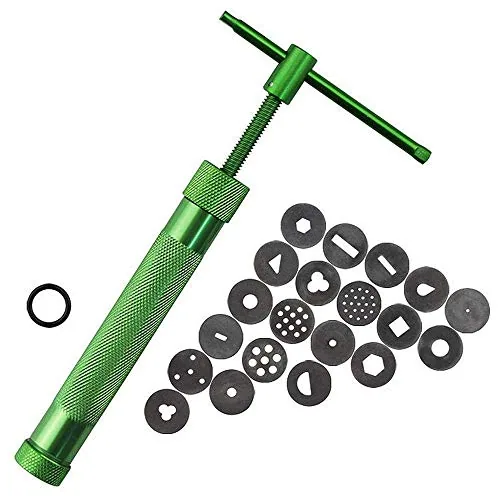
COMIART lists a stainless barrel, 20 stainless discs and a weight of just 3.2 oz (92 g). Lightweight and simple, it is fine for small coils and textures on air-dry, polymer or soft ceramic clay.
Best for: small decorative coils, travel kits
Skip if: you need large extrusions
- 20 discs
- 3.2 oz weight listed
- Stainless barrel
- Very small capacity
VORCOOL Polymer Clay Extruder Gun, 20 Discs
- Material
- Aluminium alloy
- Dies count
- 20
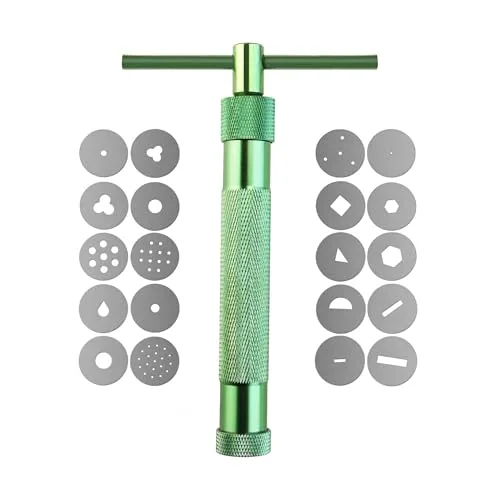
VORCOOL lists an aluminum alloy gun with 20 discs for hair, grass and floral textures, aimed at polymer and ceramic clay as well as cake decorating.
Best for: polymer clay and texture details
Skip if: you want a gun built mainly for pottery
- 20 discs
- Aluminum alloy
- Marketing mixes food and clay uses; keep separate tools
LittleChip Coil Dies for Handheld Extruders, 6 pc
- Material
- PLA-based engineered material
- Dies count
- 6
- Sizes
- 1/4-7/8 inch
- Fits
- Most 2" handheld extruders
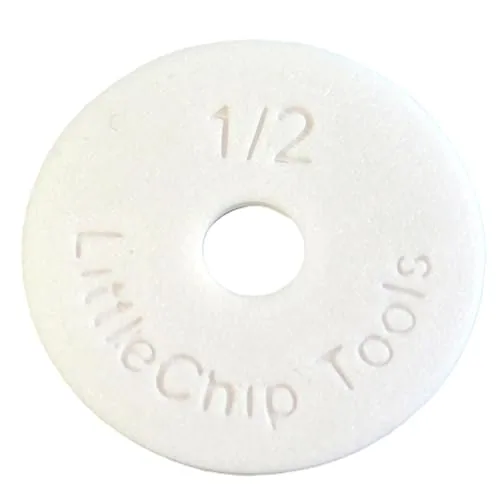
LittleChip's six coil dies (1/4 to 7/8 inch) are listed as compatible with most 2-inch handheld extruders, including Shimpo/Nidec, Scott Creek, Kemper and a battery-powered Milwaukee model. They are made in the USA from a PLA-based material. You need one of those extruders, which are not in our catalogue.
Best for: owners of a 2-inch handheld extruder
Skip if: you only own a small clay gun
- 6 coil sizes, 1/4–7/8 in
- Fits most 2 in handheld extruders
- Accessory only; extruder not included
What makes the best clay extruder for your work?
- Scale. Clay guns hold a few ounces and suit soft clay and small parts. 2-inch hand extruders and wall-mounted barrels handle firm stoneware and hollow forms.
- Dies. More dies means more shapes, but check the size. Coil dies from 1/4 to 7/8 inch (LittleChip) are far bigger than most clay-gun openings.
- Body material. Aluminum and stainless steel resist bending under pressure.
- Clay softness. Hand guns need soft, well-wedged clay. Add a little water and re-wedge if it will not push through.
- Extras. Handle forms (Griiyakii) and depth-adjustable blades (DiamondCore) matter more than die count for mug makers.
Dies or profiles per purchase
As listed. DiamondCore counts its four tool profiles.
Die count favors the craft guns, but potters often get more use from fewer, larger profiles. Think about the part you make most (handles, coils or rims) and choose the tool that makes that part well.
Clay extruders compared
| Product | Dies count | Material | Disc diameter | Fits |
|---|---|---|---|---|
| Griiyakii Clay Gun w/ 14 Plates + Handle Forms | 14 | Aluminum | 2.28" | — |
| DiamondCore Handheld Extruder 4-Pack, Set 1 | — | — | — | — |
| CZWESTC Clay Extruder Gun w/ 20 Discs | 20 | Aluminum alloy body, stainless steel discs | — | — |
| COMIART Clay Extruder Gun w/ 20 Discs | 20 | Stainless steel barrel and discs | — | — |
| VORCOOL Polymer Clay Extruder Gun, 20 Discs | 20 | Aluminium alloy | — | — |
| LittleChip Coil Dies for Handheld Extruders, 6 pc | 6 | PLA-based engineered material | — | Most 2" handheld extruders |
Specs as listed by the maker or seller; check the listing before you buy.
Extruder types: what each can do
| Clay gun (in our list) | Handle-strip cutter (in our list) | 2 in hand extruder (not in catalogue) | Wall-mounted (not in catalogue) | |
|---|---|---|---|---|
| Firm stoneware | ✗ Struggles | ✓ Cuts from a block | ~ Medium-soft clay | ✓ Yes |
| Mug handles | ✓ Small | ✓ Best | ✓ Yes | ✓ Yes |
| Coils for coil building | ~ Thin only | ✗ No | ✓ Up to about 7/8 in with dies | ✓ Large |
| Hollow forms | ✗ No | ✗ No | ~ Small | ✓ Yes |
| Polymer and air-dry clay | ✓ Yes | ~ Possible | ~ Possible | ~ Overkill |
| Space needed | ✓ Drawer | ✓ Drawer | ✓ Shelf | ✗ Wall and clearance |
How to extrude clay with a hand gun
- Soften the clay
Use clay a little softer than throwing consistency. Wedge it well so there are no air pockets. See best wedging boards.
- Roll a plug
Roll a coil slightly narrower than the barrel and push it in without trapping air.
- Pick the die
Fit the die and screw the cap on firmly.
- Press steadily
Squeeze or turn with even pressure. Let the extrusion fall onto canvas or a board rather than pulling it.
- Shape and dry
Drape handles over forms, then attach at soft leather-hard with scoring and slip. Dry slowly under plastic to avoid cracked joins; see why pottery cracks.
Making mug handles: extruder or strip cutter?
Mug handles are the most common reason home potters want an extruder. You have three routes: pull handles by hand, cut strips from a block with a tool like DiamondCore's, or push clay through a handle die.
DiamondCore Handheld Extruder 4-Pack, Set 1
- Pieces
- 4
- Blade
- Stainless steel
- Handle
- Wood
Best for Pulling consistent mug handles
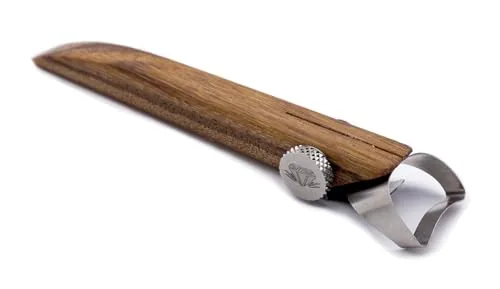
DiamondCore Handheld Extruder, R4 Concave
- Shape
- R4 Concave
- Blade
- Stainless steel
- Handle
- Wood
Best for Concave mug handles
Griiyakii Clay Gun w/ 14 Plates + Handle Forms
- Material
- Aluminum
- Dies count
- 14
- Extras
- 12 mug handle forms
Best for Extruded coils and handles
The DiamondCore R4 Concave is also sold alone if you want one profile. The Griiyakii set's mug handle forms help you shape identical curves. For the full process, see how to make a mug.
What can you make with a small clay extruder?
Small guns and strip cutters are more useful than they look once you think in parts rather than whole pots.
- Handles: mugs, pitchers, lids and casserole lugs. Consistent handles make a set of mugs look like a set.
- Feet and rims: a thin extruded coil added to a slab plate or bowl makes a foot ring without trimming.
- Sprigs and trim: beads, ropes, leaves and geometric bands for decoration. Attach with slip at soft leather-hard.
- Lettering and line art: thin coils laid on a slab to make raised text or patterns.
- Polymer and air-dry details: hair, grass, canes and jewelry parts.
Plan the joint before you extrude. Extrusions dry faster than the pot they attach to, so keep both under light plastic and attach when they feel similar in firmness. That single habit prevents most cracked handles and popped sprigs.
How to clean and care for an extruder
Clean right after use. Dried clay inside a barrel or a die is hard to remove and can scratch the next extrusion.
- Push out any remaining clay into your reclaim bucket. See how to reclaim clay.
- Unscrew the cap and rinse the barrel and die in a bucket of water, not straight into the sink.
- Use a soft brush or needle tool to clear die openings.
- Dry metal parts fully before storing so aluminum and steel do not spot or pit.
- Store dies flat in a labeled bag so the small ones do not go missing.
For strip cutters like DiamondCore's, wipe the blade, check the thumb screw is snug and keep the tool in a holder so the blade edge stays protected.
Which extruder for which potter?
- Mug makers: DiamondCore 4-pack or Griiyakii with handle forms.
- Polymer and air-dry crafters: any 20-disc gun. Browse the no-kiln hub and best polymer clay.
- Coil builders: you need a 2-inch hand extruder or wall unit plus dies such as LittleChip; the small guns make only thin coils.
- Small apartments: every option here fits in a drawer. See the hand-building category for more space-friendly tools.
- Studios that extrude daily: a wall-mounted extruder from a pottery supplier, which is outside our catalogue.
Clay extruder mistakes to avoid
- Loading clay that is too stiff. Hand guns bend or jam. Soften and re-wedge.
- Trapping air. Air pockets cause blowouts in the extrusion and weak spots in handles.
- Sharing food and clay tools. Several guns here are marketed for fondant too. Keep separate tools for food.
- Expecting coil-building coils from a clay gun. The openings are small.
- Attaching handles to a pot that is too dry. Handles crack off at the join.
We compare manufacturer specs and listing data (power, capacity, size, voltage, temperature or cone rating, firing range, what is included) and what the maker says each product is for. We did not throw on, fire or lab-test these products, and we never show invented scores, ratings or prices.