- Honest note: our catalogue has only one true slab roller, the Xiaomatoiu hand-cranked machine (12.5-inch rollers, 0–30 mm thickness, wedging board included). Big-name floor slab rollers such as North Star are not in our catalogue.
- For most home hand-builders, the best slab roller alternative is a rolling pin plus thickness guides (Jieting, Leyclub, Sasylvia, Fireboomoon), which costs little and stores in a drawer.
- The Activa Clay Roller Kit combines a 10.5-inch board, roller and thickness rails in one kit.
- The AMACO Adjustable Clay Slicer cuts slabs 1/8 to 4-3/8 inches thick and up to 7 inches wide straight from a block, with no rolling.
The best slab roller for a home studio is the one that gives you even, consistent slabs for the projects you actually make, without eating a corner of the room. A full-size floor slab roller is wonderful for tiles and platters, but most hobby hand-builders make mugs, boxes, plates and planters that a hand-crank machine or a rolling pin with guides handles well.
We checked our whole catalogue and found only one true slab roller: a tabletop hand-crank model. Rather than pad the list, we include seven honest alternatives and label each one by type: rolling guides, a roller kit, a wire slab cutter and a canvas rolling surface. Specs come from listings; we did not roll clay on them. For the technique, see how to make pottery without a wheel.
Our picks
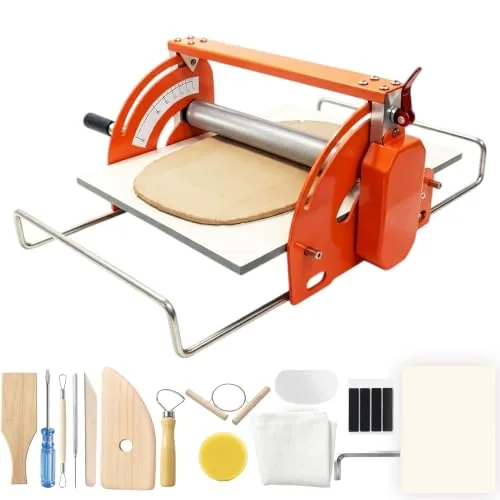
Xiaomatoiu Hand-Cranked Slab Roller, 12.5" w/ Board
- Roller width
- 12.5"
- Slab thickness
- 0-30mm
- Pieces
- 14
- Wedging board
- 12x15.8"
This is the only actual slab roller in our catalogue. Xiaomatoiu lists 12.5-inch-wide rollers, a calibrated scale and twist knob for slabs from 0 to 30 mm, a foldable heavy-duty steel frame, and a 14-piece kit with a 12 x 15.8 inch wedging board, a clay cloth and 11 tools. It needs no electricity and carries a 1-year maker warranty.
Best for: regular slab work in a small studio
Skip if: you need slabs wider than 12.5 inches
- True roller with 0–30 mm thickness scale
- Wedging board and cloth included
- Foldable for storage
- 12.5 in width limits big platters
- Lesser-known brand; maker's speed claims are marketing, not tested
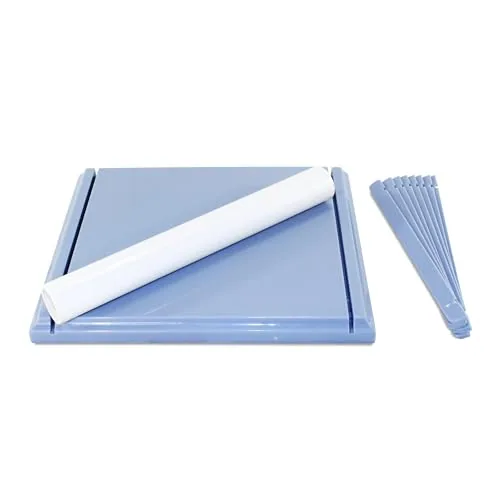
Activa Clay Roller Kit, 10.5" Board w/ Rails
- Board width
- 10.5"
- Includes
- Rolling board, roller, thickness rails
Activa's Clay Roller Kit is a rolling board with a roller and thickness rails, listed at 10.5 inches wide for rolling clay to a perfect, even thickness. It is not a slab roller machine; it is a guided rolling setup that suits small slabs.
Best for: small slabs, jewelry, air-dry and polymer clay
Skip if: you roll large slabs for plates
- Board, roller and rails in one kit
- Suitable for all clay types per the listing
- 10.5 in board width
- Thin listing; rail thicknesses not stated
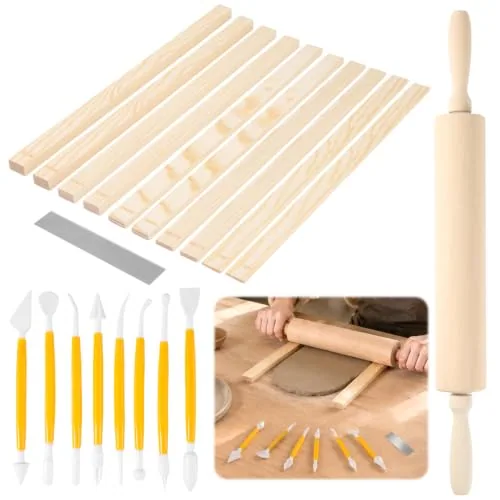
Jieting Rolling Pin Set w/ 10 Guides, 20 pc
- Pieces
- 20
- Material
- Wood rolling pin, plastic tools
- Thickness guides
- 3, 5, 7, 10, 12 mm
Jieting bundles a wooden rolling pin, 10 thickness guides in 5 sizes (3, 5, 7, 10 and 12 mm), 8 plastic sculpting tools and a cutter. It is the simplest complete alternative to a slab roller.
Best for: beginners starting slab building
Skip if: you already own a good rolling pin
- Rolling pin included
- 5 thicknesses, 3–12 mm
- Extra sculpting tools
- Guide length not listed
- Rolling by hand takes more effort
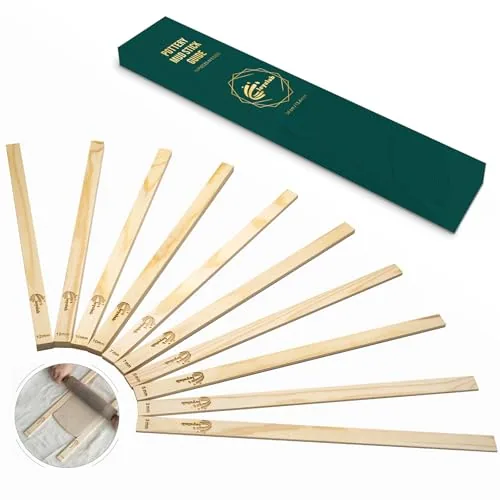
Leyclub Rolling Pin Thickness Guides, 10 pc
- Pieces
- 10 (5 sizes)
- Material
- Wood
- Thickness
- 0.12"/0.2"/0.28"/0.39"/0.47"
- Length
- 13.4"
Leyclub lists 10 wooden guides in 5 sizes (0.12, 0.2, 0.28, 0.39 and 0.47 inch), 13.4 inches long, with laser-engraved inch and mm markings so you never grab the wrong pair.
Best for: potters who already own a rolling pin
Skip if: you need slabs longer than about 13 in
- Engraved size markings
- 5 thicknesses
- No rolling pin included
- 13.4 in length
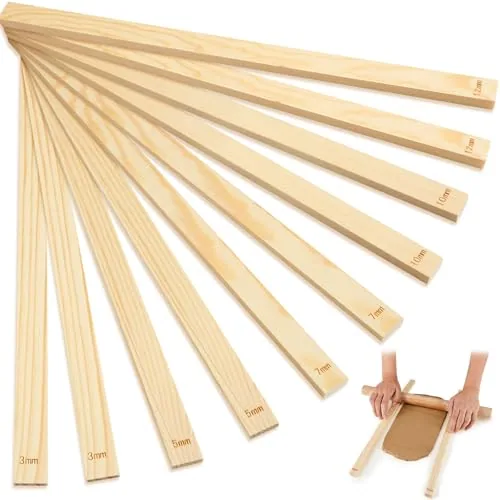
Sasylvia Clay Rolling Guides, 10 pc, 5 Sizes
- Size
- 16.73 x 0.8"
- Pieces
- 10 (5 sizes)
- Material
- Wood
- Thickness
- 0.12"-0.47"
Sasylvia's 10 guides come in the same 5 thicknesses (0.12–0.47 inch) but are longer at about 16.73 x 0.8 inches, which helps when you roll slabs for plates or tall cylinders.
Best for: longer slabs
Skip if: you want size markings on each stick
- 16.73 in length
- 2 of each of 5 sizes
- No rolling pin
- Markings not mentioned
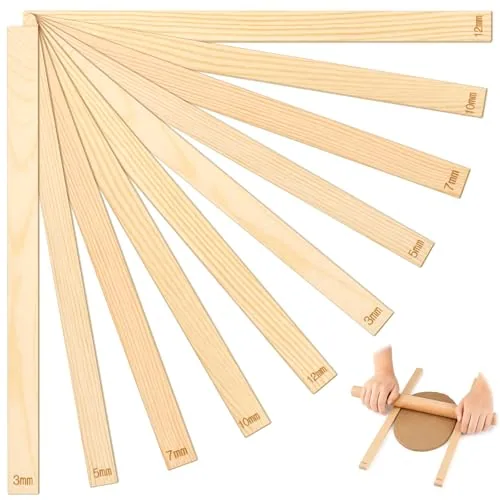
Fireboomoon Clay Slab Sticks, 10 pc, 3-12mm
- Size
- 13.4 x 0.8"
- Pieces
- 10 (5 sizes)
- Material
- Wood
- Thickness
- 3, 5, 7, 10, 12 mm
Fireboomoon's 10 sticks (3, 5, 7, 10, 12 mm; 13.4 inches long) are end-marked in mm and inch and listed as stackable for even slabs. The listing states the product is only for adults.
Best for: adults who want a budget guide set
Skip if: the guides are for children
- End-marked mm/inch
- Stackable for extra thickness
- Listed for adults only
- No rolling pin
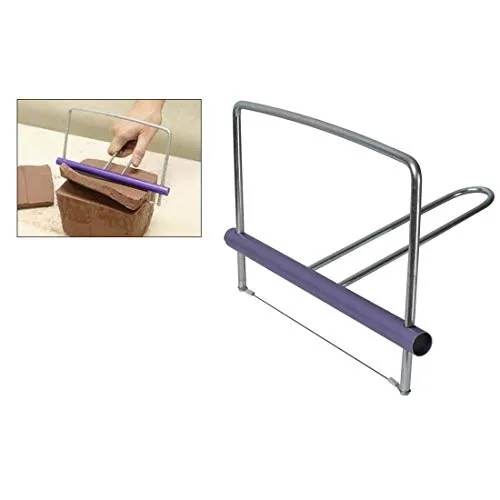
AMACO Adjustable Handled Clay Slicer
- Material
- Stainless steel wire
- Slab thickness
- 1/8 - 4-3/8 inches
- Width
- Up to 7 inches
AMACO's Adjustable Handled Clay Slicer uses heavy stainless wire on a handle with a guide bar that moves to cut slabs from 1/8 to 4-3/8 inches thick and up to 7 inches wide. You slice slabs straight from a block instead of rolling, which also makes tiles and extrusions easy.
Best for: fast thick slabs and tiles
Skip if: you need wide, thin slabs
- 1/8–4-3/8 in thickness range
- Stainless wire
- No rolling needed
- 7 in maximum width
- Cut slabs are not compressed like rolled slabs
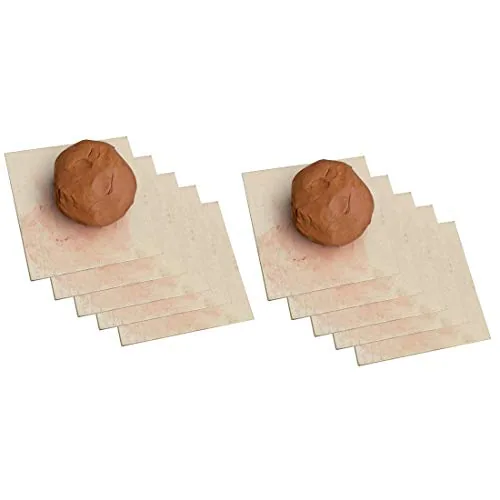
AMACO Canvas Covered Boards, 10-Pack
- Pieces
- 10
- Surface
- Canvas
AMACO's Canvas Covered Boards come 10 to a pack. The listing describes a portable clay work surface for wedging and rolling that can be moved and stored easily. Canvas stops slabs sticking and lets you carry a slab on its board.
Best for: classes and anyone rolling on a kitchen table
Skip if: you already have a canvas-covered table
- 10 boards
- Portable surface for rolling and wedging
- Board size not listed
Do you need a slab roller?
Not to start. A rolling pin with a pair of thickness guides makes even slabs for mugs, boxes, trays and small plates. A slab roller pays off when you roll many slabs a week, want large slabs for platters or tiles, or have wrist or shoulder strain from hand rolling.
Slab roller vs alternatives
| Hand-crank slab roller | Rolling pin + guides | Wire slab cutter | |
|---|---|---|---|
| Even thickness | ✓ Scale-set | ✓ Set by guides | ✓ Set by guide bar |
| Effort | ✓ Low | ~ Moderate | ✓ Low |
| Compresses clay | ✓ Yes | ✓ Yes | ✗ Slices only |
| Max width here | 12.5 in | Limited by your table | 7 in |
| Storage | ~ Folds, but bulky | ✓ Drawer | ✓ Drawer |
| Best for | Frequent slab work | Most hobbyists | Tiles, thick slabs |
Source: Listings in the Clay at Home catalogue
If you rent or have a small space, the guides and a cutter are easier to store. See pottery in an apartment and the small space hub.
What to look for in the best slab roller or alternative
- Thickness range. Many hand-builders roll about 1/4 inch for mugs and boxes and thicker for plates and planters. Check the listed range covers both.
- Width. Roller width or guide length sets your maximum slab size. Measure your largest project.
- Markings. Marked guides (Leyclub, Fireboomoon) prevent mix-ups.
- Surface. Roll on canvas or cloth so the slab releases; never on bare plastic laminate.
- Storage. Floor slab rollers need a dedicated table. Hand-crank tabletop units and guides store away.
Maximum listed slab thickness
Inches, as listed. Xiaomatoiu converted from 30 mm; guides show their thickest pair.
The thickest guide pair in each set is 0.47 inch (12 mm), which already covers most functional hand-building. The roller and slicer go much thicker, useful for sculpture blocks and tiles.
Slab tools side by side
| Product | Roller width | Slab thickness | Thickness | Size | Pieces |
|---|---|---|---|---|---|
| Xiaomatoiu Hand-Cranked Slab Roller, 12.5" w/ Board | 12.5" | 0-30mm | — | — | 14 |
| Activa Clay Roller Kit, 10.5" Board w/ Rails | — | — | — | — | — |
| Jieting Rolling Pin Set w/ 10 Guides, 20 pc | — | — | — | — | 20 |
| Leyclub Rolling Pin Thickness Guides, 10 pc | — | — | 0.12"/0.2"/0.28"/0.39"/0.47" | — | 10 (5 sizes) |
| Sasylvia Clay Rolling Guides, 10 pc, 5 Sizes | — | — | 0.12"-0.47" | 16.73 x 0.8" | 10 (5 sizes) |
| Fireboomoon Clay Slab Sticks, 10 pc, 3-12mm | — | — | 3, 5, 7, 10, 12 mm | 13.4 x 0.8" | 10 (5 sizes) |
| AMACO Adjustable Handled Clay Slicer | — | 1/8 - 4-3/8 inches | — | — | — |
| AMACO Canvas Covered Boards, 10-Pack | — | — | — | — | 10 |
Specs as listed by the maker or seller; check the listing before you buy.
When is a floor slab roller worth it?
Floor and table-mounted slab rollers from studio brands use a long bed, canvas sheets and a crank to press much wider slabs; North Star, for example, names 24-, 30- and 36-inch models. They are not in our catalogue, so we cannot compare their listed specs here, but it helps to know when one makes sense.
- You sell tiles, platters or large slab pieces and roll several big slabs every session.
- You teach and need many identical slabs quickly.
- You have a permanent studio with a sturdy table that can be dedicated to the roller.
- Hand rolling hurts. Repeated rolling strains wrists and shoulders; a roller moves that effort to a crank.
If none of those apply, a hand-crank tabletop roller or a good guide set will do the same job for typical mugs, boxes, trays and planters. Sellers can find more setup advice in the selling your pottery hub.
How to roll an even slab with guides
- Wedge and flatten
Wedge the clay, then slap it into a thick pancake on canvas. Pick a board from best wedging boards if you need one.
- Set the guides
Lay one guide on each side of the clay, parallel and a little closer together than your rolling pin is long.
- Roll from the center out
Roll in both directions, lifting and turning the slab between passes so it does not stick.
- Compress with a rib
Run a flexible rib across both sides. Compression helps prevent warping and cracking. See best pottery ribs.
- Dry evenly
Let slabs stiffen to soft leather-hard between boards or under plastic before building. Uneven drying is a top cause of warping; see why pottery cracks.
Which slab tool fits your projects?
- First hand-building projects: Jieting's set (pin plus guides). Browse the hand-building category and the beginners hub.
- Regular slab mugs, boxes and trays: the Xiaomatoiu hand-crank roller saves effort and gives repeatable thickness.
- Tiles and thick slabs: the AMACO slicer.
- Air-dry and polymer clay: the Activa kit or any guide set; see best air-dry clay.
- Big platters: none of these exceed 12.5 inches by machine; roll big slabs by hand with long guides, or look at floor slab rollers sold through pottery suppliers.
Slab rolling mistakes to avoid
- Rolling in one direction only. Clay particles align and the slab warps. Turn and flip.
- Skipping compression. Rib both faces.
- Rolling on a slick surface. Use canvas or cloth.
- Building with slabs that are too wet or too dry. Soft leather-hard joins best.
- Trusting marketing numbers. Claims like 'cuts rolling time by 70%' are the maker's, not a measured result.
We compare manufacturer specs and listing data (power, capacity, size, voltage, temperature or cone rating, firing range, what is included) and what the maker says each product is for. We did not throw on, fire or lab-test these products, and we never show invented scores, ratings or prices.