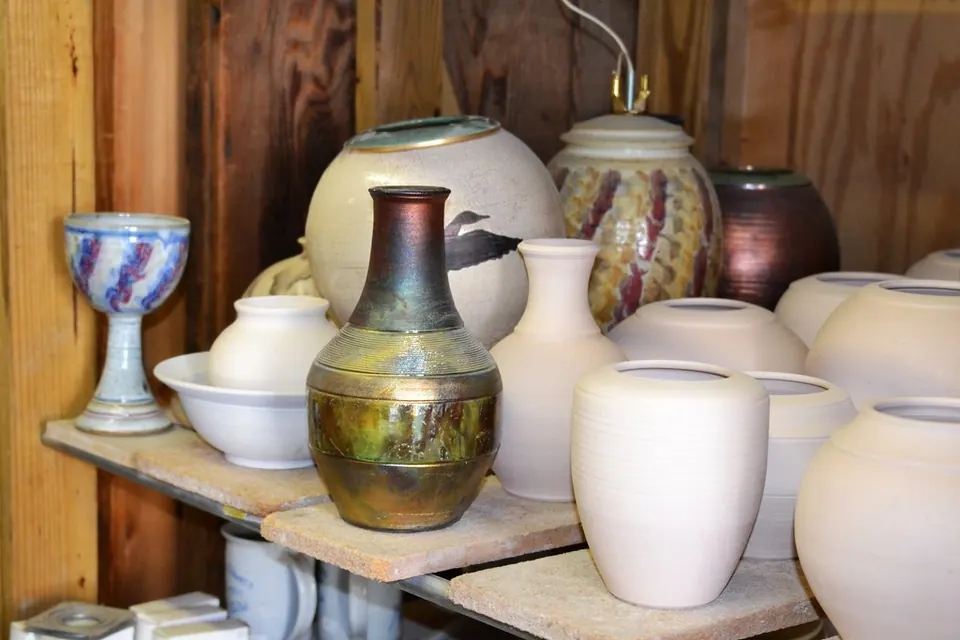
- Bisque firing turns dry greenware into porous, handleable ceramic, usually around cone 06–04 (1,828–1,945 °F at Orton’s medium rate).
- Glaze firing melts the glaze into glass and brings the clay to maturity at its rated cone, for example cone 6 at 2,232 °F.
- Bisque pieces may touch and nest. Glazed pieces must not touch each other or the shelf.
- Go slowly where it matters: early on, while water leaves the clay, and through quartz inversion near 573 °C (1,063 °F) on the way up and down.
Bisque vs glaze firing is the first firing question every new potter asks, and the answer is that they do two different jobs. The bisque firing makes fragile, bone-dry clay strong enough to glaze. The glaze firing melts the glaze and finishes the clay body. Skipping, mixing up or rushing either one is behind a lot of cracked and spoiled pots.
This guide compares the two firings side by side, explains how to load the kiln for each, and covers the slow points in a firing. Cone temperatures come from Orton’s chart; product examples come from maker listings in our catalogue.
Bisque vs glaze firing at a glance
| Bisque firing | Glaze firing | |
|---|---|---|
| Goes in as | Bone-dry greenware | Bisqueware with glaze applied |
| Comes out as | Porous, matte, handleable ceramic | Glazed, finished ware |
| Typical cone | Often cone 06–04 | The glaze and clay’s rated cone (06–04 low fire, 5–6 mid-range, 10 high fire) |
| Main job | Drive off water, burn out organic matter, harden the clay | Melt the glaze, mature the clay body |
| Loading | Pieces may touch, stack rims to rims, nest | No touching; glazed surfaces off the shelf |
| Biggest risk | Cracks or blow-outs from moisture or a fast start | Glaze running onto shelves; crawling, pinholes |
| Shrinkage | Some | Most of the remaining firing shrinkage |
How hot each firing goes
Orton medium-rate temperatures (108 °F/hr), °F
For mid-range and high-fire potters, the glaze firing is the hotter one. For low-fire work it can be the other way around: Mayco’s Jungle Gems set in our catalogue says to apply it over cone 04 bisque and fire it to cone 06, so the bisque goes slightly hotter than the glaze. Always follow the clay and glaze labels.
Orton cone temperature chartLook up the exact temperature for your bisque and glaze cones at your kiln’s heating rate.What happens in a bisque firing?
Bone-dry clay still holds some water, both in its pores and chemically bound in the clay minerals. A bisque firing removes it and burns out organic matter, then sinters the particles together. The result is hard enough to handle and dip, and porous enough that glaze sticks to it as the water soaks in.
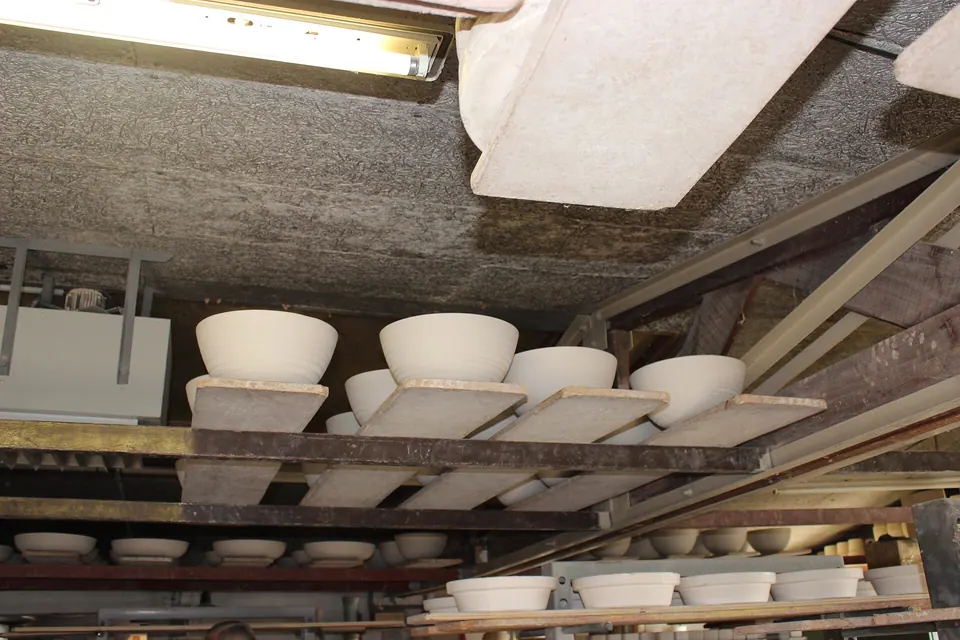
- Start slowly. If a piece is not fully dry, water turning to steam can crack it or blow out a chunk. Many potters hold the kiln at a low temperature, below the boiling point of water, for a few hours before climbing. This is often called candling or a preheat.
- Thick pieces need more time. Sculpture and heavy bases take longer to dry out inside the kiln.
- Slow through quartz inversion. Quartz in clay changes volume suddenly around 573 °C (1,063 °F). Digitalfire’s reference notes that uneven heating or cooling through this window can crack ware.
- Fire hot enough to burn out. Digitalfire notes that bisque firing well above about 1,800 °F helps clear gases from the body that can otherwise cause pinholes in the glaze later.
How to load a bisque firing
- Check every piece is bone-dry
Room temperature to the touch, lighter in color, and no cool spots on thick areas.
- Stack and nest carefully
Bisque pieces can touch. Bowls can nest inside larger bowls, and cups can sit rim to rim to keep rims from warping. Keep heavy pieces on the bottom.
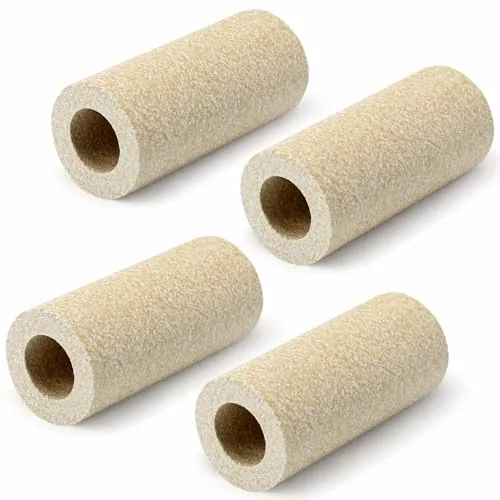
- Set shelves on posts
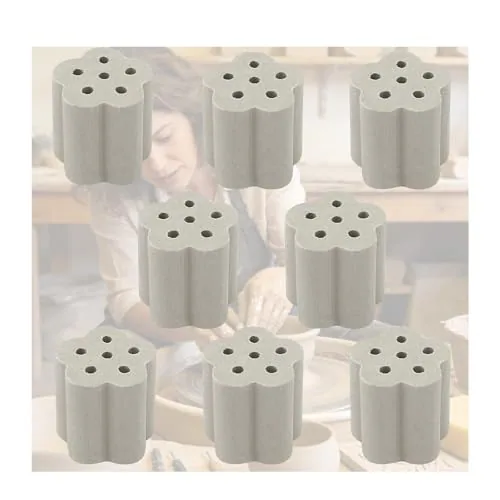
Use three posts per shelf for stability, lined up from shelf to shelf. Leave a little space from the elements.
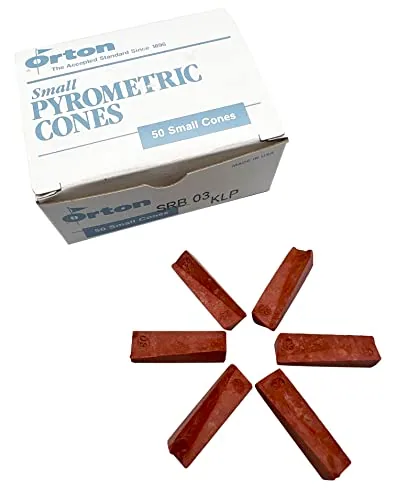
- Add a witness cone
Place a cone pack where you can see it through a peephole.
- Vent and fire
Run your vent or follow the maker’s venting instructions; bisque firings give off moisture and fumes from burning organics.
What happens in a glaze firing?
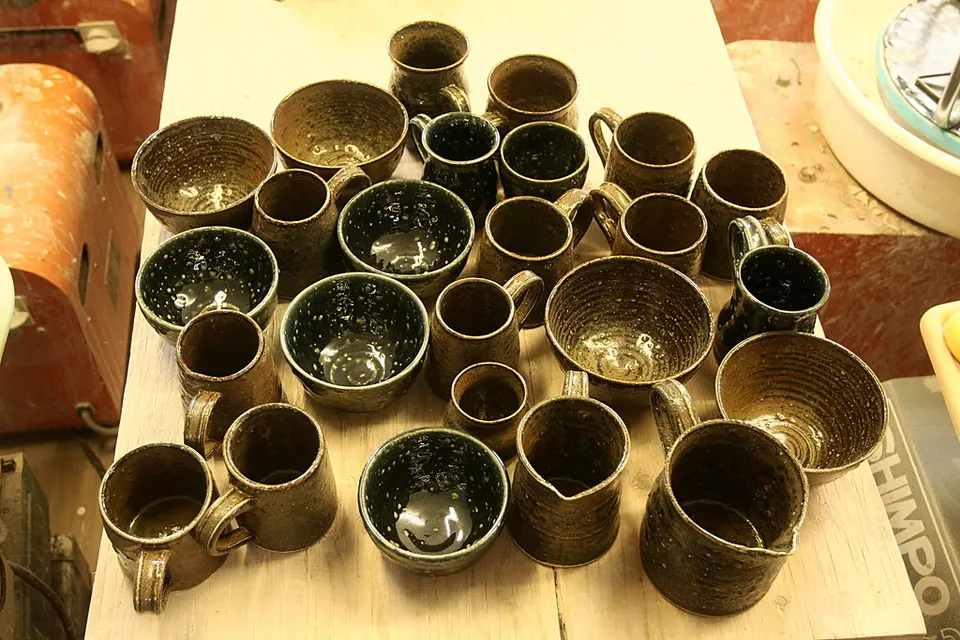
In the glaze firing the glaze materials melt into a glassy layer, and the clay body densifies to its rated maturity. For stoneware at cone 6, that is what makes a mug tight enough to hold coffee. The glaze firing also does most of the remaining shrinkage, so lids and fitted parts should be fired together.
- Clean, dry bisque. Dust or oil from hands can make glaze crawl.
- Glaze-free feet. Wipe glaze off the bottom and a little way up the foot, or wax it before glazing. Molten glaze welds pots to shelves.
- No touching. Leave space between glazed pieces; glaze fuses anything it touches.
- Cooling matters. Some glazes look different with a slow, programmed cool. Cooling too fast through quartz inversion can crack ware, which digitalfire calls dunting.
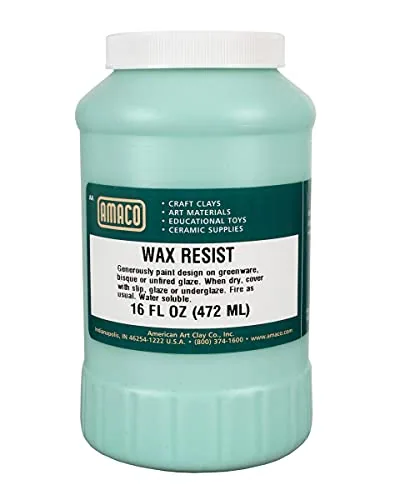
AMACO Wax Resist, 16 oz
- Size
- 16 Fl Oz (472ml)
- Use
- Resist glaze and slip on bisque
Best for Waxing feet and resist designs

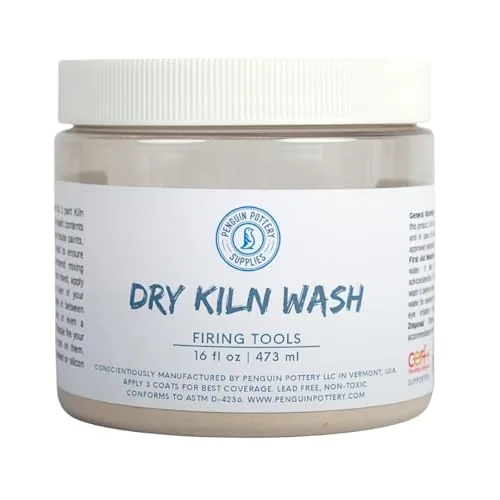
Penguin Pottery Liquid Kiln Wash, 16 oz
- Size
- 16 fl oz (1 Pint)
- Form
- Ready to use liquid
Best for Protecting new kiln shelves
How to load a glaze firing
- Protect the shelves
Coat the tops of kiln shelves with kiln wash, never the undersides. It lets you chip off glaze drips instead of losing the shelf.
- Check every foot
Run a finger around each foot. Any glaze left there will stick. Wipe with a damp sponge.
- Space the pieces
Leave a gap between pots and keep glazed surfaces away from elements and kiln walls.
- Use cookies or stilts where it makes sense
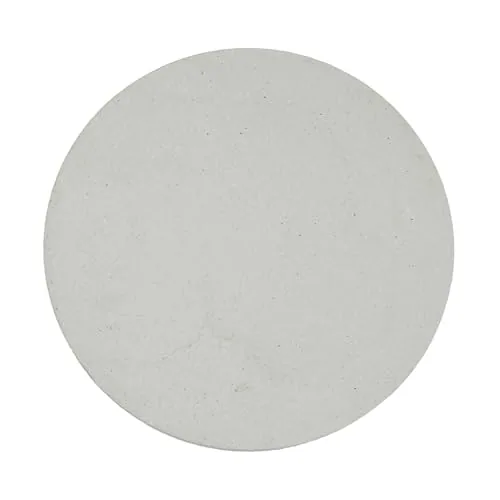
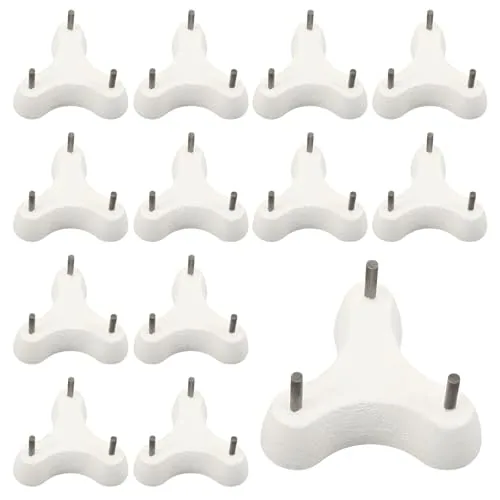
A runny glaze can sit on a sacrificial clay disc. Stilts let low-fire pieces glazed all over sit above the shelf; mid- and high-fire ware usually softens too much for stilts, so check the maker’s guidance.
- Cone pack in view
Use the target cone plus one cooler and one hotter so you can see if the firing fell short or ran hot.
Do you have to bisque fire first?
Not always. Some potters single-fire, glazing greenware and firing once. It saves a firing but is less forgiving: raw clay can crack when wet glaze soaks in, and the bond between glaze and body is more fragile. Some products are made for it; several Mayco Stroke & Coat listings say they can go on wet clay or greenware as well as bisque. For most beginners, two firings are easier and more predictable.
Studio firing services nearly always bisque everything first. If you fire at home, our do you need a kiln guide lays out the options.
What do the two firings cost?
Electricity is billed by kWh, so a longer or hotter firing costs more. As an illustration, a 1.8 kW kiln at a 60% duty cycle uses about 8.6 kWh in 8 hours and 10.8 kWh in 10 hours: about $1.57 and $1.96 at the August 2026 EIA U.S. average of 18.16¢ per kWh. Use your own program lengths for a real figure.
Kiln firing cost calculatorRun one estimate for your bisque program and one for your glaze program.The firing cost guide works the numbers by state.
Who should fire which way?
- Beginners firing at a studio: two firings, at the studio’s cones. Ask what cone they bisque to so you know how porous your bisque will be when you glaze it.
- Home kiln owners at cone 5–6: bisque around cone 06–04, glaze at cone 5–6, with a witness cone pack in both firings for the first few months.
- Low-fire and classroom work: follow the glaze label closely, since some low-fire glazes call for a hotter bisque than glaze firing.
- Experienced potters short on time: single firing is worth testing, but start with a few pieces and a glaze made for greenware.
Whichever route you choose, write down every program, cone and result. A simple firing log is the fastest way to learn your kiln.
Mistakes to avoid
- Bisquing damp pots. The most common cause of blow-outs.
- Bisquing too low. Under-fired bisque can be fragile and can leave gases in the body that cause glaze pinholes later.
- Bisquing too high for your glaze. Very dense bisque absorbs less glaze, so coats go on thin.
- Glaze on the foot. It glues the pot to the shelf.
- Opening the kiln early. Sudden cooling cracks pots. Wait until the controller and the maker’s guidance say it is safe.
- Mixed cones in one load. Cone 06 and cone 6 glazes cannot share a firing.
Cracks after firing? See why pottery cracks. Glaze problems? See glaze defects. Need furniture? Browse kiln shelves and furniture or the kiln category.
Kiln firing cost calculatorEstimate what a kiln firing costs from kiln kW, firing hours and duty cycle, using EIA average residential…Clay shrinkage calculatorConvert between wet and fired size by your clay’s shrinkage percentage, find the right scale-up factor, and…Orton cone temperature chartOrton self-supporting cone temperatures for cones 022 to 10 at slow, medium and fast heating rates, in °F…