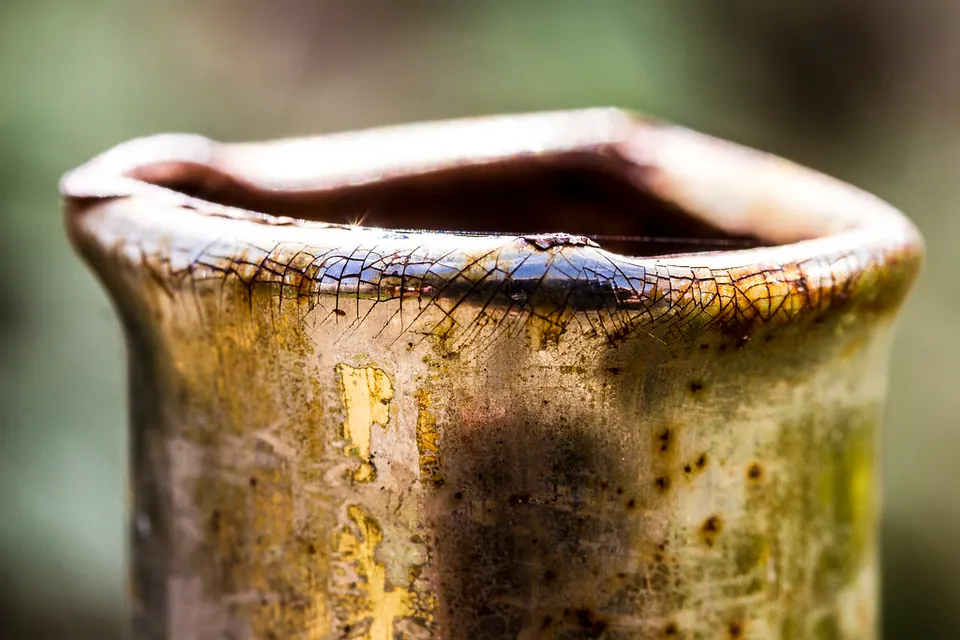
- Most glaze defects trace back to four things: application, bisque condition, firing and glaze-to-clay fit.
- Crawling (bare patches) usually starts with dusty bisque, thick or double coats, or glaze that cracked as it dried.
- Pinholes come from gas escaping through the melt: thick glaze, fast firing, underfired bisque, rough trimmed surfaces.
- Crazing and shivering are thermal expansion mismatches. Shivering can shed sharp flakes, so retire those pieces from food use.
Glaze defects are frustrating, but they are rarely mysterious. Each one has a look that points to a short list of causes, and most can be fixed by changing how you apply the glaze, how you bisque, or how you fire. A few, like crazing, come from the glaze and clay simply not fitting each other.
This guide uses Digitalfire’s technical reference library, written by ceramic chemist Tony Hansen, as its main source for causes and fixes, and Orton’s cone chart for temperatures. It is written for potters using commercial ready-mixed glazes; if you mix your own, the recipe-level fixes in the Digitalfire pages go further.
Common glaze defects at a glance
| Defect | What you see | Most likely causes | First fix to try |
|---|---|---|---|
| Crawling | Glaze pulled into islands with bare clay between | Dusty or oily bisque, thick or double coats, glaze cracked while drying | Clean bisque, thinner single coat |
| Pinholes | Tiny holes, often down to the clay | Thick glaze, fast firing, low bisque, rough trimmed areas | Thinner coat, slower end of firing, hotter bisque |
| Crazing | Fine web of cracks in the glaze | Glaze contracts more than the clay (expansion mismatch) | Different glaze or clay pairing |
| Shivering | Glaze flaking off edges and rims | Glaze expansion too low for the clay | Change glaze or clay; retire affected ware from food use |
| Running | Glaze pooled at the foot or on the shelf | Too thick, over-fired, glaze made for a lower cone | Thinner at the bottom, check cone, use a catch cookie |
| Dry or rough surface | Matte or sandy where gloss was expected | Underfired, or applied too thin | Witness cone check, thicker coat |
Source: Digitalfire Reference Library
Crawling: bare patches and beads
Digitalfire defines crawling as molten glaze pulling itself into islands, leaving bare body between them. Most cases start before the firing: the dried glaze layer cracks or loses its grip on the pot, and the melt then pulls back from the cracks.
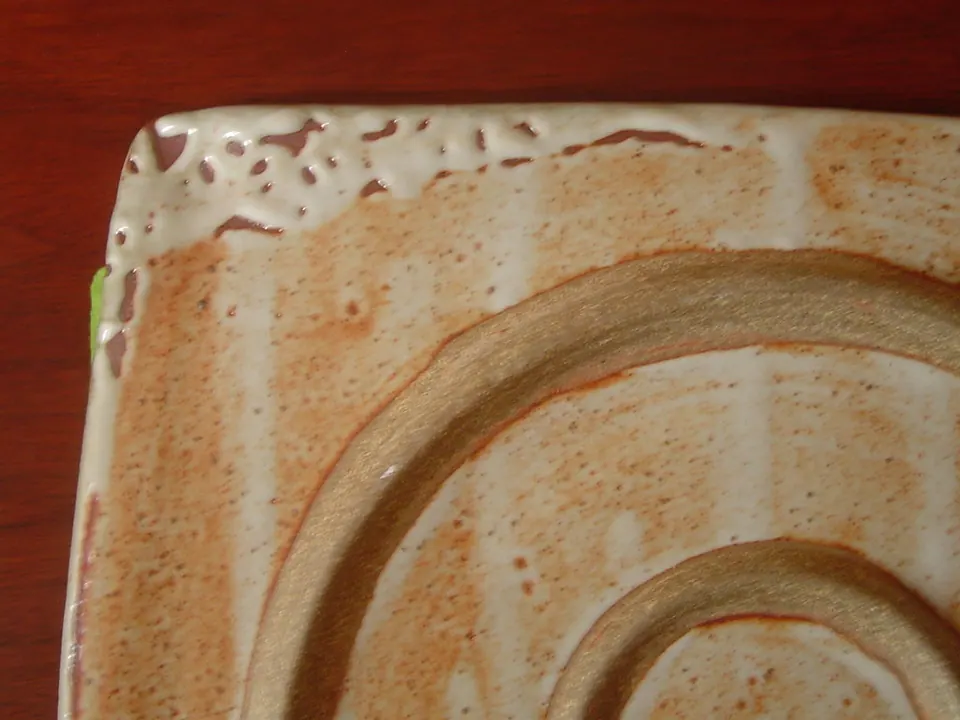
- Dusty, oily or damp bisque. Digitalfire recommends brushing or blowing off dust rather than washing, and drying the bisque before glazing.
- Too thick, or double layers. Thick coats and second coats over dry glaze shrink and crack. Apply thinner, and avoid stacking coats beyond the label’s guidance.
- Rough handling of glazed pots before firing, or force-drying them, which loosens the coat.
- Wet ware loaded into the kiln. Let glaze dry before firing.
- Underglaze or colorant under glaze. Heavy, unfluxed colorants can repel glaze; thin them or use a product made to sit under that glaze.
Before you glaze again, run a finger over the dried glaze. If it is cracked or powdery, wash it off, dry the pot and start again.
Pinholes and pits
Pinholes form when gas from the clay body or glaze bubbles up through the melt and the surface does not heal over before it stiffens. Digitalfire lists these causes and fixes:
- Thick glaze. Thicker layers pinhole more than thinner ones.
- Fast firing. Quick schedules leave less time for gases to escape and the surface to heal.
- Low bisque. Bisquing well above about 1,800 °F helps expel body gases before glazing; on Orton’s chart cone 06 is 1,828 °F and cone 04 is 1,945 °F at a medium rate.
- Rough trimmed areas pinhole more readily than smooth thrown surfaces. Smooth trimmed feet with a damp sponge or rib.
- A drop-and-hold program, easing to peak, dropping 100–200 °F and holding, can help heal the surface. Slow cooling through the melt range can help too.
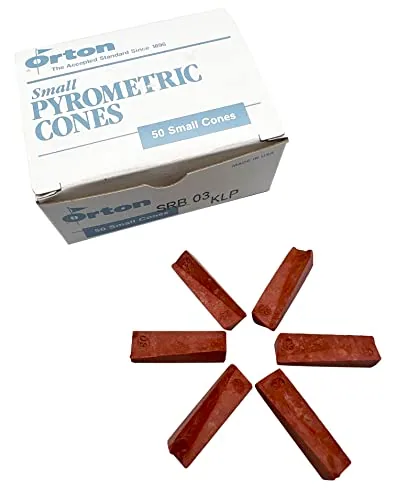
Orton Self-Supporting Cones, Cone 03, Pkg of 50
- Max cone
- 03
- Bending temp
- approximate temperature of 2014° F
- Count
- Pkg/50
Best for Checking low-fire and bisque firings
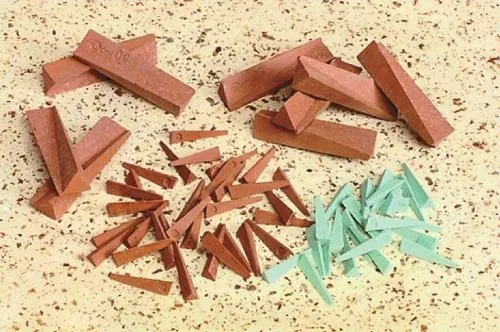
Orton Junior Pyrometric Cones, Cone 6, Box of 50
- Max cone
- #6
- Count
- Box of 50
- Size
- Small (junior)
Best for Kiln-sitter firings to cone 6
Crazing: the web of fine cracks
Crazing is a mismatch in thermal expansion: on cooling, the glaze contracts more than the clay underneath, so it ends up in tension and cracks. Digitalfire says 95% of the time the solution is to adjust the glaze’s thermal expansion, and that firing changes, slower cooling and thickness changes generally do not fix the underlying mismatch.
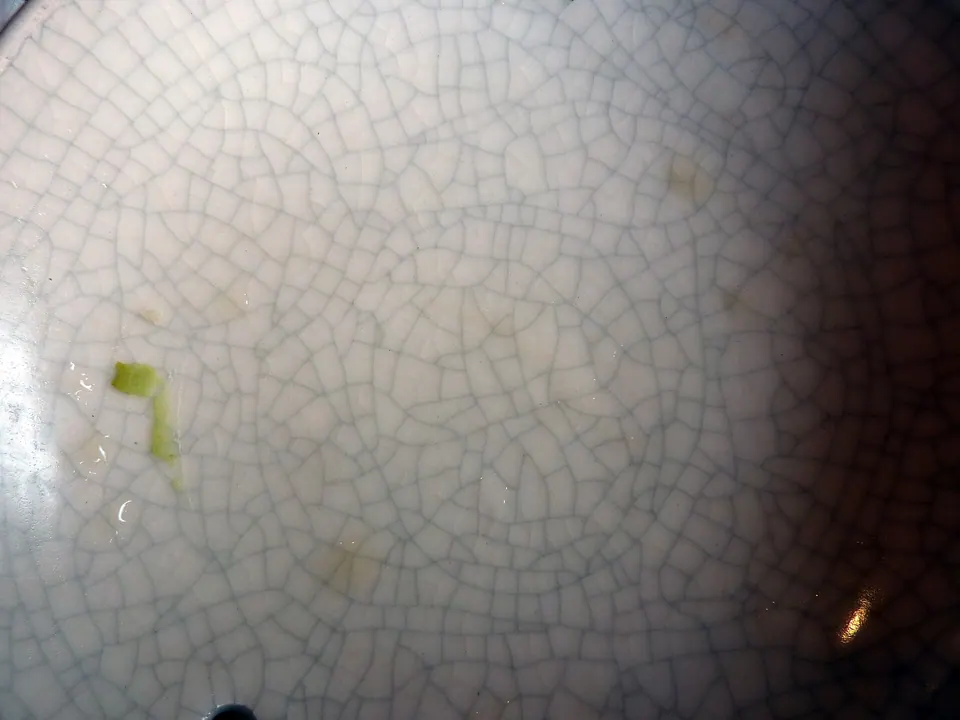
- With commercial glazes, the practical fix is a different glaze or clay pairing. Many glaze makers list the clay bodies they test with.
- Delayed crazing can appear weeks later, after repeated hot-and-cold use or when porous low-fire bodies absorb water and expand.
- Test new combinations. Digitalfire describes an ice-water and boiling-water stress test (IWCT) to reveal crazing early.
Clear liner glazes in our catalogue that list food-contact suitability when fired as directed include:
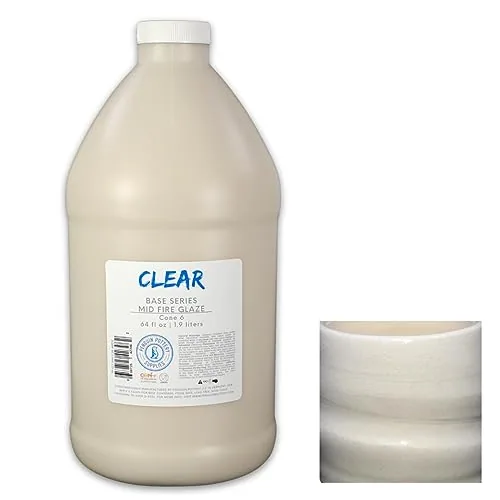
Penguin Pottery Glossy Clear Cone 5-6, 64 oz
- Firing range
- Cone 5-6 (about 2167-2232°F)
- Size
- 64 Fl Oz
- Finish
- Glossy clear, zinc-free
Best for Potters who use a lot of clear

Pasler PCC10 Mid Fire Clear Glaze, 16 oz
- Firing range
- Cone 4 to Cone 7 (1186°C - 1240°C)
- Size
- 16 fl oz/473ml
- Finish
- Clear gloss
Best for Clear over mid-fire underglaze

Sax True Flow Gloss Glaze, Natural Clear, Pint
- Firing range
- Cone 06-05
- Size
- 16 Fl Oz
- Finish
- Gloss clear
Best for Low-fire clear coat
Shivering: glaze flaking off rims
Shivering is the opposite of crazing. The glaze has too low a thermal expansion for the clay, ends up under too much compression, and pops off in flakes, especially at rims, edges and convex curves. Digitalfire calls it serious: a few shivered pieces can mean more will follow, and razor-sharp flakes can end up in food or drink.
- Stop using affected pieces for food and drink.
- Change the glaze or the clay body. A less mature or different clay can change the fit.
- Check engobes and slips under the glaze; a weak layer there can be the release point.
Running, dry glaze and the one-cone problem
Many glaze surface problems are simply a firing that was one cone off. On Orton’s chart, one cone in the mid-range is roughly 30 to 65 °F at a medium heating rate. That is easy to miss with an aging thermocouple and no witness cone.
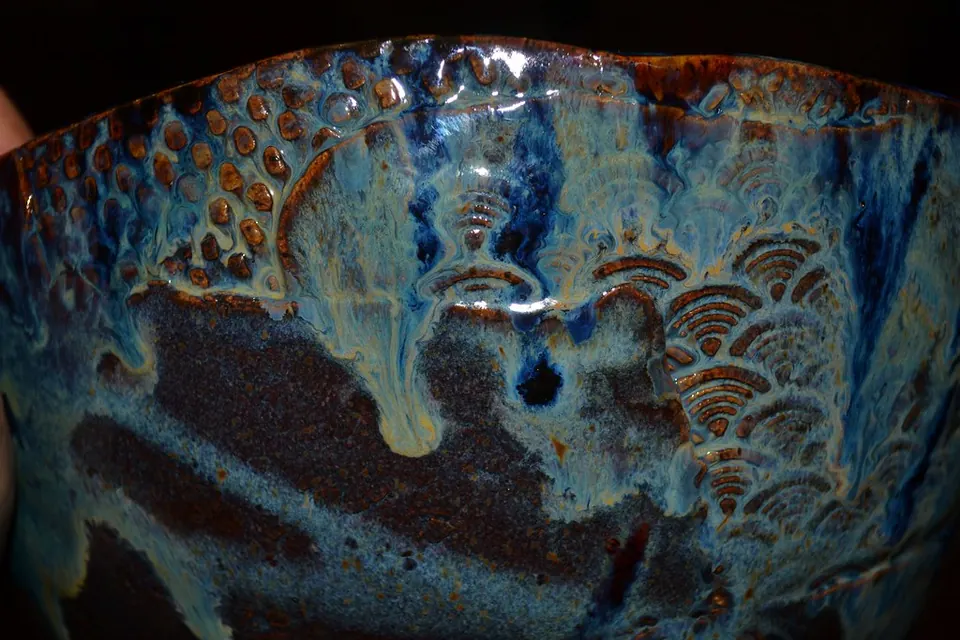
Mid-range cones are close together
Orton medium-rate temperatures (108 °F/hr), °F
- Glaze ran onto the shelf: too thick at the bottom, over-fired, too long a hold, or a low-fire glaze in a mid-fire kiln. Keep the bottom inch thinner and fire runny glazes on a catch cookie.
- Dry, rough or chalky surface: underfired or applied too thin. Check a witness cone; if the target cone did not bend, extend the firing or check the thermocouple.
- Colors off: heavy or thin application and cone both change color. Compare with a test tile fired in the same spot.
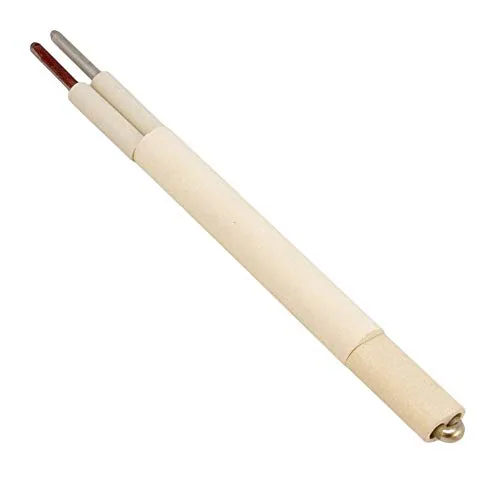
Skutt Type K Kiln Thermocouple SK1515
- Type
- Type K
- Gauge
- 8-Gauge
- Length
- 6" long
Best for Kiln owners replacing a worn thermocouple

Penguin Pottery Liquid Kiln Wash, 16 oz
- Size
- 16 fl oz (1 Pint)
- Form
- Ready to use liquid
Best for Protecting new kiln shelves
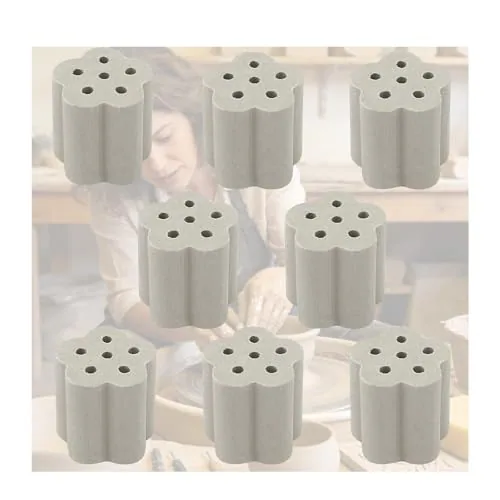
Incycall Five-Petal Kiln Stilts, 8-Pack
- Max temperature
- 2390°F
- Size
- 1.18 x 1.18 inch
- Count
- 8
Best for Supporting delicate pieces
How to troubleshoot a glaze defect
- Name the defect
Compare with the table above. Look with a strong side light and a magnifier.
- Check the witness cone
If the target cone did not bend, or the guard cone did, fix the firing first. It is the cheapest variable to rule out.
- Look at where it happens
Defects only on trimmed feet, only on the bottom shelf or only on thick areas narrow the cause quickly.
- Change one thing
Thinner coat, cleaner bisque, hotter bisque or a slower end to the firing. Change one variable per test so you know what worked.
- Make test tiles
Fire a few tiles of the same clay and glaze before risking a whole load.
- Keep a log
Write down clay, glaze, coats, bisque cone, program and result. Patterns show up within a few firings.
Fix it, or switch glazes?
Application and firing problems are worth fixing, because the same changes help every glaze you use. Fit problems are different: if a commercial glaze crazes or shivers on your clay, no amount of careful dipping will change that.
- Fix it when the defect changes with thickness, shelf position or firing: crawling, pinholes, running, dry surfaces.
- Switch the pairing when the defect appears on every piece regardless of application: crazing or shivering. Try the same glaze on a different clay body, or a different glaze on your clay.
- Ask the maker which clay bodies a glaze was tested on, and whether it is meant for liners, outsides or both.
Prevention checklist
- Fire clay and glaze to the same cone, confirmed with witness cones. See the cone chart explained.
- Bisque fully, so gases leave before glazing. See bisque vs glaze firing.
- Glaze clean, dry bisque in even coats; follow how to glaze pottery.
- Smooth trimmed surfaces before bisque.
- Choose clear liners whose makers list food-contact use when fired as directed; see the food-safe hub and glazes.