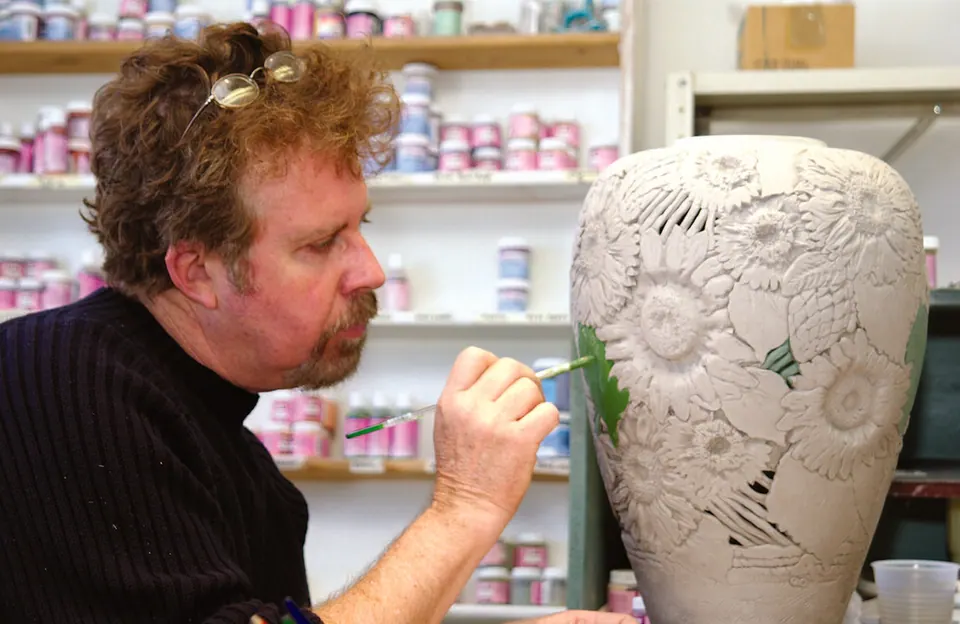
- The best underglaze for most home potters is a liquid pint with a wide listed range, such as AMACO LUG (cone 05–10) or Speedball (cone 06–6, can be fired to cone 10).
- Want fine painting on a budget of space? AMACO Semi-Moist pans work like watercolors and are listed for cone 05–6.
- For drawing and shading, Pasler underglaze pencils are listed for cone 06–10 and for ages 14 and up.
- Underglaze is color, not a food-safe seal. Only the Speedball listing in this list says dinnerware safe when used and fired as directed; AMACO Velvet says not for food contact unless covered with a tested glaze.
The best underglaze is the one that keeps its color at the cone you actually fire, covers in two or three coats and suits how you like to decorate: brushing, painting fine lines, sgraffito or drawing. Underglazes are colored clay-based slips that go on greenware or bisque, stay where you put them during firing, and are usually covered with a clear glaze.
We compared eight products from AMACO, Mayco, Speedball, Sax and Pasler using only manufacturer specs and listing text: cone range, format, size, where it can be applied and what the maker says about food contact. Where a listing is thin, we say so. If you are still choosing a clear coat or color glazes, read best glazes for beginners and underglaze vs glaze first.
Our picks
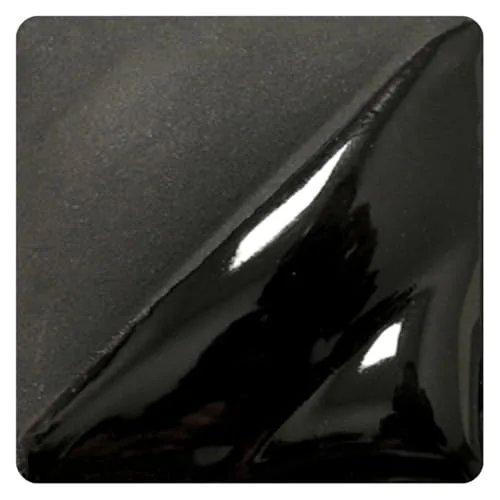
AMACO Liquid Underglaze LUG-1 Black, Pint
- Firing range
- Cone 05-10
- Size
- 16 oz. (473 mL)
- Color
- Black
- Use on
- Bisque and wet/unfired clay
AMACO lists LUG-1 Black for cone 05–10 on bisque or wet, unfired clay, and says the color is nearly the same before and after firing. It is dark and smooth at cone 05, softens toward a glaze-like surface at cone 6 and keeps a soft sheen to cone 10, so one pint covers low-fire and mid-fire work.
Best for: potters who fire at more than one cone
Skip if: you only need small amounts of many colors
- Widest listed range in this list: cone 05–10
- Use on bisque or wet/unfired clay
- 16 oz pint
- Single color per pint
- Listing does not state food safety; cover with a tested clear glaze
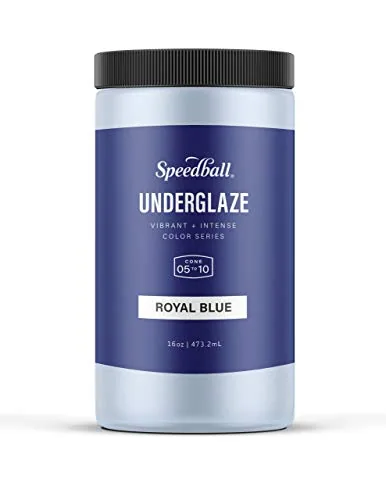
Speedball Underglaze Royal Blue, 16 oz
- Firing range
- Cone 06-6, can be fired at Cone 10
- Size
- 16 oz
- Finish
- Opaque
- Food-safe
- Lead-free, dinnerware safe when used and fired as directed
Speedball lists this opaque underglaze for cone 06–6 and says it can be fired at cone 10, with 2–3 liberal coats for best results. It is the only product here whose listing says lead-free and dinnerware safe when used and fired as directed.
Best for: cone 6 mugs and bowls with a clear liner glaze
Skip if: you want translucent watercolor washes
- Cone 06–6, can be fired to cone 10
- Listed as not moving or bleeding
- Lead-free, dinnerware safe as stated by the maker
- Needs 2–3 coats per the listing
- Dinnerware claim depends on correct use and firing
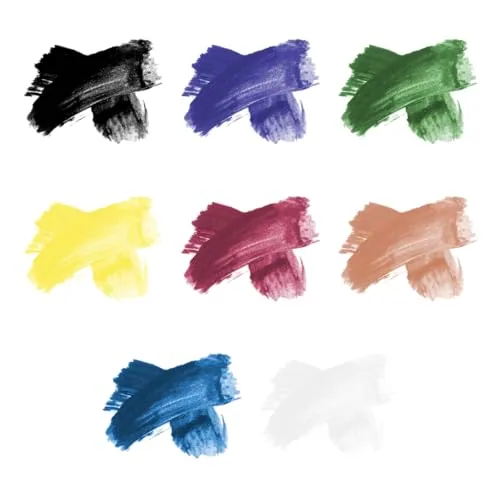
AMACO Semi-Moist Underglaze Set No. 1, 8 Colors
- Firing range
- Cone 05-6
- Count
- 8
- Format
- Watercolor-like pans
- Use on
- Unfired clay or bisque
AMACO's Semi-Moist set packs eight colors into watercolor-like pans, listed for cone 05–6 on unfired clay or bisque. You lift color with a wet brush, layer for opacity or dilute for transparency. The listing notes Maroon holds to cone 6 while the other colors can go to cone 10.
Best for: detail work, small studios, travel
Skip if: you need to cover large areas fast
- 8 colors in one hinged tray
- Opaque when layered, transparent when diluted
- Small footprint
- Small pans, not for big surfaces
- Listed range is cone 05–6 for the full set
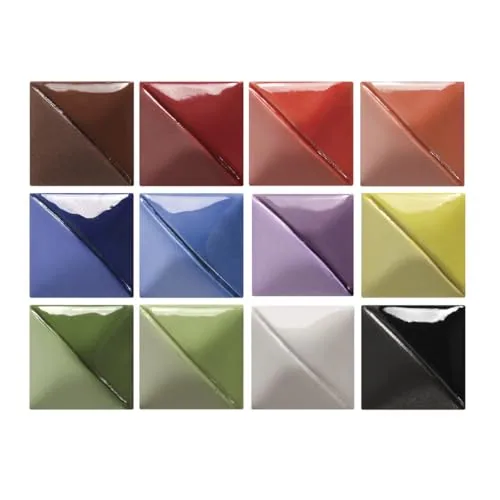
Mayco Fundamentals Underglaze Class Pack, 12 Pints
- Firing range
- Cone 06-10
- Size
- Pint
- Count
- Set of 12
- Use on
- Wet/unfired clay or bisque
Mayco's Fundamentals Underglaze Class Pack is a set of 12 pints listed for cone 06–10 on wet/unfired clay or bisque. Twelve full pints make sense for a classroom, a shared studio or anyone who goes through color quickly.
Best for: classrooms and shared studios
Skip if: you decorate a few pieces a month
- 12 pints in one pack
- Listed cone 06–10
- Wet clay or bisque
- Listing text is thin; check the color list on the listing
- Large upfront quantity
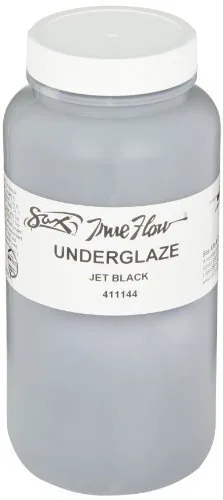
Sax True Flow Underglaze, Jet Black, Pint
- Firing range
- 06-10
- Size
- 1 Pint (16 Fl Oz)
- Color
- Jet Black
Sax True Flow Jet Black is listed with a fire range of 06–10 in a wide-mouth pint, and the listing calls it freeze-thaw stable, which matters if supplies sit in a cold garage or ship in winter.
Best for: line work, sgraffito grounds, schools
Skip if: you need a full palette
- Listed range 06–10
- Freeze-thaw stable per the listing
- Wide-mouth pint
- Black only
- No food-safety statement listed
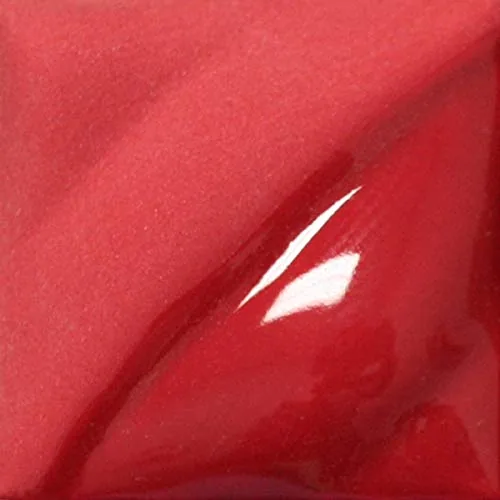
AMACO Velvet Underglaze V-387 Bright Red, Pint
- Size
- Pint
- Finish
- Opaque
Velvet is AMACO's opaque underglaze line, and reds are notoriously hard to keep bright. The listing says AP Certified and not for food contact unless covered with a glaze tested for lead and cadmium release under ASTM C738-94, which is exactly the honest framing you want.
Best for: a strong red accent under clear
Skip if: you want one bottle to cover many colors
- Opaque finish
- AP Certified per the listing
- Pint size
- Cone range not listed in the specs; check the listing
- Not for food contact without a tested glaze over it
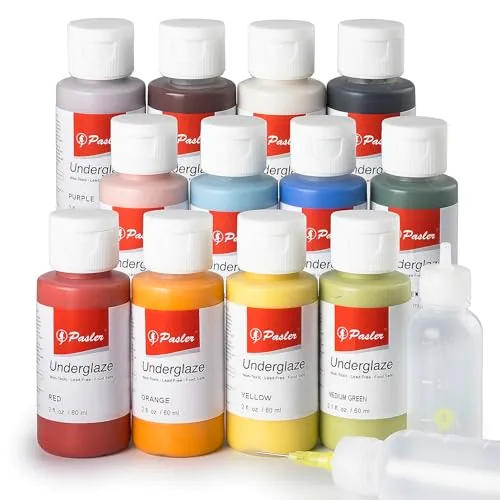
Pasler Underglaze Set, 12 x 2 oz
- Firing range
- Cone 06 - 6 (999°C - 1222°C)
- Size
- 2 fl oz/60 ml
- Count
- 12 Colors
- Food-safe
- Food safety after glazing
Pasler's set gives you 12 colors in 2 oz bottles, listed for cone 06–6 (999–1222 °C), with some colors listed as true to cone 10. Twelve small bottles let you test a palette before you commit to pints.
Best for: trying many colors at once
Skip if: you already know your two or three go-to colors
- 12 colors, 2 fl oz each
- Listed cone 06–6
- Bisque or greenware
- Food-safety wording on the listing is vague
- Small bottles run out on big pieces
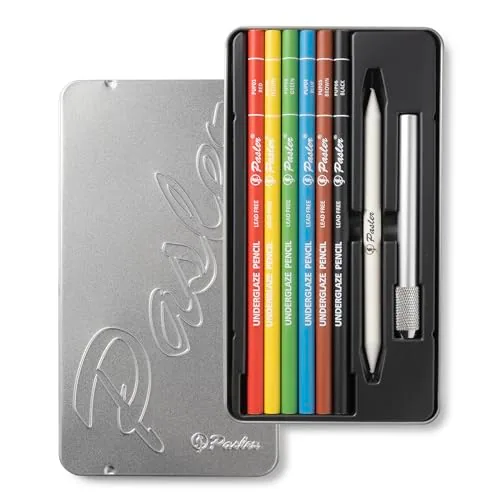
Pasler Underglaze Pencil Kit, 6 Colors
- Firing range
- Cone 06 (999°C) - Cone 10 (1,305°C)
- Count
- 6 colors
- Includes
- Paper stump, pencil extender
Pasler's underglaze pencils come in six colors with a paper stump and extender, listed for cone 06 to cone 10. You draw on bisque, blend with a fingertip and fire. The listing states ages 14 and above.
Best for: illustration, shading, lettering
Skip if: you want solid color fields
- 6 colors plus stump and extender
- Listed cone 06–10
- Easy to correct before firing
- Bisque only per the listing
- Light coverage compared with liquid underglaze
What makes the best underglaze for your kiln?
Start with the firing range, then format, then color count. An underglaze that is gorgeous at cone 05 can burn out or shift at cone 6, so match the listed range to the cone your clay and clear glaze need.
- Cone range. Most liquids here are listed from cone 06 or 05 up to 6 or 10. If you fire mid-range stoneware, make sure your colors are listed to at least cone 6. Check numbers against the cone chart.
- Where you can apply it. Some products go on wet or leather-hard clay and bisque (AMACO LUG, Mayco Fundamentals); pencils are listed for bisque.
- Opacity. Opaque lines such as Velvet and Speedball cover in a few coats; pans and diluted liquids give watercolor effects.
- Size. Pints suit regular work. 2 oz sets and pans are for testing and detail.
- Food-contact wording. Read it. Phrases range from 'dinnerware safe when used and fired as directed' to 'not for food contact unless covered with a glaze tested for lead and cadmium release'.
Top listed firing cone, shown as °F
Highest cone each listing names, converted with the Orton medium rate (108 °F/hr). Where a listing says 'can be fired to cone 10', the cone 10 value is shown.
Most of these products top out at cone 10 on paper, so the real difference is the low end and how colors behave in the middle. Fire a test tile at your own cone before you decorate a full set of mugs.
Underglaze specs side by side
| Product | Firing range | Size | Count | Use on | Finish | Food-safe |
|---|---|---|---|---|---|---|
| AMACO Liquid Underglaze LUG-1 Black, Pint | Cone 05-10 | 16 oz. (473 mL) | — | Bisque and wet/unfired clay | — | — |
| Speedball Underglaze Royal Blue, 16 oz | Cone 06-6, can be fired at Cone 10 | 16 oz | — | — | Opaque | Lead-free, dinnerware safe when used and fired as directed |
| AMACO Semi-Moist Underglaze Set No. 1, 8 Colors | Cone 05-6 | — | 8 | Unfired clay or bisque | — | — |
| Mayco Fundamentals Underglaze Class Pack, 12 Pints | Cone 06-10 | Pint | Set of 12 | Wet/unfired clay or bisque | — | — |
| Sax True Flow Underglaze, Jet Black, Pint | 06-10 | 1 Pint (16 Fl Oz) | — | — | — | — |
| AMACO Velvet Underglaze V-387 Bright Red, Pint | — | Pint | — | — | Opaque | Not for food contact, unless covered with a glaze tested for lead and cadmium release |
| Pasler Underglaze Set, 12 x 2 oz | Cone 06 - 6 (999°C - 1222°C) | 2 fl oz/60 ml | 12 Colors | — | — | Food safety after glazing |
| Pasler Underglaze Pencil Kit, 6 Colors | Cone 06 (999°C) - Cone 10 (1,305°C) | — | 6 colors | — | — | — |
Specs as listed by the maker or seller; check the listing before you buy.
Which format fits how you decorate?
| Liquid pint | Semi-moist pans | Small-bottle set | Pencils | |
|---|---|---|---|---|
| Large areas | ✓ Yes | ✗ No | ~ Small pieces | ✗ No |
| Fine lines and detail | ~ With a liner brush | ✓ Yes | ~ Yes | ✓ Yes |
| Watercolor washes | ~ When diluted | ✓ Yes | ~ When diluted | ~ Blend with fingertip |
| Wet or greenware | ✓ Most lines | ✓ Listed | ✓ Pasler listed | ✗ Bisque per listing |
| Testing many colors | ✗ One color each | ✓ 8 colors | ✓ 12 colors | ✓ 6 colors |
How to apply underglaze for even color
- Pick the stage
Apply to leather-hard or bone-dry greenware if the product is listed for unfired clay, or to bisque. Greenware decoration lets you bisque the color on and handle the piece more freely afterward.
- Clean the surface
Wipe bisque with a barely damp sponge to remove dust. Oils from your hands can cause bare spots.
- Brush 2–3 coats
Speedball's listing recommends 2–3 liberal coats. Alternate brush direction and let each coat lose its shine before the next.
- Add detail last
Use pans, pencils or a fine brush for linework once the base colors are dry. Sgraffito works best on leather-hard clay.
- Fire, then glaze
Bisque fire (often cone 06–04), then cover with a clear glaze rated for your clay and fire to the glaze cone. See how to glaze pottery and bisque vs glaze firing.
Is underglaze food safe?
Underglaze on its own is a colorant, not a sealed food surface. On mugs and bowls, most potters keep underglaze on the outside or cover it with a clear glaze that the maker lists as dinnerware safe when fired as directed.
Of the eight picks, Speedball's listing states 'lead-free, dinnerware safe when used and fired as directed'. AMACO Velvet states 'not for food contact, unless covered with a glaze tested for lead and cadmium release in accordance with ASTM C738-94'. Pasler's listing says 'food safety after glazing' without naming a test, so treat that as unconfirmed. More on this in our food-safe ware hub and best food-safe glazes.
Which underglaze for beginners, classrooms and sellers?
- First-time decorators: a small set (Pasler 12-color or AMACO Semi-Moist) plus one clear glaze lets you learn how colors fire before buying pints.
- Classrooms: the Mayco Fundamentals Class Pack gives 12 pints; Sax Jet Black is a reliable outline color. Browse the kids and classroom hub for clay and glaze class packs.
- Cone 6 functional potters: AMACO LUG or Speedball, both listed to cone 6 and beyond, under a clear liner.
- Illustrators: pencils for drawing, pans for tinting, one black liquid for bold lines.
Underglaze mistakes to avoid
- Firing past the listed range. Some reds and pinks fade or burn out at higher cones. AMACO even notes Maroon in the Semi-Moist set holds only to cone 6.
- One thin coat. Streaks show after firing. Build 2–3 coats for solid color.
- Thick clear over thick underglaze. Too much clear can blur lines or crawl. See glaze defects.
- Skipping a test tile. Clay body, cone and clear glaze all change the final color.
- Assuming 'non-toxic' means food safe. They are different claims.
We compare manufacturer specs and listing data (power, capacity, size, voltage, temperature or cone rating, firing range, what is included) and what the maker says each product is for. We did not throw on, fire or lab-test these products, and we never show invented scores, ratings or prices.