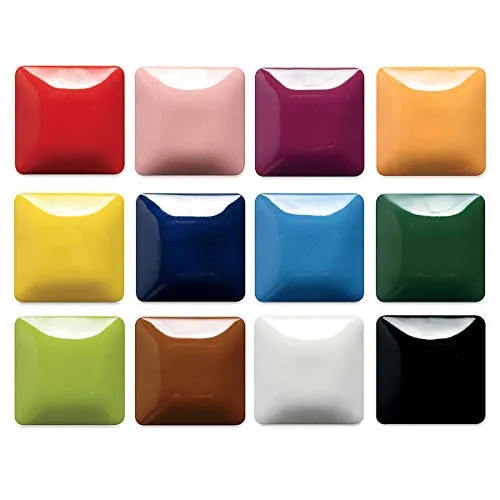
- Low-fire starter: the Mayco Stroke & Coat Kit 1 has twelve 2 oz bottles that fire glossy without a clear coat. Mayco states they're food-safe when fired according to its directions.
- Cone 5–6 starter: the Penguin Pottery Specialty Series Set 1 has seven 4 oz glazes plus wax resist, for cone 5–6 (about 2,167–2,232 °F).
- Classrooms: the Sax Gloss Glaze Set has six pints at cone 06–05, AP certified and lead-free per the listing.
- Check the cone first. A cone 06 glaze fired to cone 6 will run, and a cone 6 glaze fired to cone 06 stays dry and raw.
The best glazes for beginners are the ones made for the cone your kiln, or your community studio, actually fires. The second thing to look for is a set big enough to learn layering without buying a dozen pints. Most hobby studios fire either low (cone 06–04) or mid range (cone 5–6), and the two systems don't mix on one piece.
Below are seven picks from five brands, sorted by firing range. Everything we quote, from cones and finishes to food-safety wording, comes from the listing. If a listing leaves something out, we tell you.
Our picks
Mayco Stroke & Coat Glaze Kit #1, 12 x 2 oz
- Size
- 2 Fl Oz bottles
- Count
- 12
- Finish
- Gloss without clear glaze
- Use on
- Wet clay, greenware, earthenware or stoneware bisque
Stroke & Coat is the glaze most beginners meet first in paint-your-own studios and classrooms. It brushes on like paint, goes on wet clay, greenware or bisque, and fires to a gloss without a clear overcoat. Mayco states it's "food-safe and dinnerware-safe when fired according to manufacturer directions".
Best for: low-fire studios, kids' classes and painted designs
Skip if: your kiln or studio fires only cone 6
- Gloss without a clear glaze
- Works on wet clay, greenware or bisque
- Food-safe as stated, when fired as directed
- This kit listing doesn't give a cone; check Mayco's chart
- 2 oz bottles run out fast on big pieces
Penguin Pottery Specialty Series Glaze Set #1, 8 x 4 oz
- Firing range
- Cone 5-6 (about 2167-2232°F)
- Size
- 4 fl oz jars
- Count
- 7 glazes plus wax resist
- Finish
- Glossy, opaque
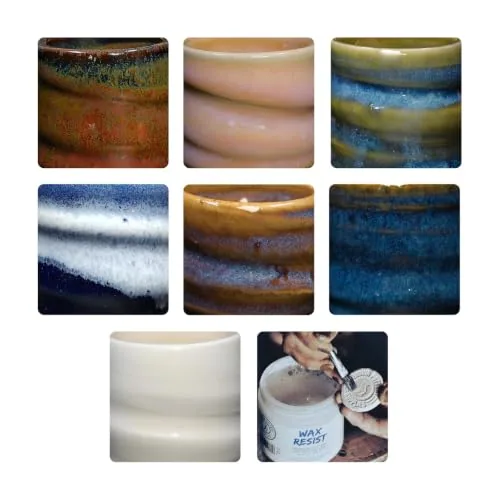
Seven 4 oz glazes (Ultra Marine, White, Rutile, Rusty's Red, Rose Quartz, Floating Green and Glossy Clear) plus a jar of wax resist cover most of what a new mid-fire potter needs. Penguin lists them for cone 5–6, about 2,167–2,232 °F. It says they're suitable for food and drink surfaces when fired to the specified cone.
Best for: wheel throwers firing cone 5–6 stoneware
Skip if: you fire low-fire earthenware
- Wax resist included
- Glossy, opaque finish
- Food-contact statement tied to cone 5–6
- 4 oz jars: enough for testing, not for dipping
- Opaque colors hide clay texture
Sax Gloss Glaze Set, 6 Pints
- Firing range
- Cone 06-05
- Size
- 16 Ounce Pints
- Count
- Set of 6
- Finish
- Gloss, opaque
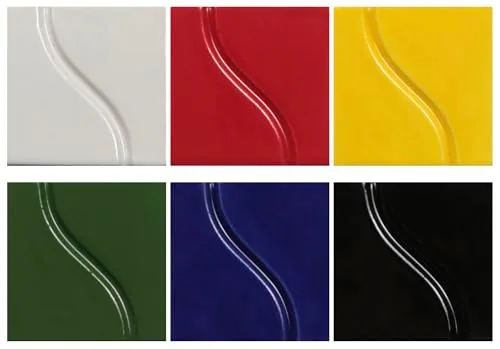
Six pints in bright opaque colors (white, red, yellow, green, blue and black) are dinnerware-suitable when fired to cone 06–05, per Sax. The listing says the glazes are AP certified and lead-free. Pints suit groups better than small bottles.
Best for: schools, camps and low-fire group studios
Skip if: you want subtle, layered stoneware effects
- Six full pints
- AP certified and lead-free per the listing
- Dinnerware-suitable at cone 06–05
- Basic primary palette
- Low fire only for food-use claims
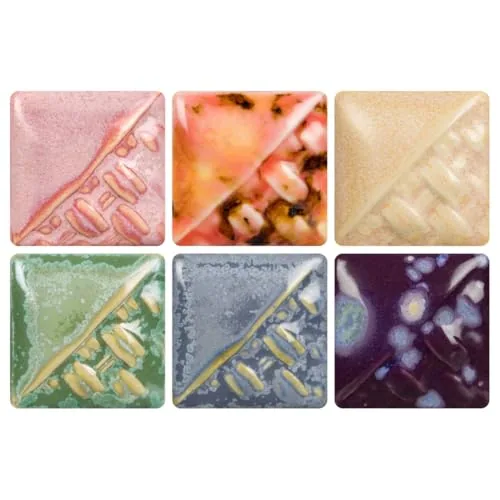
Mayco Stoneware Glaze Kit #4, 6 Pints
- Firing range
- Cone 5/6-10
- Size
- 16 oz. (473 mL) jars
- Count
- 6
Mayco's Stoneware Kit #4 gives you six full pints, including two crystal glazes, Amaryllis and Passion Flower. Mayco says they move and break over texture but don't run off the piece. Apply to cone 06–04 bisque and fire to cone 5–6. Mayco says they can also be high-fired to cone 9–10.
Best for: mid-fire potters ready to layer glazes
Skip if: you're still testing what you like
- Six 16 oz jars
- Cone 5/6–10 range
- Designed to layer and break over texture
- No food-safety statement in this listing
- Crystal glazes need testing on your clay
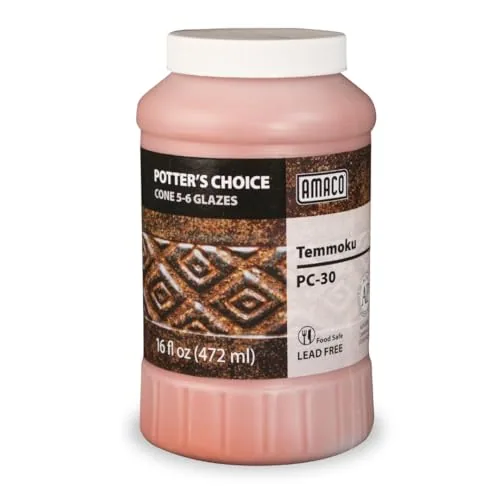
AMACO Potter's Choice PC-30 Temmoku, Pint
- Firing range
- Mid-High Fire Cone 5-6
- Size
- 1 pint
- Color
- Dark brown tan speckled
AMACO's Potter's Choice line is built for cone 5–6 electric kilns and aims at the look of cone 10 reduction without a gas kiln. PC-30 Temmoku is a dark brown with tan speckles, and a common base coat for layering lighter Potter's Choice colors on top. The listing calls it lead-free and non-toxic.
Best for: learning one reliable dark base glaze
Skip if: you want variety from a single purchase
- Cone 5–6 in an electric kiln
- Lead-free per the listing
- A full pint for dipping small pieces
- One color only
- No food-safety statement in this listing
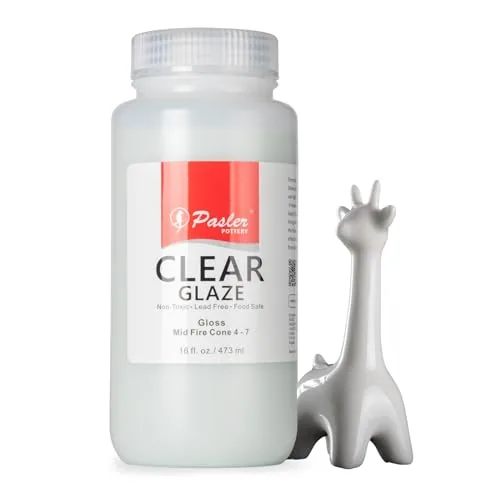
Pasler PCC10 Mid Fire Clear Glaze, 16 oz
- Firing range
- Cone 4 to Cone 7 (1186°C - 1240°C)
- Size
- 16 fl oz/473ml
- Finish
- Clear gloss
- Food-safe
- Meets food safety standards
A clear glaze is the most-used jar in most studios. Pasler's PCC10 covers a wide cone 4 to cone 7 range (1,186–1,240 °C). It's light blue before firing, so you can see where you've applied it, and fires fully transparent. Pasler says it meets food safety standards and is lead-free.
Best for: covering underglaze designs at mid fire
Skip if: you fire low fire
- Wide cone 4–7 range
- Tinted before firing so you can see coverage
- Lead-free per the listing
- Listing doesn't say which food safety standard
- Clear only
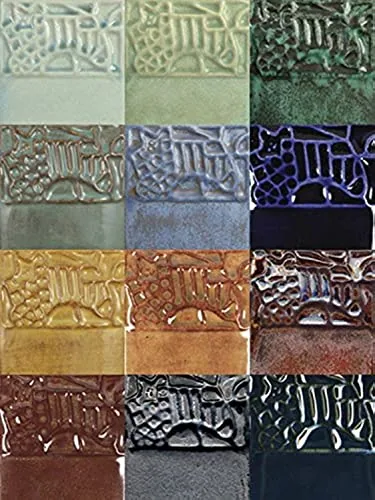
Mayco Elements Glaze Set, 12 x 4 oz
- Firing range
- Cone 06/05
- Size
- 4 Ounces
- Count
- 12
- Finish
- Semi-opaque and opaque with crystals
Mayco's Elements set adds twelve 4 oz jars of semi-opaque and opaque glazes with crystals that spread into bursts of color during firing. They're made for cone 06/05. Treat them as decorative: this listing makes no food-safety statement.
Best for: decorative low-fire pieces with a lot of character
Skip if: you need glazes for mugs and plates
- 12 colors with crystal effects
- Cone 06/05
- 4 oz jars
- No food-safety statement
- Crystal results vary with thickness
Low fire or cone 6: which glazes for beginners fit your kiln?
Ask your kiln, or whoever fires your work, one question: what cone? That one answer narrows the shelf to a few product lines. Glaze and clay need to mature at the same cone. Most studios bisque around cone 06–04 either way, so what differs is the glaze firing.
Low-fire vs mid-fire glazing
| Low fire (cone 06–04) | Mid fire (cone 5–6) | |
|---|---|---|
| Orton temperature, medium rate | 1,828–1,945 °F | 2,167–2,232 °F |
| Typical clay | Earthenware, white low-fire | Stoneware, porcelain |
| Color | ✓ Bright, predictable | ~ Earthier, varies with clay |
| Durability of ware | ~ Porous body; glaze does the sealing | ✓ Denser, stronger body |
| Small 120 V kilns | ✓ Most can reach it | ~ Only some; check the listed max |
Source: Orton cone chart, 108 °F/hr column
Where each pick fires on the Orton scale
°F at Orton's medium rate (108 °F/hr). Marks show each listing's stated firing target.
Not sure what your kiln reaches? Check its listed maximum against the Orton cone chart, or read our home kiln guide, which explains why a 2,000 °F kiln is a low-fire kiln.
Compare the glaze sets by listed specs
These figures are copied from each listing. A dash means the listing doesn't state it, so check the maker's chart before you fire.
| Product | Count | Size | Firing range | Finish | Food-safe |
|---|---|---|---|---|---|
| Mayco Stroke & Coat Glaze Kit #1, 12 x 2 oz | 12 | 2 Fl Oz bottles | — | Gloss without clear glaze | Food-safe and dinnerware-safe when fired according to manufacturer directions |
| Penguin Pottery Specialty Series Glaze Set #1, 8 x 4 oz | 7 glazes plus wax resist | 4 fl oz jars | Cone 5-6 (about 2167-2232°F) | Glossy, opaque | Suitable for surfaces that come into contact with food or drink when fired to the specified cone |
| Sax Gloss Glaze Set, 6 Pints | Set of 6 | 16 Ounce Pints | Cone 06-05 | Gloss, opaque | Dinnerware suitable when fired to cone 06-05 |
| Mayco Stoneware Glaze Kit #4, 6 Pints | 6 | 16 oz. (473 mL) jars | Cone 5/6-10 | — | — |
| AMACO Potter's Choice PC-30 Temmoku, Pint | — | 1 pint | Mid-High Fire Cone 5-6 | — | — |
| Pasler PCC10 Mid Fire Clear Glaze, 16 oz | — | 16 fl oz/473ml | Cone 4 to Cone 7 (1186°C - 1240°C) | Clear gloss | Meets food safety standards |
| Mayco Elements Glaze Set, 12 x 4 oz | 12 | 4 Ounces | Cone 06/05 | Semi-opaque and opaque with crystals | — |
Specs as listed by the maker or seller; check the listing before you buy.
Watch the jar size as well as the color count. Brushing takes about three coats, so a 2 oz bottle covers only a few mugs. Dipping needs a pint or more just to submerge a small piece. If you plan to dip, buy pints of your two or three favorites once the testing is done.
How do you apply glaze as a beginner?
- Start with clean bisque
Wipe bisqueware with a barely damp sponge to remove dust and hand oils. Oily spots make glaze crawl.
- Wax the foot
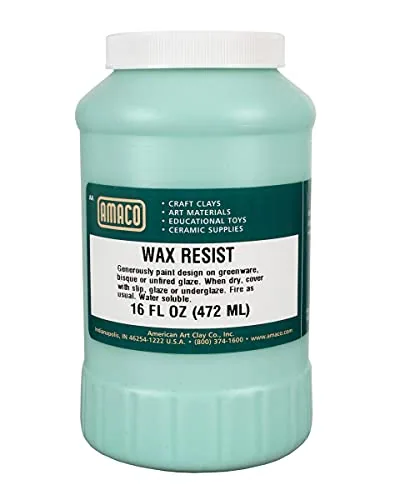
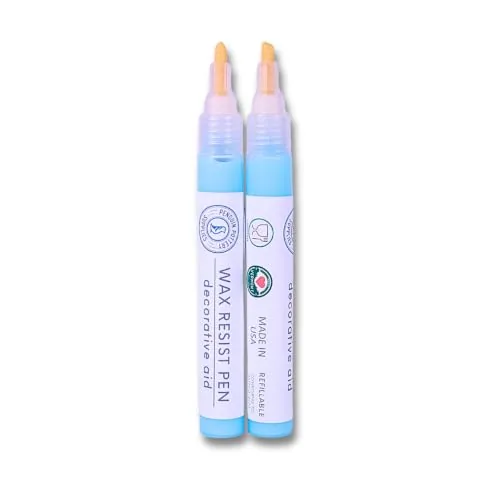
Paint wax resist on the bottom and about ¼ inch up the side, so glaze never touches the kiln shelf.
- Stir, don't shake only
Glazes settle. Stir to the bottom of the jar for a minute or two until the color is even.
- Brush three even coats
Let each coat dry to the touch, and brush each one in a different direction. Mayco says one coat of Stroke & Coat is translucent and three are opaque.
- Keep the lower edge thin
Glaze moves down in the firing. Leave the bottom ½ inch thinner, especially with layered or crystal glazes.
- Make test tiles
Fire a tile of every glaze, and every layered pair, on your own clay before you glaze a finished piece.
For the full process, from dipping and pouring to layering, see how to glaze pottery. The difference between the two firings is explained in bisque vs glaze firing.
Which glaze set suits which beginner?
- You fire at a paint-your-own or kids' studio: Mayco Stroke & Coat. It's forgiving and brushes like paint.
- You throw cone 6 stoneware at a community studio: the Penguin Pottery Specialty Series set, then pints of your favorites. Ask the studio first, because many only allow their own glazes.
- You teach a class: the Sax Gloss Glaze Set in pints, with low-fire clay.
- You want to learn layering: AMACO Potter's Choice Temmoku as a base, or the Mayco Stoneware Kit #4. AMACO vs Mayco compares the two systems.
- You love drawing on pots: underglazes under a clear like Pasler PCC10. Start with underglaze vs glaze and our underglaze picks.
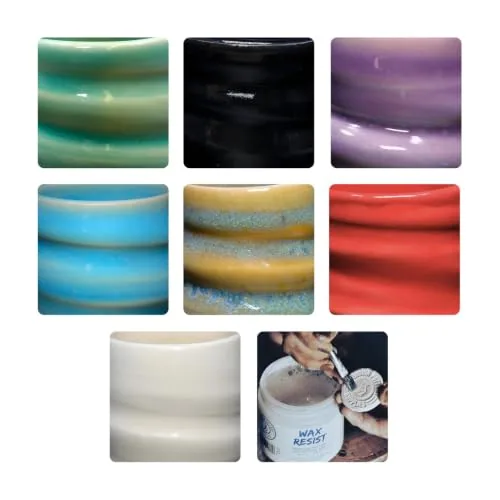
Penguin Pottery Celadon Series Glaze Set, 8 x 4 oz
- Firing range
- Cone 5-6 (about 2167-2232°F)
- Size
- 4 fl oz jars
- Count
- 7 glazes plus wax resist
Best for Carved or textured stoneware
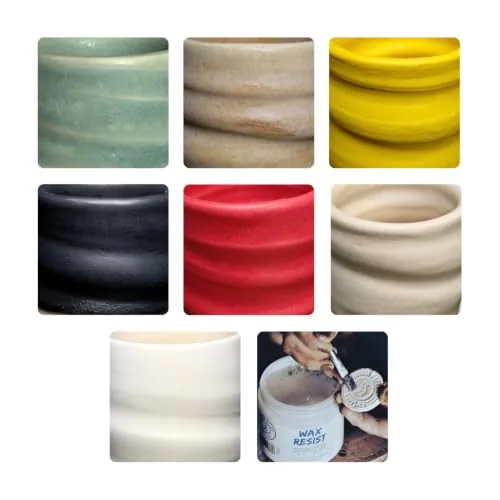
Penguin Pottery Matte Series Glaze Set, 8 x 4 oz
- Firing range
- Cone 5-6 (about 2167-2232°F)
- Size
- 4 fl oz jars
- Count
- 7 glazes plus wax resist
Best for Matte mid-fire surfaces
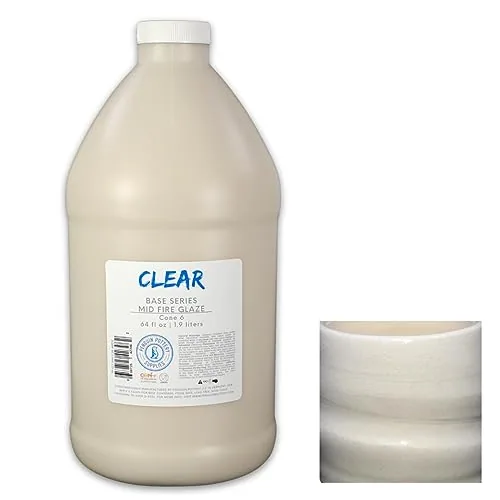
Penguin Pottery Glossy Clear Cone 5-6, 64 oz
- Firing range
- Cone 5-6 (about 2167-2232°F)
- Size
- 64 Fl Oz
- Finish
- Glossy clear, zinc-free
Best for Potters who use a lot of clear
Mistakes to avoid with beginner glazes
- Mixing cone systems on one piece. A low-fire glaze on cone 6 clay, fired to cone 6, will run and blister. A cone 6 glaze at cone 06 stays dry and chalky.
- Using decorative glazes on dinnerware. Mayco's Jungle Gems listing says "Do not use for dinnerware", and Penguin's Raku set says it's "Not for surfaces that come into contact with food or drink". Read the jar.
- Glazing too thick. Heavy coats crawl, run onto shelves and craze. Our glaze defects guide shows what each fault looks like.
- Skipping wax on the foot. One drip can glue a pot to a shelf. Kiln wash on the shelf is the second line of defense.
- Sanding or scraping dry glaze indoors. Glaze dust can contain silica. Wipe drips with a damp sponge before firing, and wear a NIOSH-approved respirator if you must grind fired drips.
Making mugs and bowls? Read our food-safe glaze picks for what makers actually promise. You can browse every glaze, underglaze and wax resist in the glazes category, and more starter gear in total beginners.
We compared each glaze's listed cone range, finish, jar size and count, and any food-safety wording in the listing, then placed each firing range on Orton's published cone chart at 108 °F per hour. We did not apply or fire these glazes. Colors and results depend on your clay, application and kiln.