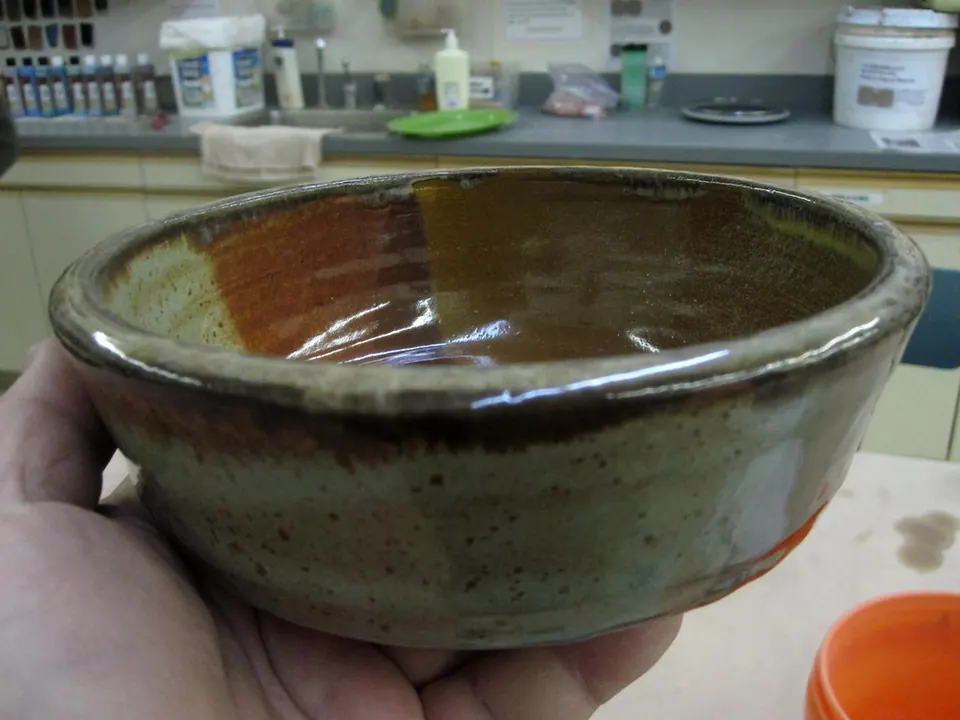
- Mid-fire clear: Penguin Pottery Glossy Clear (cone 5–6, 64 oz) is stated as suitable for food or drink surfaces "when fired to the specified cone".
- Low-fire color: Mayco Stroke & Coat Kit 1 is "food-safe and dinnerware-safe when fired according to manufacturer directions".
- Low-fire clear: Sax True Flow Natural Clear is "dinnerware safe when fired to cone 06-05".
- Every claim is conditional. Under-firing, the wrong clay or a thick, crazed coat can undo it. If you sell, consider a lab leach test.
The best food-safe glaze is one whose maker explicitly states it's dinnerware-safe or food-safe when fired as directed, and that you then fire exactly as directed. That second half is the part people skip. A glaze's safety depends on its chemistry and on whether it fully melted into a stable glass at the right cone, on a clay body that fits it.
This ranking only includes glazes whose listings make a food-safety statement. We quote each one word for word with its conditions. We haven't lab-tested any of them, and nobody can promise a glaze is safe on every clay and every firing.
Our picks
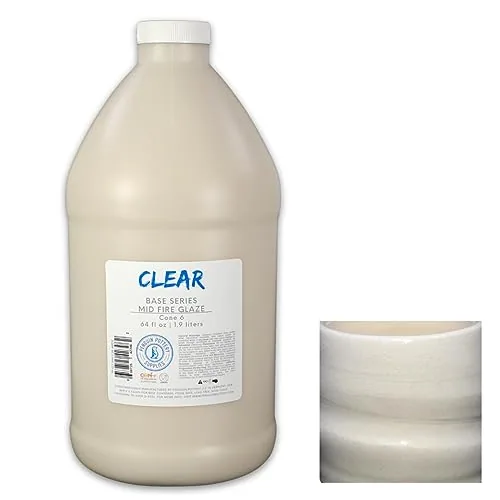
Penguin Pottery Glossy Clear Cone 5-6, 64 oz
- Firing range
- Cone 5-6 (about 2167-2232°F)
- Size
- 64 Fl Oz
- Finish
- Glossy clear, zinc-free
A clear liner is the glaze most functional potters lean on, both for the inside of mugs and bowls and over underglaze decoration. Penguin lists this zinc-free gloss clear for cone 5–6 (about 2,167–2,232 °F). It states it's "suitable for surfaces that come into contact with food or drink when fired to the specified cone". The 64 oz jar is big enough to dip.
Best for: liners and clear coats on cone 5–6 stoneware
Skip if: you fire low fire
- Food-contact statement tied to cone 5–6
- Zinc-free gloss clear
- 64 oz, enough for dipping
- Results depend on your clay's fit with the glaze
- Clear shows every application flaw
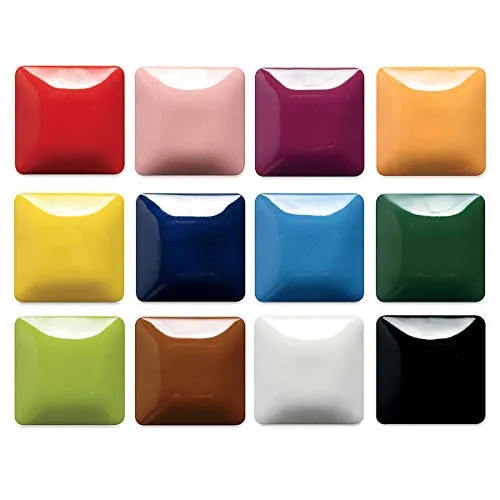
Mayco Stroke & Coat Glaze Kit #1, 12 x 2 oz
- Size
- 2 Fl Oz bottles
- Count
- 12
- Finish
- Gloss without clear glaze
- Use on
- Wet clay, greenware, earthenware or stoneware bisque
Stroke & Coat brings twelve colors that fire glossy without a clear coat. Mayco states it's "food-safe and dinnerware-safe when fired according to manufacturer directions". That condition matters: the directions set the cone, coat count and clay, and this kit listing doesn't repeat the cone.
Best for: colorful low-fire plates, mugs and painted ware
Skip if: you can't get Mayco's firing directions for your setup
- Explicit food-safe and dinnerware-safe wording
- Gloss without a clear coat
- Twelve 2 oz colors
- Cone not listed on this kit; check Mayco's chart
- Small bottles
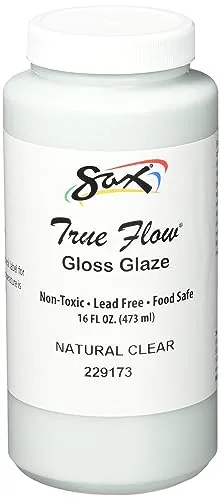
Sax True Flow Gloss Glaze, Natural Clear, Pint
- Firing range
- Cone 06-05
- Size
- 16 Fl Oz
- Finish
- Gloss clear
- Food-safe
- Dinnerware safe when fired to cone 06-05
Sax gives a clear, specific condition: "Dinnerware safe when fired to cone 06-05". That's 1,828–1,888 °F at Orton's medium rate. The listing also says it's lead-free, non-toxic and conforms to ASTM D-4236, so it's a straightforward choice for low-fire earthenware and classroom ware.
Best for: clear-coating low-fire earthenware and underglaze work
Skip if: your kiln fires stoneware only
- Cone named in the safety statement
- Lead-free per the listing
- Gloss clear in a pint
- Low fire only
- One pint goes quickly if you dip
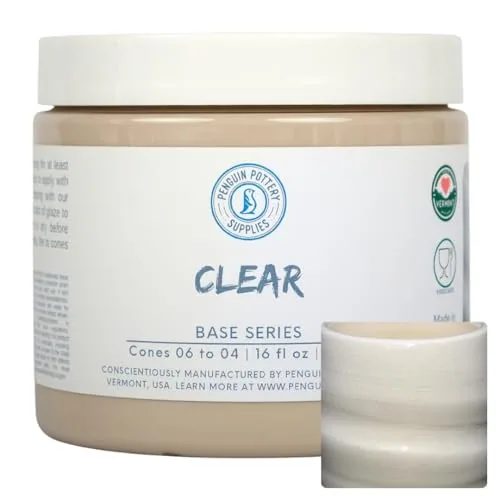
Penguin Pottery Low Fire Clear Glaze, Cone 06-04, Pint
- Firing range
- Cone 06-04
- Size
- 16 oz (473 ml)
- Finish
- Clear
- Food-safe
- Food safe (when properly fired and tested)
Penguin's low-fire clear (cone 06–04) says it's lead-free, non-toxic and "food safe (when properly fired and tested)". The listing adds that your kiln must be checked for temperature accuracy so you know it reaches the target cone. That's the most honest framing on this list: it puts the testing step in writing.
Best for: low-fire potters who check their firings with witness cones
Skip if: you don't want to verify your kiln
- Lead-free per the listing
- Spells out the fire-and-test condition
- Cone 06–04
- You carry the testing burden
- Low fire only
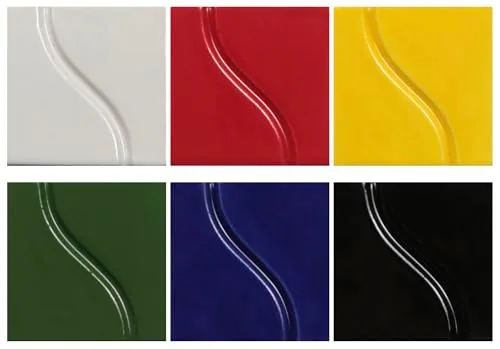
Sax Gloss Glaze Set, 6 Pints
- Firing range
- Cone 06-05
- Size
- 16 Ounce Pints
- Count
- Set of 6
- Finish
- Gloss, opaque
Six pints of opaque gloss in bright colors that Sax says are "dinnerware suitable when fired to cone 06-05". The listing says they're AP certified and lead-free. Pints make sense for a school that fires plates and mugs for families.
Best for: schools and groups glazing functional low-fire pieces
Skip if: you want mid-fire stoneware surfaces
- Cone named in the statement
- AP certified and lead-free per the listing
- Six full pints
- Primary-color palette
- Food-use wording only at cone 06–05
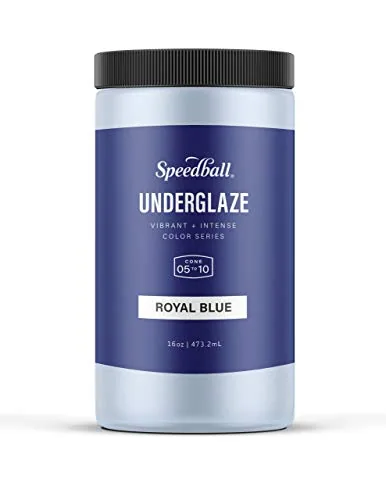
Speedball Underglaze Royal Blue, 16 oz
- Firing range
- Cone 06-6, can be fired at Cone 10
- Size
- 16 oz
- Finish
- Opaque
- Food-safe
- Lead-free, dinnerware safe when used and fired as directed
Most underglazes avoid food claims. Speedball states this opaque Royal Blue is "lead-free, dinnerware safe when used and fired as directed". It's designed for cone 06–6 and can be fired to cone 10. You can paint it on and sgraffito through it, then cover it with a clear from the same cone.
Best for: decorating functional ware under a matching clear
Skip if: you were hoping to skip the clear coat on food surfaces
- Dinnerware-safe wording
- Cone 06–6, can be fired to cone 10
- Opaque and won't bleed, per Speedball
- "As directed" means following Speedball's coat and firing guidance
- A single color
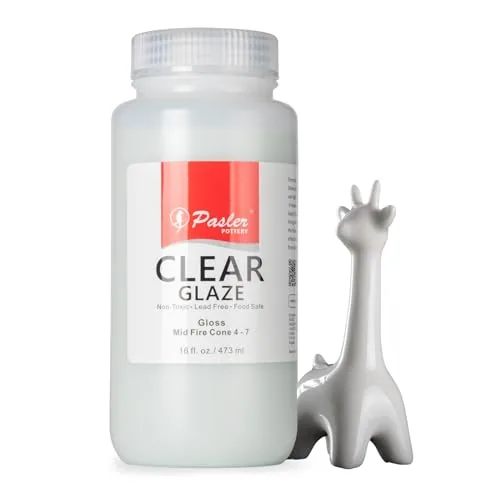
Pasler PCC10 Mid Fire Clear Glaze, 16 oz
- Firing range
- Cone 4 to Cone 7 (1186°C - 1240°C)
- Size
- 16 fl oz/473ml
- Finish
- Clear gloss
- Food-safe
- Meets food safety standards
Pasler's PCC10 clear covers cone 4 to cone 7 (1,186–1,240 °C). It goes on light blue so you can see coverage, then fires transparent. The listing says it "meets food safety standards" and is lead-free, but doesn't say which standard. Ask the seller before you rely on it for ware you sell.
Best for: home kilns that fire a little hot or cool around cone 6
Skip if: you want a named test standard behind the claim
- Wide cone 4–7 range
- Tinted before firing
- Lead-free per the listing
- Food standard not specified
- Clear only
What does food-safe glaze actually mean?
A glaze is a thin layer of glass. If it melts fully and the recipe is balanced, metals and colorants stay locked in. If it's under-fired, badly formulated or attacked by acidic food, some of that material can leach out. The FDA's pottery guidance focuses on exactly this risk with lead, which is why "lead-free" alone doesn't settle the question.
That's also why careful makers attach conditions. AMACO's Velvet underglaze listing is a good example of honest wording: "Not for food contact, unless covered with a glaze tested for lead and cadmium release in accordance with ASTM C738-94." ASTM C738 is a lab method for measuring lead and cadmium released from glazed surfaces.
Compare each food-safe glaze, word for word
Below is each maker's own statement, with the condition it depends on.
Food-safety statements as listed
| Glaze | Statement | Condition |
|---|---|---|
| Penguin Pottery Glossy Clear | Suitable for surfaces that come into contact with food or drink | When fired to the specified cone (5–6) |
| Mayco Stroke & Coat Kit 1 | Food-safe and dinnerware-safe | When fired according to manufacturer directions |
| Sax True Flow Natural Clear | Dinnerware safe | When fired to cone 06–05 |
| Penguin Pottery Low Fire Clear | Food safe | When properly fired and tested |
| Sax Gloss Glaze Set | Dinnerware suitable | When fired to cone 06–05 |
| Speedball Underglaze Royal Blue | Dinnerware safe | When used and fired as directed |
| Pasler PCC10 Clear | Meets food safety standards | ~ Standard not named |
| Product | Firing range | Size | Finish | Food-safe |
|---|---|---|---|---|
| Penguin Pottery Glossy Clear Cone 5-6, 64 oz | Cone 5-6 (about 2167-2232°F) | 64 Fl Oz | Glossy clear, zinc-free | Suitable for surfaces that come into contact with food or drink when fired to the specified cone |
| Mayco Stroke & Coat Glaze Kit #1, 12 x 2 oz | — | 2 Fl Oz bottles | Gloss without clear glaze | Food-safe and dinnerware-safe when fired according to manufacturer directions |
| Sax True Flow Gloss Glaze, Natural Clear, Pint | Cone 06-05 | 16 Fl Oz | Gloss clear | Dinnerware safe when fired to cone 06-05 |
| Penguin Pottery Low Fire Clear Glaze, Cone 06-04, Pint | Cone 06-04 | 16 oz (473 ml) | Clear | Food safe (when properly fired and tested) |
| Sax Gloss Glaze Set, 6 Pints | Cone 06-05 | 16 Ounce Pints | Gloss, opaque | Dinnerware suitable when fired to cone 06-05 |
| Speedball Underglaze Royal Blue, 16 oz | Cone 06-6, can be fired at Cone 10 | 16 oz | Opaque | Lead-free, dinnerware safe when used and fired as directed |
| Pasler PCC10 Mid Fire Clear Glaze, 16 oz | Cone 4 to Cone 7 (1186°C - 1240°C) | 16 fl oz/473ml | Clear gloss | Meets food safety standards |
Specs as listed by the maker or seller; check the listing before you buy.
Top of each glaze's stated firing range
°F at Orton's medium rate (108 °F/hr). The Mayco kit listing gives no cone, so it isn't shown.
The chart makes the main point plain: these glazes split into a low-fire group and a mid-fire group, and a food-safety claim made at one cone doesn't carry over to the other. Look up your kiln's real reach on the cone chart.
How do you make glazed ware as food-safe as you can?
- Choose a glaze with a written statement
Use only glazes whose maker states food or dinnerware safety for food surfaces. Keep decorative glazes, like Mayco Jungle Gems ("Do not use for dinnerware") and Penguin Raku, on the outside or on decorative pieces.
- Match the clay to the cone
Use a clay body made for the glaze's cone. A cone 5–6 glaze needs cone 5–6 clay. Stoneware vs earthenware vs porcelain explains the bodies.
- Apply as directed
Follow the maker's coat count. Too thin can fire dry and rough, and too thick can craze or run.
- Fire with witness cones
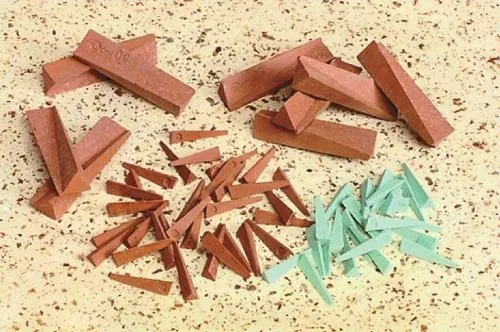
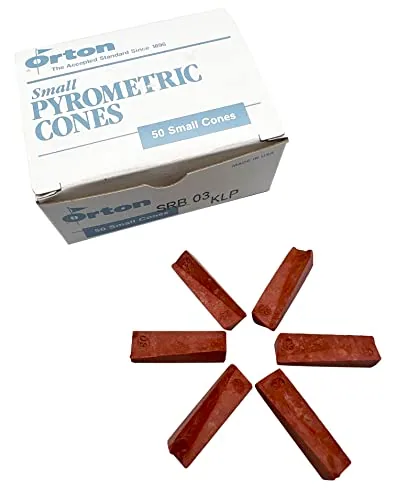
Put a cone pack on the shelf to see what the load actually reached. Controllers and thermocouples drift over time.
- Inspect every piece
Food surfaces should be smooth and fully glossy (or evenly satin, if that's the design). Retire pieces that are crazed, pitted or chalky to plant-pot duty.
- Test if you sell
If your mugs and plates leave your house, consider a lab leach test of your clay, glaze and firing combination. Digitalfire explains why a home check can't stand in for a lab result.
Which food-safe glaze suits your setup?
- Cone 5–6 stoneware at home or a studio: Penguin Pottery Glossy Clear as a liner, with color from the Penguin mid-fire series sets.
- Low-fire earthenware: Sax True Flow Natural Clear or Penguin Low Fire Clear, with Mayco Stroke & Coat for color.
- Classrooms making family mugs: the Sax Gloss Glaze Set, fired to cone 06–05 and checked with witness cones.
- Illustrated ware: Speedball underglaze under a clear from the same cone. Read underglaze vs glaze and see our underglaze picks.
- Just starting out: begin with our beginner glaze sets, and keep your first pieces decorative until you trust your firings.
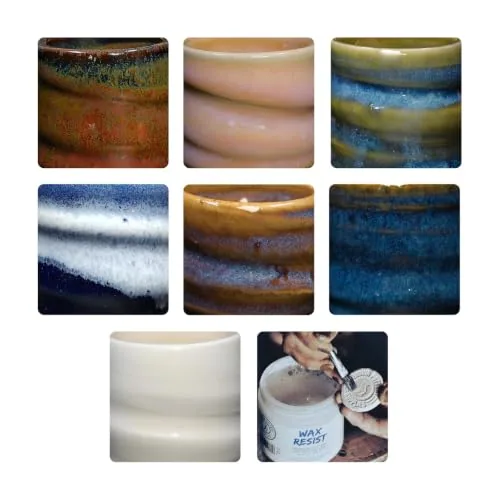
Penguin Pottery Specialty Series Glaze Set #1, 8 x 4 oz
- Firing range
- Cone 5-6 (about 2167-2232°F)
- Size
- 4 fl oz jars
- Count
- 7 glazes plus wax resist
Best for Trying mid-fire glazes
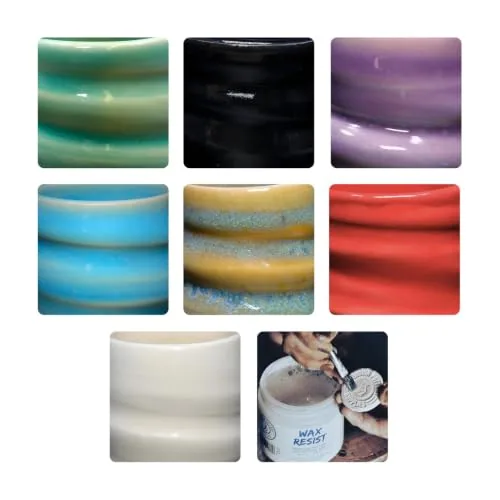
Penguin Pottery Celadon Series Glaze Set, 8 x 4 oz
- Firing range
- Cone 5-6 (about 2167-2232°F)
- Size
- 4 fl oz jars
- Count
- 7 glazes plus wax resist
Best for Carved or textured stoneware
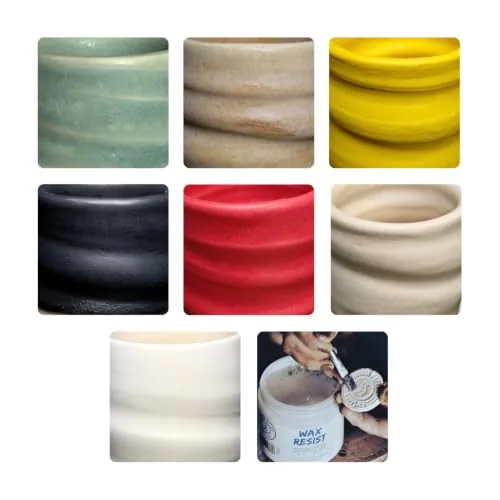
Penguin Pottery Matte Series Glaze Set, 8 x 4 oz
- Firing range
- Cone 5-6 (about 2167-2232°F)
- Size
- 4 fl oz jars
- Count
- 7 glazes plus wax resist
Best for Matte mid-fire surfaces
More functional-ware picks are collected in food-safe ware, and every glaze we cover is in the glazes category.
Mistakes that undo a food-safe label
- Under-firing. A cone 6 glaze that reached only cone 5 may look fine but hasn't fully melted. Witness cones catch this; a controller's display may not.
- Ignoring crazing. Fine cracks in the glaze trap food and bacteria and weaken the piece. Our glaze defects guide covers how to fix the clay-glaze fit.
- Layering without testing. Two food-safe glazes layered together are a new, untested surface, especially at the drip line.
- Trusting "lead-free" alone. Lead is one concern. Other colorants can leach from a poorly melted glaze.
- Using decorative glazes inside mugs. Read the jar: no statement means no food use.
- Mislabeling decorative ware you sell. FDA rules (21 CFR 109.16) describe how ornamental ceramicware not intended for food must be labeled.
Firing a lot of test tiles? Estimate the electricity with our firing cost calculator, and check whether your kiln can really reach cone 6 in our home kiln guide.
We included only glazes whose listing makes a food or dinnerware safety statement, quoted that statement and its condition word for word, and placed each listed firing range on Orton's cone chart at 108 °F per hour. We did not fire, leach-test or lab-test any glaze. A maker's statement is not a guarantee for your clay, application or kiln.